People ask me with some regularity how things are going in New York. This is a difficult question to answer since the vast majority of things I do here are work. There's only so much I can talk about work period, and I know a lot more people who want to know "how I'm doing" than I do who want to hear about the nuts and bolts of a lawyer's life, anyway.
In a lot of ways I don't really feel like I'm in New York. I don't really have the time to explore the free places (I have not gotten to explore any more of Prospect Park, although it remains on my to-do list), and I don't have anywhere near enough money to explore the local restaurants (even the cheap ones), museums, theaters, or any of those things. That is to say, I could have enough money, but that would mean cutting down on saving, which is the whole reason I'm here.
Nevertheless, the emotional reality that I am Away From Home remains, lurking on the periphery of my soul. This makes it extra necessary to pay attention to my touchstones. These are things I have had as long as I can remember, although the actual touchstones themselves have changed from season to season in my life - the things that help me remember that I am still me. They aren't the things that make me me, just reminders. These are things that I expect everybody has, but I am by nature very sensitive to symbols, so I think about them a lot.
Here are some of my touchstones in New York:
My signature seal. This is something Thayet had made for me a long time ago. It's a pewter seal with my initials carved into it in a design she did herself. Seals are like flowers - despite the outward appearance of their function, their real function (at least, in Natalie) is to honor the recipient. My signature seal reminds me to honor others.
My Phoenix Earth seal. Every week, I send a letter to Thayet signed with my signature seal, and seal the envelope with my Phoenix Earth seal. This has various ritualistic layers of significance - the colors of the waxes, the act of letter-writing itself, the use of seals, and so forth, most of which are an idiosyncratic Natalian mix of meanings culled from various sources. One of the layers that actually has nothing to do with Thayet at all, though, is the opportunity to handle the Phoenix Earth symbol itself. The Phoenix Earth symbol was designed by my sister for the roleplaying game of the same name, but it actually holds very little significance for me as a symbol for all those bonds forged around the table and stories told (though those bonds and stories are, in their own right, very dear to me). The Phoenix Earth itself, rather, is my personal expression that I still believe in the Second Coming of Christ, that the king will return, that God is in his heaven and still in charge of the universe, that things will get better, that he is here.
The mythosaur. Another symbolic touchstone these days is the mythosaur. This one really crystallized when my cousin bought me a set of Star Wars pins from Disneyland, one of which is a red mythosaur skull on a yellow field. As the prototypical symbol of Mandalorian culture, the mythosaur emblem stands for the application of will to the concept of family: of choosing to make a person your spouse, child, or parent (that is, loving them as those things), and doing what has to be done for them. I wore this pin to every job interview when I was looking for work, pinned to my tie under my left collar, and I still sometimes wear it to work when I feel like wearing a tie. There are a set of mythosaur cufflinks on eBay that I'd like to buy one day.
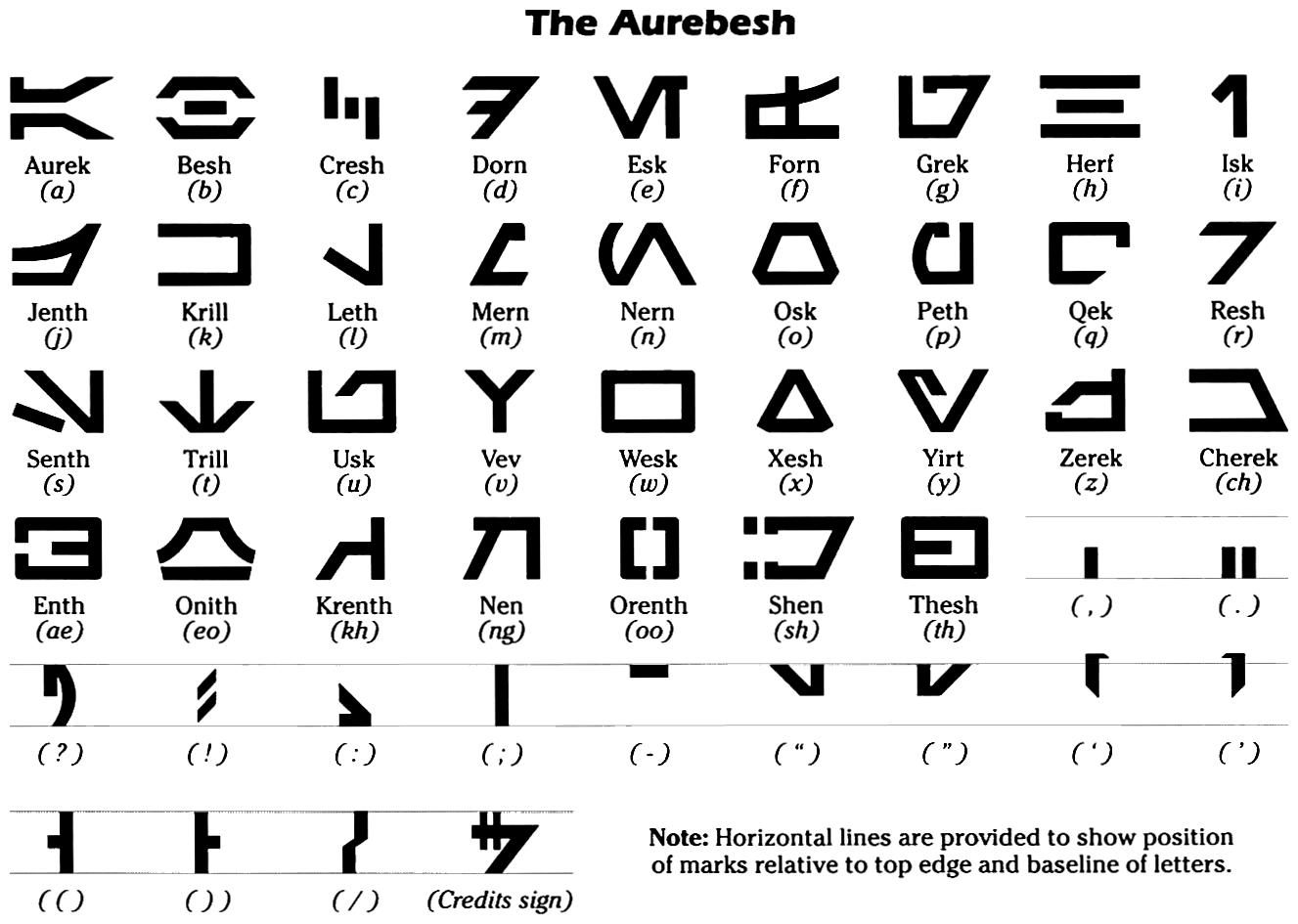
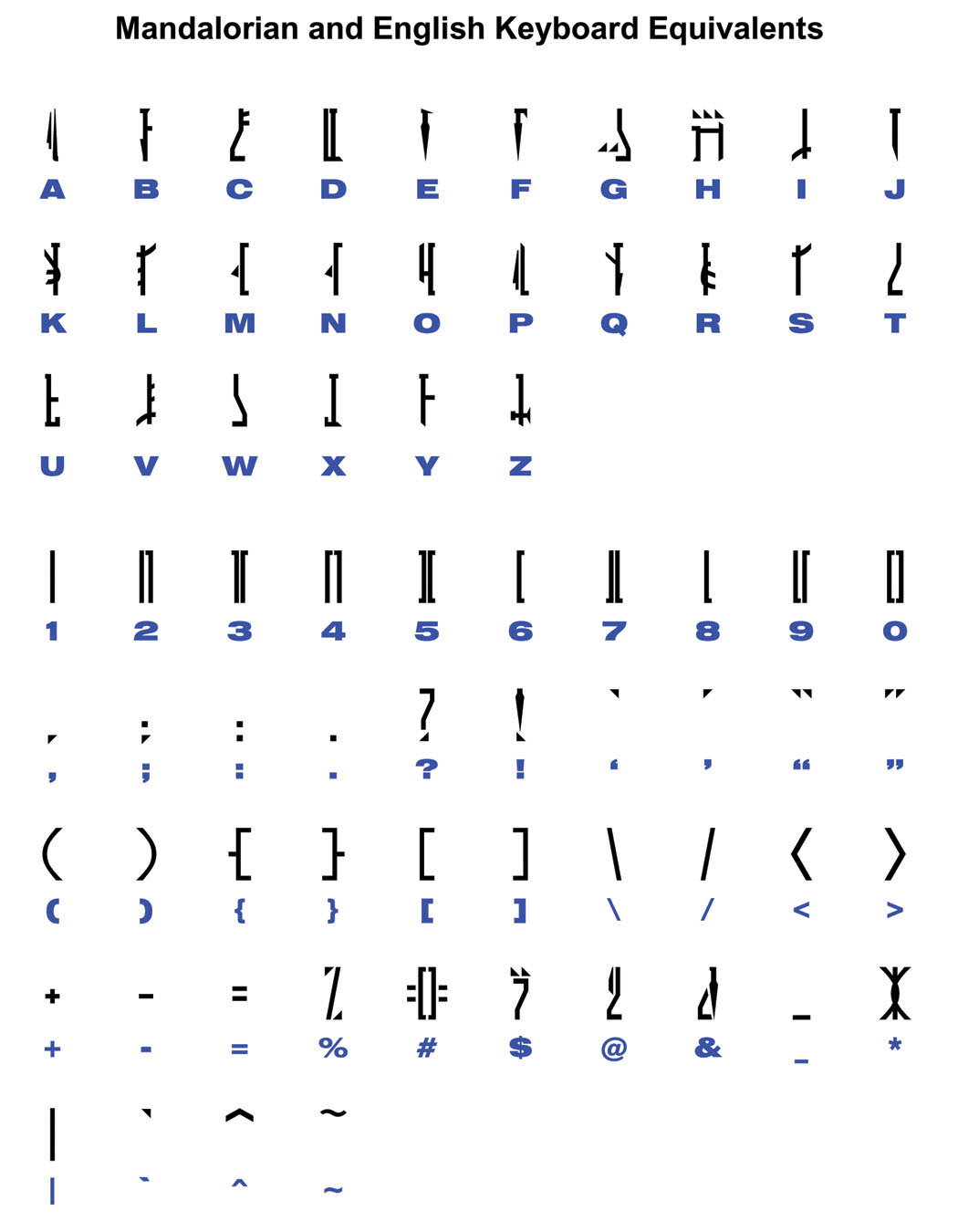
Star Wars. My adult relationship with Star Wars is sort of weird. After loving it to death as a child and teenager, I came to a sort of love-hate relationship in my twenties. This post summed up my feelings about it for a long time. I didn't like Star Wars anymore, and I felt mostly relief. But that was never entirely true, and I think I've finally kind of figured out why I can't leave Star Wars alone. In many ways, I value it the same way I value Disney (an ironic identity, now that Disney owns Star Wars): it teaches me to believe in magic. I am currently teaching myself to read the aurebesh and Mandalorian alphabet by transliterating On Basilisk Station in Word and reading it in the different alphabets, one chapter at a time, on the subway to and from work. It's hugely geeky, I know, to want to read fictional alphabets with the same facility with which I read the English alphabet (I'm getting pretty good at the aurebesh), and it's probably even geekier to read an Honor Harrington in a Star Wars script. But it's cheap entertainment, and ... well, it's a touchstone. I need to believe in magic.
KDF. KDF takes up virtually my entire discretionary budget, and is actually rather more expensive than I would like. I still love movies, and the ritual of eating out, and buying toys. I would like to have some money to do those things, even if only once a month. But in general, the expense is part of the point. It's often said by swordspeople (as by many martial artists generally, I think) that the point of their discipline is ultimately control of the self. Certainly that is what I primarily value KDF for: control, control, you must learn control. Discipline in spending, working, exercising ... these are the things that KDF has become my touchstone for.
Sunday, July 21, 2013


Sunday, July 07, 2013
Never Pick Up A Weapon ...
On Saturday, we spent the entire hour drilling krumphauen. I was very happy about this, since at this point what most interests me about cuts is the how and why. The krumphau ("crooked hew") is a sort of windshield wiper movement of the sword - if you suppose you have your weapon in both hands on the right side of your body, imagine twisting your wrists such that the sword cuts down and to the left. Simply twisting your wrists is not likely to cut anything, of course (and even if it does, it's inefficient body mechanics), so you actually sort of drop into a lunge while dropping your whole arms to help power the sword down, but that basic windshield wiper movement seems to be what ties all krumphauen together.
One of the reasons that I think it's so important to think about this sort of thing is that it's particularly hard (maybe impossible) to drill. Obviously a body with no hands is still physiologically capable of killing an assailant in any number of ways, but of course getting one's hands cut off is likely to be quite the psychological shock, both in terms of surprise and pain. How do you train for that? I'm not sure you can. But you can at least meditate on it.
There are difficulties the other way, as well. One of the other uses of the krumphau, apparently, is to defeat an oberhau (overhand strike). As the opponent's blade descends, a krumphau can be used to smash it into the ground. This momentarily disables the opponent's sword (from the sudden and unexpected momentum change), and places one's weapon on top. From here, it can be flicked into the opponent's head.
Now, it was made very clear to us that such an attack is not going to kill one's opponent. The point is simply to wound him so that you have a window for a follow-up strike. I wonder: will we train that way? It won't be until August that I can participate in our sparring hour, but I wonder what our rules will look like. It seems obvious to me that, if we are truly practicing a killing art, a krumphau used in that way should not end the bout. In fact, most attacks, it seems to me, will not actually kill an opponent except over a period of many seconds or minutes. I am curious to see what our practice will be.
A related question this brings up: how should a man in the modern world fight? This is perhaps more philosophical than practical, as a sword is not particularly likely to be at hand in a modern fight scenario, but I think the philosophical point is still important. Suppose I have successfully cut off my opponent's hands, or flicked my sword into his face. Neither wound is especially likely to be fatal; neither removes the opponent as a threat. What should my instinct be? To attempt to disengage, giving my opponent time to reconsider whether he wishes to continue to attempt to kill me? Or to follow up with an attack that will actually incapacitate him?
It seems to me that the wisdom of the martial community is that one does not let up - if the opponent removes himself as a threat, well and good, but until that point, his life is forfeit - you continue to strike, or shoot, or whatever, until the opponent is either unconscious, paralyzed, or dead. This seems to me like it has to be the right answer. It is a sobering thought, though, to consider that the thing you do to a man whose hands you have just cut off, whose face or throat you have just opened, is hit him again - because he still has a brain capable of ordering your death, and a spinal cord capable of relaying those orders to his body.
Firearms practitioners have an old chestnut that I think is applicable to all fighting: never point a gun at something you are unwilling to destroy. It's important to remember just what that destruction means, though, in the context of a human being. If you aren't willing strike down a man whose hands you have just cut off, you shouldn't cut off his hands in the first place - shouldn't even have drawn your sword. These words, from Weber's Honor Among Enemies, have always haunted me:
The obvious use of this cut is to remove your opponent's hands. Suppose, as he cuts or holds his sword in front of him in what we call "long point" (langenort, which seems to refer to the fact that the sword is at a point that is "long," or far, from the body - not "point" as in the sharp tip of the sword), one lunges to his left. One can then use a krumphau to amputate both hands at the wrists or forearms. A man with no hands is obviously still capable of killing you, but you have at least removed a major threat source.
I mention that a man with no hands is "obviously" capable of still killing you advisedly. This is grade-school stuff for a certain class of nerd, but it bears reflecting upon. Heinlein puts these words into the mouth of Sergeant Zim:
"Well, suppose all you have is a knife? Or maybe not even a knife? What do you do? Just say your prayers and die? Or wade in and make him buy it anyhow? Son, this is real -- it's not a checker game you can concede if you find yourself too far behind."So suppose somebody does cut off your hands. You might run away - surviving is often more important than killing one's opponent. But suppose it isn't? Or suppose you can't? What do you do? Say your prayers and die, or wade in and make him buy it anyhow?
One of the reasons that I think it's so important to think about this sort of thing is that it's particularly hard (maybe impossible) to drill. Obviously a body with no hands is still physiologically capable of killing an assailant in any number of ways, but of course getting one's hands cut off is likely to be quite the psychological shock, both in terms of surprise and pain. How do you train for that? I'm not sure you can. But you can at least meditate on it.
There are difficulties the other way, as well. One of the other uses of the krumphau, apparently, is to defeat an oberhau (overhand strike). As the opponent's blade descends, a krumphau can be used to smash it into the ground. This momentarily disables the opponent's sword (from the sudden and unexpected momentum change), and places one's weapon on top. From here, it can be flicked into the opponent's head.
Now, it was made very clear to us that such an attack is not going to kill one's opponent. The point is simply to wound him so that you have a window for a follow-up strike. I wonder: will we train that way? It won't be until August that I can participate in our sparring hour, but I wonder what our rules will look like. It seems obvious to me that, if we are truly practicing a killing art, a krumphau used in that way should not end the bout. In fact, most attacks, it seems to me, will not actually kill an opponent except over a period of many seconds or minutes. I am curious to see what our practice will be.
A related question this brings up: how should a man in the modern world fight? This is perhaps more philosophical than practical, as a sword is not particularly likely to be at hand in a modern fight scenario, but I think the philosophical point is still important. Suppose I have successfully cut off my opponent's hands, or flicked my sword into his face. Neither wound is especially likely to be fatal; neither removes the opponent as a threat. What should my instinct be? To attempt to disengage, giving my opponent time to reconsider whether he wishes to continue to attempt to kill me? Or to follow up with an attack that will actually incapacitate him?
It seems to me that the wisdom of the martial community is that one does not let up - if the opponent removes himself as a threat, well and good, but until that point, his life is forfeit - you continue to strike, or shoot, or whatever, until the opponent is either unconscious, paralyzed, or dead. This seems to me like it has to be the right answer. It is a sobering thought, though, to consider that the thing you do to a man whose hands you have just cut off, whose face or throat you have just opened, is hit him again - because he still has a brain capable of ordering your death, and a spinal cord capable of relaying those orders to his body.
Firearms practitioners have an old chestnut that I think is applicable to all fighting: never point a gun at something you are unwilling to destroy. It's important to remember just what that destruction means, though, in the context of a human being. If you aren't willing strike down a man whose hands you have just cut off, you shouldn't cut off his hands in the first place - shouldn't even have drawn your sword. These words, from Weber's Honor Among Enemies, have always haunted me:
"Course, you knew it wasn't real. It was just training, and you figured - hey, I'm a little, wiry guy, and I've never had a fight, and I'm never gonna have a fight, and I don't want to have one, even if I could. That about sum it up?"
"It sure does," Aubrey said feelingly, and Harkness chuckled.
"Well, looks to me like you were wrong. You are gonna have a fight - the only question is whether or not you're gonna win it or get your fool head busted. And do you know what the secret to not getting your head busted is?"
"What?" Aubrey asked, almost against his will.
"It's busting the other guy's head first," Harkness said grimly. "It's making up your mind going in that you're not just gonna try to defend yourself. It's deciding right now, ahead of time, that you're gonna kill the motherfucker if that's what it takes."
Thursday, June 27, 2013
United States v Windsor (the DOMA case)
I've been staring at my screen for a while trying to figure out what I wanted to say about United States v Windsor, the DOMA case that was decided yesterday. My initial plan was simply to do a Natalie-style breakdown of the opinion for those of my readers who value such things, and then do a separate post with my personal responses, but after reading the whole thing, I'm not sure I can separate them cleanly enough to do that.
Some of our most celebrated Supreme Court cases have been, I think, wrongly decided. Brown v Board of Education is one such case (although some have argued that there was no legally correct answer, I don't know of anybody who thinks the Brown I decision was correct on the merits of the case). Griswold v Connecticut, the case that enunciated federal protection for the right to privacy, is another (that the constitution guarantees some privacy-like rights is quite clear, but not even the prevailing justices in that case could agree on where, exactly, the constitution guarantees the right to privacy in general). I think that Windsor is going to go down in history with these cases. Wide-eyed law students in the future will learn about the time in 2013 when the Supreme Court struck a historic blow for equal rights - by ignoring the law.
So ... what happened?
The Windsor in Windsor is Edith Windsor, a New York lesbian. Windsor and her partner got married in Canada, gay marriage jurisdictions in the United States being hard to find at the time. New York then decided it would recognize same-sex marriages performed outside of its borders (later it would decide to permit same-sex marriage within its borders, but that's not relevant to the story). At this point, Windsor and her wife, Thea Spyer, were legally married as a matter of New York law. Spyer died, and willed her entire estate to her wife.
As you may know, inheritance is subject to federal income tax - it is, after all, money that you didn't have before, which is pretty much the definition of income. For its own inscrutable reasons, however, the federal tax code does not require you to pay income tax on an inheritance you receive from a spouse. You can see where this is going. For purposes of New York law, Windsor had inherited from her spouse.
For purposes of federal law, though, Windsor had not inherited from her spouse, because Section 3 of the Defense of Marriage Act defines "spouse" for purposes of federal law as an opposite-sex person (I mean that literally; Section 3 of DOMA amends the aptly named Dictionary Act). As a result, Windsor paid the Treasury her inheritance tax, then sued for a refund. The Treasury refused, since Spyer had not been Windsor's wife for federal law purposes, and Windsor took the government to federal district court on the grounds that Section 3 of DOMA violated the Equal Protection Clause.
Her argument for that was fairly bold and very much in keeping with the story that is going to be told to future generations about the gay rights struggle. But this is where things begin to get weird from a civics point of view, so before we get to her argument, pay attention to what happened next: the government told the district court that it agreed with Windsor's argument and should be ordered to refund her tax, with interest - while simultaneously continuing to enforce Section 3. While arguing that Windsor should get her tax back because Section 3 was unconstitutional, the government was simultaneously collecting estate taxes from other people in her situation (and otherwise denying legally married same-sex spouses recognition under federal law).
As might be expected when the defendant's argument is, "I am wrong and the plaintiff is right," Windsor won at the district court level. The government then appealed to the Second Circuit Court of Appeals, while continuing to hold Windsor's estate tax. This is where the gentle reader may expect the government to turn its cloak and ask for Section 3 to be upheld and the tax retained. But what happened was even more incredible - the government's argument on appeal was that it should lose the appeal, because Section 3 was unconstitutional. Take a moment to appreciate that: the government said it should lose, lost, and then appealed its loss on the grounds that it should have lost.
Under these circumstances, it is perhaps hardly surprising that the government lost. The government then appealed again, and argued to the Supreme Court that it should ... wait for it ... lose.
And it did.
You can probably tell that I have some feelings about that whole process. But let's get on to the actual opinion.
If you have the good fortune to come across the better sort of popular news reporting about legal issues, you may have heard that the majority opinion in Windsor is ... confusing. This is absolutely true, but to understand why, we need to review a few basics of common law. One of the reasons I dislike popular news reporting about legal issues so much is that it can't seem to decide which story it wants to tell. On the one hand, there is usually a narrative about "winning" and "losing," as if people pay attention to these things strictly for the entertainment value of observing the litigants fight. On the other hand, there is usually a narrative about which laws have been struck down, died, revived, or other such agonistic terms.
Neither narrative is wholly satisfactory. What people really want to know, I think, is what the state of the law is after the case is over. And to understand that, you have to understand how the case arose (which is one reason I spent so much time sketching that) and how one side "won" or "lost," a law "died" or was upheld. Remember that the whole manner in which courts create law (which in a broad sense they are supposed to do; let us have no childish nonsense about "activist" vs. "conservative" judges here) is by articulating principles, so that the legal reasoning in one case can be applied to analogous - but not identical - situations.
So what are the principles that underlie Windsor? The majority spends several pages discussing the proper boundaries of federal action with respect to marriage. "By history and tradition the definition and regulation of marriage, as will be discussed in more detail, has been treated as being within the authority and realm of the separate States." Aha, thinks the reader - this is a federalism argument. "Federalism" is a fancy word for the principle that not everything is something that the federal government can regulate. Yet the majority then says that it is not deciding the case on federalism grounds, because that's unnecessary: "Despite these considerations, it is unnecessary to decide whether this federal intrusion on state power is a violation of the Constitution because it disrupts the federal balance."
So ... apparently we will not be hearing whether Section 3 violates federalism principles after all. What then? The majority turns to a principle that it will restate in several forms: "DOMA seeks to injure the very class New York seeks to protect. By doing so it violates basic due process and equal protection principles applicable to the Federal Government. [citation omitted] The Constitution's guarantee of equality 'must at the very least mean that a bare congressional desire to harm a politically unpopular group cannot' justify disparate treatment of that group." Fair enough, it seems. New York wants to protect same-sex couples (by allowing them to marry); Section 3 does the opposite (by refusing to acknowledge their otherwise valid marriage). Equal protection violation, problem sorted.
Take another look at that sentence and ask yourself what the animating principle is. Is the constitutional problem here that Section 3 seeks to injure the class that New York seeks to protect? Or is it that Section 3 itself reflects a "bare congressional desire to harm a politically unpopular group?"
If the former, then Windsor would seem to stand for the very alarming principle that federal law cannot override state law. That is entirely counter to our tradition of federalism. The federalist principle is that there are some areas as to which the federal government cannot make law at all, but in those areas where the federal government can act, its law is supreme. This is what Article VI, clause 2 of the federal constitution means when it says "the laws of the United States ... shall be the supreme law of the land, anything in the constitution or laws of any State to the contrary notwithstanding."
It seems incredible that the majority opinion would be based on such an elementary error. So perhaps the real principle is that laws that represent a bare desire to harm a politically unpopular group are unconstitutional.
This is an attractive statement, but also an incredibly strange one to anybody who is even moderately versed in the actual law of equal protection in this country. As I've said before, neither the Equal Protection Clause of the Fourteenth Amendment, the Due Process Clause of the Fifth Amendment, nor the general concept of "equal protection" means that all laws must treat everybody equally. This is easy to forget when one is caught up in the emotions of a righteous crusade for civil rights, but it is a very ordinary concept. Prior to Windsor, some people were denied the benefits of federal marriage law. After Windsor, some people are denied the benefits of federal marriage law. Let's call them "single people." Why can't single people demand federal marriage rights under equal protection?
The answer is as simple, and as complex, as saying that single people and married people are not the same. The Supreme Court puts it this way: "The equal protection of the laws must coexist with the practical necessity that most legislation classifies for one purpose or another, with resulting disadvantages to various groups or persons."
Because of this tension - on the one hand, we want everybody to enjoy equal protection under the law; on the other hand, taking that principle to its logical extreme means virtually no law is valid - American jurisprudence has a familiar and fairly well understood way to balance. This is the "tiers of scrutiny" or "heightened scrutiny" approach you may have heard about. The principle is this: when a law benefits or harms one class of people over another (say, giving married people benefits that only married people can have, or imposing penalties on convicted criminals that only convicted criminals have to suffer), the question is what the purpose of the law is and what sort of distinction is being made. Roughly, when a law draws a distinction based on something that is very rarely relevant to legitimate state interests in general, the classification must be narrowly tailored and the specific state interest in question must be a "compelling" one. The classic example is race (well, it is now; originally it was religion or national origin). For instance, suppose the United States were suffering from a plague that only infected white people, with a 100% mortality rate, which could only be communicated by shaking right hands. A state could very likely pass a law forbidding white people to shake right hands with each other, in this case, despite the fact that the law would only burden the behavior of white people (a class based on race), because preventing the spread of such a virulent plague is a "compelling" government interest, and the law was as narrowly tailored as possible (it would, for instance, be unconstitutional to pass a law preventing white people to have physical contact with each other - the goal is still compelling, but the method is no longer as narrowly tailored as possible).
At the other end of the spectrum is "rational basis scrutiny," which is applied when the law draws a distinction of the sort that is often relevant to legitimate state interests in general. In this case, the rule requires only that the government's goal be a "legitimate" one, and that the classification be one that a rational person could find legitimate - even if other people disagreed. Married people vs. single people is one such classification - if a law distinguishes between married people and single people (a distinction that is often relevant to legitimate government interests), it need only be based on a set of facts that a rational person could believe to be true. Those facts don't have to be true. They don't have to be popular.
What Windsor really wanted was for the Supreme Court to say that sexual orientation is very rarely relevant to legitimate state interests - to say that it is like race, religion, or national origin. I think it fair to say that this is what most LGBT advocates, including myself, want the law to say. And indeed, most of the legal arguments in Windsor were about precisely this question. This is how we decide equal protection arguments in this country, and the obvious fact that virtually every law creates inequality by the very nature of lawmaking.
But, having raised the specter of equal protection law, the opinion doesn't even mention the tiered scrutiny test. Instead, it recites a variety of ways in which Section 3 makes same-sex marriages "second class marriages." Now, it is undoubtedly true that Section 3 has this effect. But notice what the court goes on to say: "What has been explained to this point should more than suffice to establish that the principal purpose and the necessary effect of this law are to demean those persons who are in a lawful same-sex marriage. This requires the Court to hold, as it now does, that DOMA is unconstitutional as a deprivation of the liberty of the person protected by the Fifth Amendment of the Constitution."
I confess to being skeptical that one can, as a matter of principle, determine the "purpose" of a law with any degree of certainty. But let us leave that aside, and assume that it is theoretically possible to determine a law's purpose. What exactly is the rule here? Would it be enough if Section 3's principal purpose were to demean same-sex marriages, even if it didn't really have that effect? What about the other way around - what if a law accidentally had the effect of demeaning same-sex marriages, even though that wasn't its principal purpose? Or does a law have to have both? What if a law does neither? What if a law merely makes a distinction between opposite-sex and same-sex marriages, but manages to do so with neither the purpose nor the effect of demeaning either class?
If the court had simply followed the tiered scrutiny test, none of these questions would arise. Instead, they do. The court never explains the test it is using to make its decision. It never even explains its reasoning. It simply lays out a bunch of statements, and then says, "Somewhere in here is our warrant for holding as we do." What are we supposed to do with that? What is the law?
One might well ask why the court did things this way. We may never know. It may be that in the strictest sense we can't know, any more than we can know why a law was passed. If one were feeling cynical, one might imagine that the court wanted to make a statement on gay marriage without articulating a usable test that would be applied throughout the nation. Yet if that were so, why didn't they simply dismiss for lack of standing? Did they feel like to dismiss both Windsor and Hollingsworth (the Prop. 8 case) without making some sort of statement would be somehow cowardly?
Which brings us to the question of standing. Recall that, from the very first trial, Windsor won, and the government repeatedly urged successive courts that Windsor should win. I am incredulous that, under these circumstances, the court agreed to decide the merits of the case at all.
There is a tendency nowadays to imagine that the Supreme Court is the final arbiter of justice in the land, and the ultimate word on what is the law. This is not true. In fact, Article III of the constitution specifically prohibits the judiciary from issuing what are called "advisory" opinions. In some countries, one can essentially ask the judiciary a hypothetical question, and the judiciary is allowed to answer - to give its legal advice about the query. One can imagine the usefulness of such a situation. However, the constitution prohibits the federal judiciary from doing any such thing. In this country, if one wants mere legal advice from a government official on a constitutional question (e.g., "Hypothetically, what level of scrutiny should be applied to classifications based on sexual orientation?"), one asks the attorney general. The American judiciary is only allowed to decide actual cases. Doing so may require it to state what the law is, but that does not mean that the judicial branch has the power, in general, to state what the law is. First, there must be two parties who disagree over which of them is entitled to redress.
And yet in this case ... where was that? Windsor won. The government agreed that she should win. Where is the disagreement? At every stage of the litigation, the government loudly and forcefully denounced its own cause. Truth be told, the Supreme Court was not allowed to decide this "dispute," but if it wanted to avoid the clarity that the tiered scrutiny analysis would give, it certainly had an easy out.
I do not think that Section 3 was good policy, and I would - in general - be glad to see it gone. But I am deeply disappointed in the way that this all played out. The judiciary ducked its responsibility to say that this whole appeal was an unconstitutional attempt to weasel an advisory opinion out of it, and then issued a confusing muddle of an opinion with a clear result but no clear reasoning or statement of principles (again, if one were of a cynical mind, one might think they didn't want to make their reasoning clear). But the deeper cowardice belongs to the executive branch, which got us into this whole mess by continuing to enforce a law that it believed - as it told everybody who would listen - to be unconstitutional. This is unacceptable. If the executive believes that a law is unlawful, it is supposed to refuse to enforce it, in which case it will never have to defend it in court. If the legislature has a problem with that, the two of them are supposed to fight it out. If the executive believes that a law is lawful, it is supposed to enforce it, and defend it in court. But the executive cannot have it both ways. Either it has the courage of its convictions or it does not. If one were of a cynical mind, one might think the executive wanted the political cache of being an LGBT ally and the political cover of only ceasing to enforce Section 3 after the courts had "agreed" that it was unconstitutional. Cowards.
As I said, I am sure that striking down Section 3 will be remembered as a landmark victory for the cause of equal rights. And I suppose that it is. But I cannot escape the conclusion that it was a victory achieved by the cowardice of two branches of government whose essential reasoning was that the ends justify the means. A marriage regime that is no respecter of sexual orientation is a good end. But the ends do not justify the means.
Some of our most celebrated Supreme Court cases have been, I think, wrongly decided. Brown v Board of Education is one such case (although some have argued that there was no legally correct answer, I don't know of anybody who thinks the Brown I decision was correct on the merits of the case). Griswold v Connecticut, the case that enunciated federal protection for the right to privacy, is another (that the constitution guarantees some privacy-like rights is quite clear, but not even the prevailing justices in that case could agree on where, exactly, the constitution guarantees the right to privacy in general). I think that Windsor is going to go down in history with these cases. Wide-eyed law students in the future will learn about the time in 2013 when the Supreme Court struck a historic blow for equal rights - by ignoring the law.
So ... what happened?
The Windsor in Windsor is Edith Windsor, a New York lesbian. Windsor and her partner got married in Canada, gay marriage jurisdictions in the United States being hard to find at the time. New York then decided it would recognize same-sex marriages performed outside of its borders (later it would decide to permit same-sex marriage within its borders, but that's not relevant to the story). At this point, Windsor and her wife, Thea Spyer, were legally married as a matter of New York law. Spyer died, and willed her entire estate to her wife.
As you may know, inheritance is subject to federal income tax - it is, after all, money that you didn't have before, which is pretty much the definition of income. For its own inscrutable reasons, however, the federal tax code does not require you to pay income tax on an inheritance you receive from a spouse. You can see where this is going. For purposes of New York law, Windsor had inherited from her spouse.
For purposes of federal law, though, Windsor had not inherited from her spouse, because Section 3 of the Defense of Marriage Act defines "spouse" for purposes of federal law as an opposite-sex person (I mean that literally; Section 3 of DOMA amends the aptly named Dictionary Act). As a result, Windsor paid the Treasury her inheritance tax, then sued for a refund. The Treasury refused, since Spyer had not been Windsor's wife for federal law purposes, and Windsor took the government to federal district court on the grounds that Section 3 of DOMA violated the Equal Protection Clause.
Her argument for that was fairly bold and very much in keeping with the story that is going to be told to future generations about the gay rights struggle. But this is where things begin to get weird from a civics point of view, so before we get to her argument, pay attention to what happened next: the government told the district court that it agreed with Windsor's argument and should be ordered to refund her tax, with interest - while simultaneously continuing to enforce Section 3. While arguing that Windsor should get her tax back because Section 3 was unconstitutional, the government was simultaneously collecting estate taxes from other people in her situation (and otherwise denying legally married same-sex spouses recognition under federal law).
As might be expected when the defendant's argument is, "I am wrong and the plaintiff is right," Windsor won at the district court level. The government then appealed to the Second Circuit Court of Appeals, while continuing to hold Windsor's estate tax. This is where the gentle reader may expect the government to turn its cloak and ask for Section 3 to be upheld and the tax retained. But what happened was even more incredible - the government's argument on appeal was that it should lose the appeal, because Section 3 was unconstitutional. Take a moment to appreciate that: the government said it should lose, lost, and then appealed its loss on the grounds that it should have lost.
Under these circumstances, it is perhaps hardly surprising that the government lost. The government then appealed again, and argued to the Supreme Court that it should ... wait for it ... lose.
And it did.
You can probably tell that I have some feelings about that whole process. But let's get on to the actual opinion.
If you have the good fortune to come across the better sort of popular news reporting about legal issues, you may have heard that the majority opinion in Windsor is ... confusing. This is absolutely true, but to understand why, we need to review a few basics of common law. One of the reasons I dislike popular news reporting about legal issues so much is that it can't seem to decide which story it wants to tell. On the one hand, there is usually a narrative about "winning" and "losing," as if people pay attention to these things strictly for the entertainment value of observing the litigants fight. On the other hand, there is usually a narrative about which laws have been struck down, died, revived, or other such agonistic terms.
Neither narrative is wholly satisfactory. What people really want to know, I think, is what the state of the law is after the case is over. And to understand that, you have to understand how the case arose (which is one reason I spent so much time sketching that) and how one side "won" or "lost," a law "died" or was upheld. Remember that the whole manner in which courts create law (which in a broad sense they are supposed to do; let us have no childish nonsense about "activist" vs. "conservative" judges here) is by articulating principles, so that the legal reasoning in one case can be applied to analogous - but not identical - situations.
So what are the principles that underlie Windsor? The majority spends several pages discussing the proper boundaries of federal action with respect to marriage. "By history and tradition the definition and regulation of marriage, as will be discussed in more detail, has been treated as being within the authority and realm of the separate States." Aha, thinks the reader - this is a federalism argument. "Federalism" is a fancy word for the principle that not everything is something that the federal government can regulate. Yet the majority then says that it is not deciding the case on federalism grounds, because that's unnecessary: "Despite these considerations, it is unnecessary to decide whether this federal intrusion on state power is a violation of the Constitution because it disrupts the federal balance."
So ... apparently we will not be hearing whether Section 3 violates federalism principles after all. What then? The majority turns to a principle that it will restate in several forms: "DOMA seeks to injure the very class New York seeks to protect. By doing so it violates basic due process and equal protection principles applicable to the Federal Government. [citation omitted] The Constitution's guarantee of equality 'must at the very least mean that a bare congressional desire to harm a politically unpopular group cannot' justify disparate treatment of that group." Fair enough, it seems. New York wants to protect same-sex couples (by allowing them to marry); Section 3 does the opposite (by refusing to acknowledge their otherwise valid marriage). Equal protection violation, problem sorted.
Take another look at that sentence and ask yourself what the animating principle is. Is the constitutional problem here that Section 3 seeks to injure the class that New York seeks to protect? Or is it that Section 3 itself reflects a "bare congressional desire to harm a politically unpopular group?"
If the former, then Windsor would seem to stand for the very alarming principle that federal law cannot override state law. That is entirely counter to our tradition of federalism. The federalist principle is that there are some areas as to which the federal government cannot make law at all, but in those areas where the federal government can act, its law is supreme. This is what Article VI, clause 2 of the federal constitution means when it says "the laws of the United States ... shall be the supreme law of the land, anything in the constitution or laws of any State to the contrary notwithstanding."
It seems incredible that the majority opinion would be based on such an elementary error. So perhaps the real principle is that laws that represent a bare desire to harm a politically unpopular group are unconstitutional.
This is an attractive statement, but also an incredibly strange one to anybody who is even moderately versed in the actual law of equal protection in this country. As I've said before, neither the Equal Protection Clause of the Fourteenth Amendment, the Due Process Clause of the Fifth Amendment, nor the general concept of "equal protection" means that all laws must treat everybody equally. This is easy to forget when one is caught up in the emotions of a righteous crusade for civil rights, but it is a very ordinary concept. Prior to Windsor, some people were denied the benefits of federal marriage law. After Windsor, some people are denied the benefits of federal marriage law. Let's call them "single people." Why can't single people demand federal marriage rights under equal protection?
The answer is as simple, and as complex, as saying that single people and married people are not the same. The Supreme Court puts it this way: "The equal protection of the laws must coexist with the practical necessity that most legislation classifies for one purpose or another, with resulting disadvantages to various groups or persons."
Because of this tension - on the one hand, we want everybody to enjoy equal protection under the law; on the other hand, taking that principle to its logical extreme means virtually no law is valid - American jurisprudence has a familiar and fairly well understood way to balance. This is the "tiers of scrutiny" or "heightened scrutiny" approach you may have heard about. The principle is this: when a law benefits or harms one class of people over another (say, giving married people benefits that only married people can have, or imposing penalties on convicted criminals that only convicted criminals have to suffer), the question is what the purpose of the law is and what sort of distinction is being made. Roughly, when a law draws a distinction based on something that is very rarely relevant to legitimate state interests in general, the classification must be narrowly tailored and the specific state interest in question must be a "compelling" one. The classic example is race (well, it is now; originally it was religion or national origin). For instance, suppose the United States were suffering from a plague that only infected white people, with a 100% mortality rate, which could only be communicated by shaking right hands. A state could very likely pass a law forbidding white people to shake right hands with each other, in this case, despite the fact that the law would only burden the behavior of white people (a class based on race), because preventing the spread of such a virulent plague is a "compelling" government interest, and the law was as narrowly tailored as possible (it would, for instance, be unconstitutional to pass a law preventing white people to have physical contact with each other - the goal is still compelling, but the method is no longer as narrowly tailored as possible).
At the other end of the spectrum is "rational basis scrutiny," which is applied when the law draws a distinction of the sort that is often relevant to legitimate state interests in general. In this case, the rule requires only that the government's goal be a "legitimate" one, and that the classification be one that a rational person could find legitimate - even if other people disagreed. Married people vs. single people is one such classification - if a law distinguishes between married people and single people (a distinction that is often relevant to legitimate government interests), it need only be based on a set of facts that a rational person could believe to be true. Those facts don't have to be true. They don't have to be popular.
What Windsor really wanted was for the Supreme Court to say that sexual orientation is very rarely relevant to legitimate state interests - to say that it is like race, religion, or national origin. I think it fair to say that this is what most LGBT advocates, including myself, want the law to say. And indeed, most of the legal arguments in Windsor were about precisely this question. This is how we decide equal protection arguments in this country, and the obvious fact that virtually every law creates inequality by the very nature of lawmaking.
But, having raised the specter of equal protection law, the opinion doesn't even mention the tiered scrutiny test. Instead, it recites a variety of ways in which Section 3 makes same-sex marriages "second class marriages." Now, it is undoubtedly true that Section 3 has this effect. But notice what the court goes on to say: "What has been explained to this point should more than suffice to establish that the principal purpose and the necessary effect of this law are to demean those persons who are in a lawful same-sex marriage. This requires the Court to hold, as it now does, that DOMA is unconstitutional as a deprivation of the liberty of the person protected by the Fifth Amendment of the Constitution."
I confess to being skeptical that one can, as a matter of principle, determine the "purpose" of a law with any degree of certainty. But let us leave that aside, and assume that it is theoretically possible to determine a law's purpose. What exactly is the rule here? Would it be enough if Section 3's principal purpose were to demean same-sex marriages, even if it didn't really have that effect? What about the other way around - what if a law accidentally had the effect of demeaning same-sex marriages, even though that wasn't its principal purpose? Or does a law have to have both? What if a law does neither? What if a law merely makes a distinction between opposite-sex and same-sex marriages, but manages to do so with neither the purpose nor the effect of demeaning either class?
If the court had simply followed the tiered scrutiny test, none of these questions would arise. Instead, they do. The court never explains the test it is using to make its decision. It never even explains its reasoning. It simply lays out a bunch of statements, and then says, "Somewhere in here is our warrant for holding as we do." What are we supposed to do with that? What is the law?
One might well ask why the court did things this way. We may never know. It may be that in the strictest sense we can't know, any more than we can know why a law was passed. If one were feeling cynical, one might imagine that the court wanted to make a statement on gay marriage without articulating a usable test that would be applied throughout the nation. Yet if that were so, why didn't they simply dismiss for lack of standing? Did they feel like to dismiss both Windsor and Hollingsworth (the Prop. 8 case) without making some sort of statement would be somehow cowardly?
Which brings us to the question of standing. Recall that, from the very first trial, Windsor won, and the government repeatedly urged successive courts that Windsor should win. I am incredulous that, under these circumstances, the court agreed to decide the merits of the case at all.
There is a tendency nowadays to imagine that the Supreme Court is the final arbiter of justice in the land, and the ultimate word on what is the law. This is not true. In fact, Article III of the constitution specifically prohibits the judiciary from issuing what are called "advisory" opinions. In some countries, one can essentially ask the judiciary a hypothetical question, and the judiciary is allowed to answer - to give its legal advice about the query. One can imagine the usefulness of such a situation. However, the constitution prohibits the federal judiciary from doing any such thing. In this country, if one wants mere legal advice from a government official on a constitutional question (e.g., "Hypothetically, what level of scrutiny should be applied to classifications based on sexual orientation?"), one asks the attorney general. The American judiciary is only allowed to decide actual cases. Doing so may require it to state what the law is, but that does not mean that the judicial branch has the power, in general, to state what the law is. First, there must be two parties who disagree over which of them is entitled to redress.
And yet in this case ... where was that? Windsor won. The government agreed that she should win. Where is the disagreement? At every stage of the litigation, the government loudly and forcefully denounced its own cause. Truth be told, the Supreme Court was not allowed to decide this "dispute," but if it wanted to avoid the clarity that the tiered scrutiny analysis would give, it certainly had an easy out.
I do not think that Section 3 was good policy, and I would - in general - be glad to see it gone. But I am deeply disappointed in the way that this all played out. The judiciary ducked its responsibility to say that this whole appeal was an unconstitutional attempt to weasel an advisory opinion out of it, and then issued a confusing muddle of an opinion with a clear result but no clear reasoning or statement of principles (again, if one were of a cynical mind, one might think they didn't want to make their reasoning clear). But the deeper cowardice belongs to the executive branch, which got us into this whole mess by continuing to enforce a law that it believed - as it told everybody who would listen - to be unconstitutional. This is unacceptable. If the executive believes that a law is unlawful, it is supposed to refuse to enforce it, in which case it will never have to defend it in court. If the legislature has a problem with that, the two of them are supposed to fight it out. If the executive believes that a law is lawful, it is supposed to enforce it, and defend it in court. But the executive cannot have it both ways. Either it has the courage of its convictions or it does not. If one were of a cynical mind, one might think the executive wanted the political cache of being an LGBT ally and the political cover of only ceasing to enforce Section 3 after the courts had "agreed" that it was unconstitutional. Cowards.
As I said, I am sure that striking down Section 3 will be remembered as a landmark victory for the cause of equal rights. And I suppose that it is. But I cannot escape the conclusion that it was a victory achieved by the cowardice of two branches of government whose essential reasoning was that the ends justify the means. A marriage regime that is no respecter of sexual orientation is a good end. But the ends do not justify the means.
Tuesday, June 18, 2013
New Every Morning
In the morning, I drag myself out of a surprisingly snuggly bed in my surprisingly dark room. I put on headphones given to me by my father and running shoes given to me by my wife, lock the door behind me with keys given to me by my landlord, and go running in a park given to me by a city that is home but not home. I pass the relief honoring the Marquis de Lafayette, with the tip of his sword shiny and bright from all the people that have rubbed it. I pound past the playground, across the grass and under the tree, wet my shoes and socks in the dew of the Long Meadow, and pass into the trees. I loop around and up the stone steps that sag in the middle back to the Long Meadow, and cross it until I reach my knoll. There my hands curl around empty air, and I begin to drill. There is no morning gloom, and Prospect Park is full of dogs and their people not far away, but this is still my space, and I am thankful. My muscles answer the thrill of the movements, and I am alone.
This is often the highlight of my day, and my days are actually not that bad. It will be another week or so before I can figure out for sure whether this is a sustainable activity, but I dearly hope that I may. This past Saturday was - I was about to say especially fun, but perhaps that is a silly thing to say given a history of only two actual lessons. It was, at any rate, exceptional in recent history. One of the things we got to do was practice unterhauen (cuts from below, beginning with the sword held down and behind), which was extra cool as I have been somewhat entranced by them ever since I discovered that you could strike from that position. But the really remarkable thing was that I found myself thinking of Tokyo Rose, someone I have not thought of in many years ... and I realized that I felt like I was in Social I again. I had that same excitement, the same eagerness to do more, to learn how it all fits together. I was, in the very Natalian sense, happy.
At my teacher's invitation I stayed to observe the open level class, which was equally exciting. The studio's kendo and siljun dobup sensei participated, and happened to be drilling right in front of my chair, so it was especially interesting to see the way he was able to teach his (much less experienced) partner about what they were doing and why. I find my own mind putting together what bits and pieces of information I have, trying them in various combinations looking for insight. One of the minor revelations was that we have actually practiced only two of the meisterhauen, and that the other cuts we have practiced were all simple oberhauen and unterhauen - whether delivered from the left, the right, or directly overhead.
The meisterhauen, I now realize/begin to suspect, are one of the organizing principles of KDF. To give a dance analogy, I break [rotary and Viennese] waltz variations into four basic categories: turns, pivots, redowa, and mazurka. Proficiency in all four of those categories (plus the basics of frame, balance, and rotation) is basically how I define proficiency in waltz itself. Yet they are categories, not individual steps or variations. I group them together partially because all the individual variations under those categories share certain physical similarities, and partially because they respond to the music in distinct ways - a musical phrase that says "redowa" to me might prompt any number of redowa variations, but it doesn't prompt a mazurka step. That phrase is not what mazurka is "for" in my head.
Similarly, KDF "cuts" do not seem to be listed by individual cut but rather by category of cut. I have practiced three individual cuts now that are all described with the word oberhau, two that are both unterhau, and so forth. Of the mastercuts I have definitely been exposed to, the scheitelhau (there seems to be no good translation; the scheitel is the crown of a hill, but also a mathematical apex, and also the part line in your hair) I have only done in one way but I suspect could be done in at least two, and the zwerchau can be done either from the left or from the right, with each individual variation performed in a slightly different way (a left zwerchau is not simply a mirror image of the right zwerchau). The jargon is not of individual moves but of categories of moves ... and so, I realize, my task as a student is to get it into my bones what these general categories are for. Just as this phrase may signify a redowa and not a mazurka, so this disposition of opponents signifies a zwerchau and not a ... well, whatever else it doesn't signify.
Interestingly, I begin to suspect (which is to say, I have read but cannot yet confirm through my own experience) that the meisterhauen are so-called because of their dual function. Prior to the smallsword revolution of the 17th century, people were generally taught to fence in what the Italians and English would call "single time," which is I think is a stupid terminology that simply means with single actions. If you wish to attack somebody with an arming sword, for instance, your sword only takes one action - the attack. It does not attempt to defeat your opponent's defense and then attack, as does a sport foil. If you wish to defeat your opponent's defense, you must do it with another weapon (such as the buckler in your left hand) or through movement. The meisterhauen, by contrast, take advantage of the longsword's greater length to become movements that are both attack and defense, in the same action - they are ways of moving your sword to attack such that your opponent's ability to counterattack is foreclosed, and ways to parry your opponent's attack in a way that simultaneously attacks him. This is, obviously, superior to a movement of the sword that only attacks or only defends - hence the description of these five categories of maneuver as "master."
Now I just need to learn how to, you know, do them. And when. While moving. When the blows are coming about once a second. I can't wait.
But enough of my amateur musings on the art of fighting. The point is, this makes me happy. And I am grateful to have it out here, where I can greet the day and its promise of mercies new with this one small mercy. There is city glass ground into the dirt beneath my feet, but the morning breeze blows through the trees, my muscles answer the thrill of the movements, and I am here.
This is often the highlight of my day, and my days are actually not that bad. It will be another week or so before I can figure out for sure whether this is a sustainable activity, but I dearly hope that I may. This past Saturday was - I was about to say especially fun, but perhaps that is a silly thing to say given a history of only two actual lessons. It was, at any rate, exceptional in recent history. One of the things we got to do was practice unterhauen (cuts from below, beginning with the sword held down and behind), which was extra cool as I have been somewhat entranced by them ever since I discovered that you could strike from that position. But the really remarkable thing was that I found myself thinking of Tokyo Rose, someone I have not thought of in many years ... and I realized that I felt like I was in Social I again. I had that same excitement, the same eagerness to do more, to learn how it all fits together. I was, in the very Natalian sense, happy.
At my teacher's invitation I stayed to observe the open level class, which was equally exciting. The studio's kendo and siljun dobup sensei participated, and happened to be drilling right in front of my chair, so it was especially interesting to see the way he was able to teach his (much less experienced) partner about what they were doing and why. I find my own mind putting together what bits and pieces of information I have, trying them in various combinations looking for insight. One of the minor revelations was that we have actually practiced only two of the meisterhauen, and that the other cuts we have practiced were all simple oberhauen and unterhauen - whether delivered from the left, the right, or directly overhead.
The meisterhauen, I now realize/begin to suspect, are one of the organizing principles of KDF. To give a dance analogy, I break [rotary and Viennese] waltz variations into four basic categories: turns, pivots, redowa, and mazurka. Proficiency in all four of those categories (plus the basics of frame, balance, and rotation) is basically how I define proficiency in waltz itself. Yet they are categories, not individual steps or variations. I group them together partially because all the individual variations under those categories share certain physical similarities, and partially because they respond to the music in distinct ways - a musical phrase that says "redowa" to me might prompt any number of redowa variations, but it doesn't prompt a mazurka step. That phrase is not what mazurka is "for" in my head.
Similarly, KDF "cuts" do not seem to be listed by individual cut but rather by category of cut. I have practiced three individual cuts now that are all described with the word oberhau, two that are both unterhau, and so forth. Of the mastercuts I have definitely been exposed to, the scheitelhau (there seems to be no good translation; the scheitel is the crown of a hill, but also a mathematical apex, and also the part line in your hair) I have only done in one way but I suspect could be done in at least two, and the zwerchau can be done either from the left or from the right, with each individual variation performed in a slightly different way (a left zwerchau is not simply a mirror image of the right zwerchau). The jargon is not of individual moves but of categories of moves ... and so, I realize, my task as a student is to get it into my bones what these general categories are for. Just as this phrase may signify a redowa and not a mazurka, so this disposition of opponents signifies a zwerchau and not a ... well, whatever else it doesn't signify.
Interestingly, I begin to suspect (which is to say, I have read but cannot yet confirm through my own experience) that the meisterhauen are so-called because of their dual function. Prior to the smallsword revolution of the 17th century, people were generally taught to fence in what the Italians and English would call "single time," which is I think is a stupid terminology that simply means with single actions. If you wish to attack somebody with an arming sword, for instance, your sword only takes one action - the attack. It does not attempt to defeat your opponent's defense and then attack, as does a sport foil. If you wish to defeat your opponent's defense, you must do it with another weapon (such as the buckler in your left hand) or through movement. The meisterhauen, by contrast, take advantage of the longsword's greater length to become movements that are both attack and defense, in the same action - they are ways of moving your sword to attack such that your opponent's ability to counterattack is foreclosed, and ways to parry your opponent's attack in a way that simultaneously attacks him. This is, obviously, superior to a movement of the sword that only attacks or only defends - hence the description of these five categories of maneuver as "master."
Now I just need to learn how to, you know, do them. And when. While moving. When the blows are coming about once a second. I can't wait.
But enough of my amateur musings on the art of fighting. The point is, this makes me happy. And I am grateful to have it out here, where I can greet the day and its promise of mercies new with this one small mercy. There is city glass ground into the dirt beneath my feet, but the morning breeze blows through the trees, my muscles answer the thrill of the movements, and I am here.
Saturday, June 08, 2013
KDF: Round One
My first KDF class was, I feel, an unqualified success. My lesson with Sword Class NYC (which I only name because I was so impressed) was held at a dance studio in the garment district of Manhattan, which in retrospect makes a lot of sense as mirrored walls are a very useful tool for anybody attempting to improve their technique in an athletic discipline that involves relatively large motions. My thoughts:
I happened to arrive on the first day of a recurring three-week introductory series, which was nice. I was immediately surprised that we got access to training weapons (Knightshop nylon wasters, if I'm not mistaken) on the very first day. My only previous fencing experience is a quarter of foil fencing I took at Stanford, during which we were taught feet first. In fact, as I recall, it was several weeks before we were allowed to handle a foil. Which method is superior pedagogically I couldn't say (or perhaps each is equally appropriate for its respective discipline), but it was pretty cool to get hands on a waster straight away.
The reason we had wasters right off the bat is because apparently the first class in the introductory series is cuts. We went through six, which as far as I understand covered three of the five so-called KDF "master cuts" - the krumphau (left and right - at least, I think it was the krumphau [EDIT: Pretty sure the krumphau is a different technique]), zwerchau (left and right), and scheitelhau, with the addition of a straight oberhau. I call those cuts by their German names partially because that's the way they were taught, partially for my own edification, and partially to highlight the fact that Tristan (whose name I also mention only because I was so impressed) did a really good job using the German terms. They were not used to show off, and very little was made of the fact that German was being thrown around the studio, but I think it was pedagogically useful. It is already clear to me that the cuts we were learning have a lot of fiddly little components that go into them, and associating them with a compact German word creates an efficient jargon - code words that are not only quick to say, but that we can fill with our understanding of the technique.
I was quite pleased with the whole class' practicality. One of the things I most liked about learning from the Dance Master was that he always explained technique in terms of what we were trying to accomplish. Usually the objective in social dance is pleasure - one's partner's pleasure first, but also one's own. He taught us points of technique that directly furthered those goals, and when he mentioned a point of technique that was something else - merely decorative, say - he always made sure to label it clearly. This class worked the same way. Although there was no explicit discussion of objectives, all of the points of technique we were taught were brought back to some practical martial point. For instance, my zwerchauen (high horizontal cuts) tended to end too low - about the level of my shoulders. Tristan corrected that, but he did so by explaining why I would want my hands higher (because otherwise my sword is too low to guard my head). I appreciated both the fact that he corrected me for that reason (as opposed to say, "Because that's how Talhoffer taught it"), and that he told me that reason explicitly. There were several other times during the class that sort of thing came up, and that is exactly the sort of practical, objective-based approach I was hoping to find.
My actual experience of the class was also nothing but positive. The wasters we were using were light (about 1.73 pounds - more or less 50% as light as the real thing), but manipulating them for even an hour with the arms properly extended (there is a tendency, I gather, for newbies to try and cut with their arms too close to their bodies, because, you know, holding up even less than two pounds of nylon at arm's length gets tiring) left my arms with a pleasant burn and my chest feeling full of vital breath. I was also left feeling like the arm work we were doing would make a lot more sense if paired with footwork - even the limited amount of hip rotation we threw into the mix made things feel much more natural. I think this is cool, because it indicates that I am interested in putting together more pieces of the puzzle.
So ... there we have it. My first experience with KDF was pretty much as fun and satisfying as I wanted it to be, and way more fun than I expected from a first class. Now I just need to see if I can find a way to make this a regular thing, because at this point, I really want to.
I happened to arrive on the first day of a recurring three-week introductory series, which was nice. I was immediately surprised that we got access to training weapons (Knightshop nylon wasters, if I'm not mistaken) on the very first day. My only previous fencing experience is a quarter of foil fencing I took at Stanford, during which we were taught feet first. In fact, as I recall, it was several weeks before we were allowed to handle a foil. Which method is superior pedagogically I couldn't say (or perhaps each is equally appropriate for its respective discipline), but it was pretty cool to get hands on a waster straight away.
The reason we had wasters right off the bat is because apparently the first class in the introductory series is cuts. We went through six, which as far as I understand covered three of the five so-called KDF "master cuts" - the krumphau (left and right - at least, I think it was the krumphau [EDIT: Pretty sure the krumphau is a different technique]), zwerchau (left and right), and scheitelhau, with the addition of a straight oberhau. I call those cuts by their German names partially because that's the way they were taught, partially for my own edification, and partially to highlight the fact that Tristan (whose name I also mention only because I was so impressed) did a really good job using the German terms. They were not used to show off, and very little was made of the fact that German was being thrown around the studio, but I think it was pedagogically useful. It is already clear to me that the cuts we were learning have a lot of fiddly little components that go into them, and associating them with a compact German word creates an efficient jargon - code words that are not only quick to say, but that we can fill with our understanding of the technique.
I was quite pleased with the whole class' practicality. One of the things I most liked about learning from the Dance Master was that he always explained technique in terms of what we were trying to accomplish. Usually the objective in social dance is pleasure - one's partner's pleasure first, but also one's own. He taught us points of technique that directly furthered those goals, and when he mentioned a point of technique that was something else - merely decorative, say - he always made sure to label it clearly. This class worked the same way. Although there was no explicit discussion of objectives, all of the points of technique we were taught were brought back to some practical martial point. For instance, my zwerchauen (high horizontal cuts) tended to end too low - about the level of my shoulders. Tristan corrected that, but he did so by explaining why I would want my hands higher (because otherwise my sword is too low to guard my head). I appreciated both the fact that he corrected me for that reason (as opposed to say, "Because that's how Talhoffer taught it"), and that he told me that reason explicitly. There were several other times during the class that sort of thing came up, and that is exactly the sort of practical, objective-based approach I was hoping to find.
My actual experience of the class was also nothing but positive. The wasters we were using were light (about 1.73 pounds - more or less 50% as light as the real thing), but manipulating them for even an hour with the arms properly extended (there is a tendency, I gather, for newbies to try and cut with their arms too close to their bodies, because, you know, holding up even less than two pounds of nylon at arm's length gets tiring) left my arms with a pleasant burn and my chest feeling full of vital breath. I was also left feeling like the arm work we were doing would make a lot more sense if paired with footwork - even the limited amount of hip rotation we threw into the mix made things feel much more natural. I think this is cool, because it indicates that I am interested in putting together more pieces of the puzzle.
So ... there we have it. My first experience with KDF was pretty much as fun and satisfying as I wanted it to be, and way more fun than I expected from a first class. Now I just need to see if I can find a way to make this a regular thing, because at this point, I really want to.
Thursday, June 06, 2013
The Art of Fighting
This Saturday I’m going to have my first lesson in German longsword fencing, which I have high hopes for as a source of exercise, entertainment, and organization while here in New York. I don’t know if I will like it, or if it will turn out to be affordable in the long term, but let’s say that I will and it will. Why fencing, and why German longsword in particular?
I’ve been vaguely interested in fencing for a long time, as I suppose anybody is who consumes much fantasy literature or roleplays in any pre-modern setting. But more than that, it has long seemed to me that a proper philosophical appreciation of force requires - or at least significantly benefits from - experience with a killing art. Force may be much more than killing, forming (I think) an essential part of character, morality, honor, spirituality, sex appeal, good parenting - but I don’t think it can be divorced from killing. If I want to study all the various aspects of force, at some point I need to do at least some study of killing.
I suppose it’s worth mentioning at this point that I am not unaware of the many benefits martial arts study brings even to those who never kill or attempt to kill anybody. Many of those benefits, I think, are still force-related. But I am getting ahead of myself.
In addition to the philosophical study, there is also the need for athletic activity. I think I was probably in the best shape of my life during college, when I was generally dancing at least three and sometimes seven days a week, and I rediscovered something then that I think a lot of people (especially geeks) forget when they leave childhood: athletic activity is fun. I like being in shape. Muscles want to be used. It feels good to know that my body is ready to do whatever I want it to do. It feels manly. It feels mando. It feels right.
That said, I hate exercising, and I do not yet have sufficient self-discipline to exercise in order to stay in shape. I am much better at exercising in order to achieve some other goal - in order to dance, in order to attract a girl. As New York is apparently something of a vintage dance wasteland compared to the Bay Area, that may not be possible, and while I do want to be physically attractive for Thayet, being in love with somebody doesn’t provide the same neurological feedback as courting somebody. Exercising in order to fence seems like it might be an achievable goal, though, since I take it as axiomatic that all martial activity, be it harness fighting or tank driving, is founded on physical fitness.
So why German longsword in particular? The kunst des fechtens, as it was called when actually practiced, has a few features that are particularly attractive to me. The first is that it is about killing - that is to say, it is not an art that is aimed primarily at achieving physical fitness, spiritual enlightenment, or athletic or exhibitionist skill. Those are all valid goals for athletic activity, but they don’t appeal to me. They feel like sports, like games, and I have never been particularly motivated by sports or games. Then too, I don’t think that force is a game. Force - even if only used to build character - is deadly serious. Actually attacking somebody, especially with a weapon, is at least as serious as building character. I want to study a martial art that is comfortable with, and will invite me to wrestle with, the fact that the use of force in defense of oneself or others is serious business. (This is why I sometimes call it “fencing,” from the 16th century English usage, meaning, roughly, the art of self-defence.)
The second appealing feature of the kunst des fechtens is that it is the kunst des fechtens; that is, the art of fighting. It is not actually the art of swordfighting (another reason I prefer the term “fencing,” which in original usage was not sword-specific even though it is now). As I understand it, KDF (like all the medieval and Renaissance-era European martial traditions I’m aware of and, I shouldn’t be surprised to learn, all non-sport martial traditions everywhere) attempts not so much to teach students how to fight with this weapon or that weapon as to teach students how to fight, period - which happens to entail the use of weapons. This seems to me like a much more martially authentic approach than one focused solely on a given implement, even if the longsword is the basic or exemplar weapon of the tradition. It also seems much more athletically authentic to me, based on my very limited experience with athletic activity. Certainly I don’t feel like a waltz dancer or a polka dancer or a swing dancer - all the kinds of dance I know influence all the other kinds of dance I know.
Nevertheless, a third appealing feature of KDF certainly is that it teaches how to kill people specifically with swords. I cannot deny that I think swords (and polearms, etc.) are cool. I would like to expand my martial education into how to kill people with firearms as well, which may well be the more practical pursuit of the two (even if both are, I think, mere variations on the art of fighting). It may well be equally profitable in terms of exercise. Why start with KDF? It’s cheaper, for one thing, which is certainly an attraction. But to be honest, I just think it sounds cooler.
And fourth, there’s a historical appeal as well. KDF is, as far as I know, the earliest European martial art for which we have enough period texts (that is, texts written by actual practitioners who lived when the tradition still had an unbroken history of practice) of sufficient quality to attempt reconstruction. It isn’t the earliest historical European martial art, not by a long shot, but it is the earliest one for which reconstruction can be attempted - and I think that’s pretty cool too.
So ... here's hoping.
I’ve been vaguely interested in fencing for a long time, as I suppose anybody is who consumes much fantasy literature or roleplays in any pre-modern setting. But more than that, it has long seemed to me that a proper philosophical appreciation of force requires - or at least significantly benefits from - experience with a killing art. Force may be much more than killing, forming (I think) an essential part of character, morality, honor, spirituality, sex appeal, good parenting - but I don’t think it can be divorced from killing. If I want to study all the various aspects of force, at some point I need to do at least some study of killing.
I suppose it’s worth mentioning at this point that I am not unaware of the many benefits martial arts study brings even to those who never kill or attempt to kill anybody. Many of those benefits, I think, are still force-related. But I am getting ahead of myself.
In addition to the philosophical study, there is also the need for athletic activity. I think I was probably in the best shape of my life during college, when I was generally dancing at least three and sometimes seven days a week, and I rediscovered something then that I think a lot of people (especially geeks) forget when they leave childhood: athletic activity is fun. I like being in shape. Muscles want to be used. It feels good to know that my body is ready to do whatever I want it to do. It feels manly. It feels mando. It feels right.
That said, I hate exercising, and I do not yet have sufficient self-discipline to exercise in order to stay in shape. I am much better at exercising in order to achieve some other goal - in order to dance, in order to attract a girl. As New York is apparently something of a vintage dance wasteland compared to the Bay Area, that may not be possible, and while I do want to be physically attractive for Thayet, being in love with somebody doesn’t provide the same neurological feedback as courting somebody. Exercising in order to fence seems like it might be an achievable goal, though, since I take it as axiomatic that all martial activity, be it harness fighting or tank driving, is founded on physical fitness.
So why German longsword in particular? The kunst des fechtens, as it was called when actually practiced, has a few features that are particularly attractive to me. The first is that it is about killing - that is to say, it is not an art that is aimed primarily at achieving physical fitness, spiritual enlightenment, or athletic or exhibitionist skill. Those are all valid goals for athletic activity, but they don’t appeal to me. They feel like sports, like games, and I have never been particularly motivated by sports or games. Then too, I don’t think that force is a game. Force - even if only used to build character - is deadly serious. Actually attacking somebody, especially with a weapon, is at least as serious as building character. I want to study a martial art that is comfortable with, and will invite me to wrestle with, the fact that the use of force in defense of oneself or others is serious business. (This is why I sometimes call it “fencing,” from the 16th century English usage, meaning, roughly, the art of self-defence.)
The second appealing feature of the kunst des fechtens is that it is the kunst des fechtens; that is, the art of fighting. It is not actually the art of swordfighting (another reason I prefer the term “fencing,” which in original usage was not sword-specific even though it is now). As I understand it, KDF (like all the medieval and Renaissance-era European martial traditions I’m aware of and, I shouldn’t be surprised to learn, all non-sport martial traditions everywhere) attempts not so much to teach students how to fight with this weapon or that weapon as to teach students how to fight, period - which happens to entail the use of weapons. This seems to me like a much more martially authentic approach than one focused solely on a given implement, even if the longsword is the basic or exemplar weapon of the tradition. It also seems much more athletically authentic to me, based on my very limited experience with athletic activity. Certainly I don’t feel like a waltz dancer or a polka dancer or a swing dancer - all the kinds of dance I know influence all the other kinds of dance I know.
Nevertheless, a third appealing feature of KDF certainly is that it teaches how to kill people specifically with swords. I cannot deny that I think swords (and polearms, etc.) are cool. I would like to expand my martial education into how to kill people with firearms as well, which may well be the more practical pursuit of the two (even if both are, I think, mere variations on the art of fighting). It may well be equally profitable in terms of exercise. Why start with KDF? It’s cheaper, for one thing, which is certainly an attraction. But to be honest, I just think it sounds cooler.
And fourth, there’s a historical appeal as well. KDF is, as far as I know, the earliest European martial art for which we have enough period texts (that is, texts written by actual practitioners who lived when the tradition still had an unbroken history of practice) of sufficient quality to attempt reconstruction. It isn’t the earliest historical European martial art, not by a long shot, but it is the earliest one for which reconstruction can be attempted - and I think that’s pretty cool too.
So ... here's hoping.
Saturday, June 01, 2013
Skyfall
One of the things I have tried really hard to do in Skyfall is to not make it about Chaos. I think the Chaos gods are one of the best and most original pieces of both the Warhammer and Warhammer 40,000 universes, and I really, really like them. Ultimately, though, I do not think they are a credible threat as villains (The DM might disagree, given that to all appearances one of the Chaos gods is the ultimate threat in the Circle, but Monica [Jasmine]'s response to that is essentially to disbelieve the threat, which is basically mine as well). This is both for inherent reasons, which I don't want to sidetrack the post into just now, and because I feel like the Chaos gods are the ultimate villain of every 40K story. I wanted to do something more original, with an Ultimate Problem for the party to solve that was a believable threat to everything they hold dear, and without Skyfall sending the message that 40K is ultimately about good and evil.
So it is with a mixture of delight and disappointment that I note how much questions of who is and who isn't Chaos-tainted have dominated the psychology of recent sessions. On the one hand, all the roleplaying involved has been delightful, and I feel pretty good about the general way Chaos has been used - more as the Chaos Question than the Chaos Threat. And yet, the fact remains that Chaos is beginning to dominate my game.
This may be because of the way I run games. This morning's session, for instance, was entirely improvised - I had absolutely no plans for what to do with it. I actually run most of my games without any clear notion of what I am going to do in a session before I do it; rarely do I even have 25% of the events of a session in mind before they happen. This is not so much because I am lazy as because planning out sessions in detail doesn't make sense to me - roleplaying, to me, is essentially oral, and thus essentially improvisational. That doesn't change just because I'm a DM instead of a player. A good aoidos doesn't go into a performance already knowing what words he's going to sing, only generally what he's going to sing about.
So - perhaps because this last session sprung entirely out of the moment, and I find Chaos endlessly fascinating even if I also think it has serious limitations as a storytelling tool - the party at last answered one aspect of the Chaos Question. The name of Nurgle was spoken. I think it went reasonably well. One problem with using a known horror figure as an object of horror is that being known and being horrible are sort of antithetical. The known can still be horrible, of course, but generally only in spite of being known. In order to properly present Chaos - in order to properly present anything in 40K, I think - one has to present it as utterly horrible (and utterly reasonable, but one thing at a time). So far there hasn't been a lot of horribleness, only creepiness. The transition can be tricky but I think it went off pretty well, in no small part thanks to Neani. And more or less by accident, too.
Now, perhaps, I can stop being such a cliche and get back to what this game was supposed to be about. But who knows what next session will bring? I certainly don't.
So it is with a mixture of delight and disappointment that I note how much questions of who is and who isn't Chaos-tainted have dominated the psychology of recent sessions. On the one hand, all the roleplaying involved has been delightful, and I feel pretty good about the general way Chaos has been used - more as the Chaos Question than the Chaos Threat. And yet, the fact remains that Chaos is beginning to dominate my game.
This may be because of the way I run games. This morning's session, for instance, was entirely improvised - I had absolutely no plans for what to do with it. I actually run most of my games without any clear notion of what I am going to do in a session before I do it; rarely do I even have 25% of the events of a session in mind before they happen. This is not so much because I am lazy as because planning out sessions in detail doesn't make sense to me - roleplaying, to me, is essentially oral, and thus essentially improvisational. That doesn't change just because I'm a DM instead of a player. A good aoidos doesn't go into a performance already knowing what words he's going to sing, only generally what he's going to sing about.
So - perhaps because this last session sprung entirely out of the moment, and I find Chaos endlessly fascinating even if I also think it has serious limitations as a storytelling tool - the party at last answered one aspect of the Chaos Question. The name of Nurgle was spoken. I think it went reasonably well. One problem with using a known horror figure as an object of horror is that being known and being horrible are sort of antithetical. The known can still be horrible, of course, but generally only in spite of being known. In order to properly present Chaos - in order to properly present anything in 40K, I think - one has to present it as utterly horrible (and utterly reasonable, but one thing at a time). So far there hasn't been a lot of horribleness, only creepiness. The transition can be tricky but I think it went off pretty well, in no small part thanks to Neani. And more or less by accident, too.
Now, perhaps, I can stop being such a cliche and get back to what this game was supposed to be about. But who knows what next session will bring? I certainly don't.
Impressions
People seem curious to know how "New York" is, or how I feel about the whole thing. I don't really have useful answers to either of those questions. I have no idea how "New York" is beyond my tiny little slice of Brooklyn. I am gathering that New York is essentially preindustrial in that most people live in settlements whose geography is defined by the local river (I mean, easily accessible subway routes), and only a few people can afford to feed their mules enough to go any appreciable distance by land (I mean, car). While I am amazed at how much land-starved people can cram into walking distance (and am grateful for the chance to walk more), this seems distinctly primitive.
As for how I feel about the whole thing ... I need more time to develop feelings about this other than, "My little girl is going to miss me!" I am sure those feelings are there, but they haven't surfaced yet. Also, I have not really been able to complete the talismanic rituals that say, "I am here." My faithful desktop/gaming PC, Monica, arrived somewhat the worse for wear, with a cracked subwoofer, monitor that won't adjust, a RAM DIMM whose heat sink cracked off, and a case that is sufficiently battered that it won't close or hold my hard drives anymore. She is still operable, but kind of sad. As I write this, she is is supine atop my 40K models and missing her right side panel, like a surgery patient in stasis. I have been able to stock the kitchen, bring my Honor Harrington pictures out of retirement, and do those other such things, but ... no Monica. So I myself am a little bit in stasis still.
I do have some feelings, but they are mostly impressions. I spent most of the flight over devouring The Night Circus (which I strongly recommend to anybody who enjoys the fantastical, the romantical, or the fantastical romantical - to put it another way, it is the most Natalian book I have read in years), because ever since my sophomore year of college, "west" has been the direction to go. West is chasing the sunset. West is home. East is retrograde motion (though I did take some comfort in the thought that east is also greeting the sunset). I stopped reading to watch the landing out of a sense of duty. There is a moment in any landing that I have never been able to define in which the people and structures below stop being a mere representation of the ground, as you might find on a model train table, and become real - another moment, similarly indefinable, in which one ceases to be "flying" and becomes simply rather high off the ground. A gentle bump, a sense of incredible speed as the air brakes deploy, and then one is down with a finality so real that it takes the brain several minutes to catch up.
In my case, the sense of transmission was marred by my increasingly desperate need to pee.
It was raining when I arrived and wrestled my luggage into the back of a taxi. No city shows itself to its best advantage in the rain, so perhaps Brooklyn can be forgiven if its first impression was rather dismal. Years ago, I remarked to my family how much I hate the brick architecture that dominates the middle colonies, and I found my hatred intact. The red brick seems to suck the light out of even the sunniest streets, and with no unbroken surfaces even the largest buildings seem crowded and cramped. I realized on the cab ride over that it is not just the brick I hate - I also despise block house architecture. On the west coast (except for parts of San Francisco, which I also loathe), lots slope up away from the street. Here, the buildings tend to present themselves straight up and down right from the sidewalk, their baleful monolithic faces making even the broad Brooklyn avenues seem like the urban canyons I have assiduously avoided all my life. On my street the houses (I cannot really think of them as "apartments") at least have stairs that lead up and away from the sidewalk, which has an outsized psychological impact.
I do not intend to write much about my housemates, although I have only positive things to say.
I am very close to Prospect Park, but owing to computer-related issues and staying up practically all night to play the X-Wing miniatures game with my father I didn't get a chance to explore it until fairly recently. I went in search of greenery and a place to practice fencing between lessons (more on that later). I had a much more detailed running narrative in my mind as I wandered, but I'm afraid it has largely devolved into flashes now. I remember trying to remember the wretched east coast humidity and the heat of the sun - really remember, trying to place myself on Nova. The map of the park, glanced over and then ignored. The enormity of the tree branches - not the trees, but the branches, heavy and thick, arcing overhead - I finally understand why trees can be a symbol of strength and not just endurance. The rough-hewn ashlar wall that borders the park, good cover in a firefight. A playground near the 9th St. entrance that Meshparjai would like. The wide open spaces of grass beneath the trees that she might like even more. I pass couples picnicking on the grass, and think, I could bring Thayet here. More children than I have seen in one place in a long, long time. A little girl running through a shower of delicate golden leaves blown in the breeze.
Beyond the children is the so-called Long Meadow, full of actual baseball diamonds occupied by what appear to be pick-up games of baseball. People actually play pick-up baseball here? On the other side of the Long Meadow, inviting and mysterious trees. I wander through them, following the trail as it winds up and down hills. This would be a good place to run, I think. A man who can only run on flat paved surfaces cannot run at all. I relish the sense of being surrounded by trees filled with actual birdsong. I close my eyes and try to add the sounds of monkeys and tigers, again attempting to seize this moment for Nova. This is my life, now, and all life must eventually come to the story, to the game. Somebody has constructed a shelter beneath the canopy, lovingly piled branches against the spine of a fallen tree to form a sort of cave in which are three small logs, clearly intended as benches. It is not my space. I enter anyway and begin to understand how centuries ago people could fall in love with this coast, with its wretched waterlogged air and magnified heat and greenery that is resplendent even now.
There is a road on the other side of the trees, and I cross it. I am on a path again, one that climbs a small hill with three sets of quasimonumental stairs. Somebody put these stairs here with a foreign country in mind, I am certain in that moment. They remind me of Cambodia, not that I have ever been there. The long stone steps actually sag in the middle. Remember that detail. I take the first set of stairs two at a time. I am compelled to jog up the second and third.
I continue to wander and find myself back at the Long Meadow. This time I walk its length, past the baseball games and towards an even greater concentration of children. It must be school, I think, then realize no - these are summer camps. So this is how the children of the city enjoy their resplendent greenery. Near the children is a hillock, the top of which is too shaded for grass by a ring of trees that enclose the space. I remember the walls I excavated at Monte Polizzo and have a similar impression of sacred demarcation. Broken glass is ground into the dirt, but here - this is the spot. I have not yet taken up fencing, and I do not know for sure there will be drills I can do in the early morning if I do, or even if I will be able to get up in the early morning before work - but standing on this spot as the breeze blows back my hair I can see myself, patiently drilling in the morning gloom before the children arrive. It took me two and a half years to get any good at dancing, practicing four and often seven days a week - the only athletic endeavor to which I can compare. I mentally give myself five years to get any good at fencing, and smile at my own optimism.
I leave the ring of trees and wander through the summer camps. The children ignore me and this suits me. Past the picnic house I go, a great brick block in the middle of the park. Now I am on a pathway of grey hexagonal bricks instead of plain asphalt, and this pleases me. I wander until I reach Grand Army Plaza, then turn around to wander back through the park listening to worship songs.
I discover afterwards that I have explored about 25% of the park.
As for how I feel about the whole thing ... I need more time to develop feelings about this other than, "My little girl is going to miss me!" I am sure those feelings are there, but they haven't surfaced yet. Also, I have not really been able to complete the talismanic rituals that say, "I am here." My faithful desktop/gaming PC, Monica, arrived somewhat the worse for wear, with a cracked subwoofer, monitor that won't adjust, a RAM DIMM whose heat sink cracked off, and a case that is sufficiently battered that it won't close or hold my hard drives anymore. She is still operable, but kind of sad. As I write this, she is is supine atop my 40K models and missing her right side panel, like a surgery patient in stasis. I have been able to stock the kitchen, bring my Honor Harrington pictures out of retirement, and do those other such things, but ... no Monica. So I myself am a little bit in stasis still.
I do have some feelings, but they are mostly impressions. I spent most of the flight over devouring The Night Circus (which I strongly recommend to anybody who enjoys the fantastical, the romantical, or the fantastical romantical - to put it another way, it is the most Natalian book I have read in years), because ever since my sophomore year of college, "west" has been the direction to go. West is chasing the sunset. West is home. East is retrograde motion (though I did take some comfort in the thought that east is also greeting the sunset). I stopped reading to watch the landing out of a sense of duty. There is a moment in any landing that I have never been able to define in which the people and structures below stop being a mere representation of the ground, as you might find on a model train table, and become real - another moment, similarly indefinable, in which one ceases to be "flying" and becomes simply rather high off the ground. A gentle bump, a sense of incredible speed as the air brakes deploy, and then one is down with a finality so real that it takes the brain several minutes to catch up.
In my case, the sense of transmission was marred by my increasingly desperate need to pee.
It was raining when I arrived and wrestled my luggage into the back of a taxi. No city shows itself to its best advantage in the rain, so perhaps Brooklyn can be forgiven if its first impression was rather dismal. Years ago, I remarked to my family how much I hate the brick architecture that dominates the middle colonies, and I found my hatred intact. The red brick seems to suck the light out of even the sunniest streets, and with no unbroken surfaces even the largest buildings seem crowded and cramped. I realized on the cab ride over that it is not just the brick I hate - I also despise block house architecture. On the west coast (except for parts of San Francisco, which I also loathe), lots slope up away from the street. Here, the buildings tend to present themselves straight up and down right from the sidewalk, their baleful monolithic faces making even the broad Brooklyn avenues seem like the urban canyons I have assiduously avoided all my life. On my street the houses (I cannot really think of them as "apartments") at least have stairs that lead up and away from the sidewalk, which has an outsized psychological impact.
I do not intend to write much about my housemates, although I have only positive things to say.
I am very close to Prospect Park, but owing to computer-related issues and staying up practically all night to play the X-Wing miniatures game with my father I didn't get a chance to explore it until fairly recently. I went in search of greenery and a place to practice fencing between lessons (more on that later). I had a much more detailed running narrative in my mind as I wandered, but I'm afraid it has largely devolved into flashes now. I remember trying to remember the wretched east coast humidity and the heat of the sun - really remember, trying to place myself on Nova. The map of the park, glanced over and then ignored. The enormity of the tree branches - not the trees, but the branches, heavy and thick, arcing overhead - I finally understand why trees can be a symbol of strength and not just endurance. The rough-hewn ashlar wall that borders the park, good cover in a firefight. A playground near the 9th St. entrance that Meshparjai would like. The wide open spaces of grass beneath the trees that she might like even more. I pass couples picnicking on the grass, and think, I could bring Thayet here. More children than I have seen in one place in a long, long time. A little girl running through a shower of delicate golden leaves blown in the breeze.
Beyond the children is the so-called Long Meadow, full of actual baseball diamonds occupied by what appear to be pick-up games of baseball. People actually play pick-up baseball here? On the other side of the Long Meadow, inviting and mysterious trees. I wander through them, following the trail as it winds up and down hills. This would be a good place to run, I think. A man who can only run on flat paved surfaces cannot run at all. I relish the sense of being surrounded by trees filled with actual birdsong. I close my eyes and try to add the sounds of monkeys and tigers, again attempting to seize this moment for Nova. This is my life, now, and all life must eventually come to the story, to the game. Somebody has constructed a shelter beneath the canopy, lovingly piled branches against the spine of a fallen tree to form a sort of cave in which are three small logs, clearly intended as benches. It is not my space. I enter anyway and begin to understand how centuries ago people could fall in love with this coast, with its wretched waterlogged air and magnified heat and greenery that is resplendent even now.
There is a road on the other side of the trees, and I cross it. I am on a path again, one that climbs a small hill with three sets of quasimonumental stairs. Somebody put these stairs here with a foreign country in mind, I am certain in that moment. They remind me of Cambodia, not that I have ever been there. The long stone steps actually sag in the middle. Remember that detail. I take the first set of stairs two at a time. I am compelled to jog up the second and third.
I continue to wander and find myself back at the Long Meadow. This time I walk its length, past the baseball games and towards an even greater concentration of children. It must be school, I think, then realize no - these are summer camps. So this is how the children of the city enjoy their resplendent greenery. Near the children is a hillock, the top of which is too shaded for grass by a ring of trees that enclose the space. I remember the walls I excavated at Monte Polizzo and have a similar impression of sacred demarcation. Broken glass is ground into the dirt, but here - this is the spot. I have not yet taken up fencing, and I do not know for sure there will be drills I can do in the early morning if I do, or even if I will be able to get up in the early morning before work - but standing on this spot as the breeze blows back my hair I can see myself, patiently drilling in the morning gloom before the children arrive. It took me two and a half years to get any good at dancing, practicing four and often seven days a week - the only athletic endeavor to which I can compare. I mentally give myself five years to get any good at fencing, and smile at my own optimism.
I leave the ring of trees and wander through the summer camps. The children ignore me and this suits me. Past the picnic house I go, a great brick block in the middle of the park. Now I am on a pathway of grey hexagonal bricks instead of plain asphalt, and this pleases me. I wander until I reach Grand Army Plaza, then turn around to wander back through the park listening to worship songs.
I discover afterwards that I have explored about 25% of the park.
Wednesday, May 22, 2013
Skyfall
And then there's Skyfall, which is in many ways the opposite of Silverway.
I really love the Warhammer 40,000 universe. I've been trying to figure out why. 40K is the quintessential gothic science fiction, which I mean surprisingly literally - gothic in the sense that it combines horror, a romantic preference for evoking rather than detailing (not to mention a fixation upon its own twisted version of medievalism), melodrama, and parody. But unlike The DM, I have no particular love for gothicism. I think, for me, the thing I find most compelling about 40K is that it's endlessly deconstructible. At some point when I wasn't looking, I became a pathological deconstructionist when it comes to my sci-fi (and to a lesser extent, all my art) - I just can't stop saying, "Well actually, if you remember this tiny detail you said or implied two hundred pages/two hours ago, what you're suggesting now doesn't make sense ..."
Precisely because 40K is so gothic, one can deconstruct it in this way ad nauseum and simply be filling in the gaps, like trying to bring a pointilistic painting into photographic focus. But I also love the way 40K handles the issue of good and evil. Lots of fictional milieus have "there are no good guys" as a feature, but I think 40K does it more entertainingly than most. All the good guys in 40K can be deconstructed to be shown to be evil, and all the bad guys can be deconstructed to be shown to be good. You can be a hero in 40K and still be a terrible person.
Earlier in my life this probably would have just seemed eye-rollingly silly to me, but right now, as a Christian, I find it immensely appealing. I wouldn't call 40K Christian fiction, but I do think you can't really understand Christianity without rejecting the notion that people's essences fall on some kind of good-vs.-evil spectrum - to say that people "are" good, "are" bad, or "are" a mix of both is all to miss the point.
So anyway, I find 40K immensely appealing, but I've struggled for some time to find a way to run a roleplaying game in the 40K universe. Unlike Twilight, the immense scale of 40K doesn't appeal to my narrative sensibilities. The stories that most appeal to me, even if they have cosmic consequences or take place against the backdrop of cosmic events, are ultimately very small. In the words of Mordin Solus, "Can't anthropomorphize galaxy. But can think of favorite nephew." And although I love warfighting in the grim darkness of the 41st millennium (where, as the tagline reminds us, there is only war), I didn't think I could run a roleplaying game about soldiers without an entire party of Xenophon clones (which would be awesome, but is unlikely). I could come up with the story, but I don't think I have the right players for it.
What I finally realized was that I love looking at 40K most from the outside - and thus Skyfall was born, a game that explores what happens to the people caught in the endless wars of the grimdark. It is the 40K story I have always wanted to tell - not in terms of the plot skeleton, but in terms of how it presents the setting.
As always happens when you introduce players into a plot, actual events have not gone precisely according to script. But in a larger sense, I am immensely pleased with the oppressive sense of inferiority that pervades the game. The party consists of three individually very capable characters with a diverse range of skills, and after twenty-six sessions of gameplay one would normally expect them to be developing normal adventurers' bravura. In Silverway, for instance, the party will cheerfully tackle any challenge, even a dragon that is twice their level. To my Skyfall party, a squad of cooks presents an unthinkable challenge.
This leads to all sorts of delightful roleplaying moments, where characters - even Philippa, who in any other game would be considered quite the badass fighter - routinely do the sensible thing and run away (if that doesn't seem unusual to you, you haven't DMed enough). Nor does the party merely have a pessimistic view of its chances in a violent encounter; the whole game has a wonderfully gothic, hopeless tone to it. Everything seems like an almost insurmountable obstacle - fighting, figuring out what is going on, even moving through the rain forest (I apparently still had "green wastelands" on the brain when I chose the setting for Skyfall's opening acts).
It is extremely difficult to hammer the collective psyche of a group of players so hard that they feel their characters' helplessness, and I think Skyfall is my best hammering to date. But besides the technical achievement I think this represents (and not just on my part, mind, but the players' as well), artistically I think it ties the game together. As gothic science fiction, 40K has a heavy medieval flavor to it, and Skyfall is self-consciously set on a feudal world. In part this is because I was re-reading A Song of Ice and Fire at the start of the game, and I wanted to try my hand at a totally straight medieval setting (I've done science fantasy, near-future science fiction, Hellenistic, and Dark Ages, but never medieval), but it also blinds the characters to certain realities about wider galactic society that the republican players are less blind to, and I think part of the DM's art is to manage the gap between player and character perspective to create dramatic irony.
I'm also really very pleased with how much people are enjoying Skyfall's dearth of combat. I never planned for the game to be combat-heavy (especially as I am running the game using Phoenix Earth rules, if the party were to engage in even semi-routine combat I would have to fudge things so much to keep them alive that it would spoil the tone of the game), and the party's own self-imposed risk aversion has even avoided some combat that might otherwise have happened. In twenty-six sessions, there have been ... I think five combat encounters, and only one of those was longer than two rounds (the party combatants also unequivocally lost three of them). The entire rest of the game has been nothing but ... well, living. This was a major structural experiment for me: not only to play a game with much more roleplaying than combat, but also to play a game in which the mundane features heavily. In Skyfall, the conversation a maid has with her lady while combing out her hair at night or the silent barbs traded over a family dinner are fairly significant "on-camera" events. To my great relief, nobody has been bored. Quite the opposite, they seem to enjoy the chance to live their characters in a fuller way than usual, and I think this pays real dividends when it comes to how well players inhabit their characters in the more dramatic moments. Skyfall also hands-down wins the prize for the best use of sex in a roleplaying game that I have personally run, which I also don't think is a coincidence.
Of course, I picked the Skyfall party specifically because I wanted players I knew I could count on to immerse themselves in the lore of the game world and who were attracted to playing people, as opposed to any of the other perfectly valid reasons to roleplay. I know the lessons I've learned running Skyfall's roleplaying elements are applicable to my other games, but I'm not sure exactly how far.
I really love the Warhammer 40,000 universe. I've been trying to figure out why. 40K is the quintessential gothic science fiction, which I mean surprisingly literally - gothic in the sense that it combines horror, a romantic preference for evoking rather than detailing (not to mention a fixation upon its own twisted version of medievalism), melodrama, and parody. But unlike The DM, I have no particular love for gothicism. I think, for me, the thing I find most compelling about 40K is that it's endlessly deconstructible. At some point when I wasn't looking, I became a pathological deconstructionist when it comes to my sci-fi (and to a lesser extent, all my art) - I just can't stop saying, "Well actually, if you remember this tiny detail you said or implied two hundred pages/two hours ago, what you're suggesting now doesn't make sense ..."
Precisely because 40K is so gothic, one can deconstruct it in this way ad nauseum and simply be filling in the gaps, like trying to bring a pointilistic painting into photographic focus. But I also love the way 40K handles the issue of good and evil. Lots of fictional milieus have "there are no good guys" as a feature, but I think 40K does it more entertainingly than most. All the good guys in 40K can be deconstructed to be shown to be evil, and all the bad guys can be deconstructed to be shown to be good. You can be a hero in 40K and still be a terrible person.
Earlier in my life this probably would have just seemed eye-rollingly silly to me, but right now, as a Christian, I find it immensely appealing. I wouldn't call 40K Christian fiction, but I do think you can't really understand Christianity without rejecting the notion that people's essences fall on some kind of good-vs.-evil spectrum - to say that people "are" good, "are" bad, or "are" a mix of both is all to miss the point.
So anyway, I find 40K immensely appealing, but I've struggled for some time to find a way to run a roleplaying game in the 40K universe. Unlike Twilight, the immense scale of 40K doesn't appeal to my narrative sensibilities. The stories that most appeal to me, even if they have cosmic consequences or take place against the backdrop of cosmic events, are ultimately very small. In the words of Mordin Solus, "Can't anthropomorphize galaxy. But can think of favorite nephew." And although I love warfighting in the grim darkness of the 41st millennium (where, as the tagline reminds us, there is only war), I didn't think I could run a roleplaying game about soldiers without an entire party of Xenophon clones (which would be awesome, but is unlikely). I could come up with the story, but I don't think I have the right players for it.
What I finally realized was that I love looking at 40K most from the outside - and thus Skyfall was born, a game that explores what happens to the people caught in the endless wars of the grimdark. It is the 40K story I have always wanted to tell - not in terms of the plot skeleton, but in terms of how it presents the setting.
As always happens when you introduce players into a plot, actual events have not gone precisely according to script. But in a larger sense, I am immensely pleased with the oppressive sense of inferiority that pervades the game. The party consists of three individually very capable characters with a diverse range of skills, and after twenty-six sessions of gameplay one would normally expect them to be developing normal adventurers' bravura. In Silverway, for instance, the party will cheerfully tackle any challenge, even a dragon that is twice their level. To my Skyfall party, a squad of cooks presents an unthinkable challenge.
This leads to all sorts of delightful roleplaying moments, where characters - even Philippa, who in any other game would be considered quite the badass fighter - routinely do the sensible thing and run away (if that doesn't seem unusual to you, you haven't DMed enough). Nor does the party merely have a pessimistic view of its chances in a violent encounter; the whole game has a wonderfully gothic, hopeless tone to it. Everything seems like an almost insurmountable obstacle - fighting, figuring out what is going on, even moving through the rain forest (I apparently still had "green wastelands" on the brain when I chose the setting for Skyfall's opening acts).
It is extremely difficult to hammer the collective psyche of a group of players so hard that they feel their characters' helplessness, and I think Skyfall is my best hammering to date. But besides the technical achievement I think this represents (and not just on my part, mind, but the players' as well), artistically I think it ties the game together. As gothic science fiction, 40K has a heavy medieval flavor to it, and Skyfall is self-consciously set on a feudal world. In part this is because I was re-reading A Song of Ice and Fire at the start of the game, and I wanted to try my hand at a totally straight medieval setting (I've done science fantasy, near-future science fiction, Hellenistic, and Dark Ages, but never medieval), but it also blinds the characters to certain realities about wider galactic society that the republican players are less blind to, and I think part of the DM's art is to manage the gap between player and character perspective to create dramatic irony.
I'm also really very pleased with how much people are enjoying Skyfall's dearth of combat. I never planned for the game to be combat-heavy (especially as I am running the game using Phoenix Earth rules, if the party were to engage in even semi-routine combat I would have to fudge things so much to keep them alive that it would spoil the tone of the game), and the party's own self-imposed risk aversion has even avoided some combat that might otherwise have happened. In twenty-six sessions, there have been ... I think five combat encounters, and only one of those was longer than two rounds (the party combatants also unequivocally lost three of them). The entire rest of the game has been nothing but ... well, living. This was a major structural experiment for me: not only to play a game with much more roleplaying than combat, but also to play a game in which the mundane features heavily. In Skyfall, the conversation a maid has with her lady while combing out her hair at night or the silent barbs traded over a family dinner are fairly significant "on-camera" events. To my great relief, nobody has been bored. Quite the opposite, they seem to enjoy the chance to live their characters in a fuller way than usual, and I think this pays real dividends when it comes to how well players inhabit their characters in the more dramatic moments. Skyfall also hands-down wins the prize for the best use of sex in a roleplaying game that I have personally run, which I also don't think is a coincidence.
Of course, I picked the Skyfall party specifically because I wanted players I knew I could count on to immerse themselves in the lore of the game world and who were attracted to playing people, as opposed to any of the other perfectly valid reasons to roleplay. I know the lessons I've learned running Skyfall's roleplaying elements are applicable to my other games, but I'm not sure exactly how far.
Sunday, May 19, 2013
Silverway
Game post. I really enjoy reading Neani's posts about my games, and doing so has kicked off some thoughts about them in my own head.
It seems incredible to me that I have been playing Silverway for nearly three years. That is to say, I have been actively playing Dungeons and Dragons for three years. That just doesn't sound like me. While I revere D&D for its place in the history of roleplaying generally and my personal history of roleplaying in particular (cf. the fact that I self-consciously call all runners-of-games "dungeon masters," rather than the more generic "game masters"), I have only ever been attracted to it in the abstract. On the positive side of the ledger, D&D stands for the thrill of the unknown - the band of adventurers in a small town dealing with a small menace, who are slowly sucked into a wider world - that I think is one of the essential elements of roleplaying. Collaborative storytelling is cool precisely because neither the storyteller nor his audience has complete control over the direction or content of the story. It is in the unknown that the magic happens. No roleplaying product I have ever encountered stands for the essence of the unknown like D&D does. Not for me, at least.
On the negative side of the ledger, D&D stands for mechanics that don't tell a story. As a DM - that is, as a storyteller - this is a major problem for me. I feel like virtually no mechanic in D&D structurally reflects what is actually going on in the story, but the easiest example is this: combatants in D&D can routinely take half a dozen "successful" attacks to render incapacitated. There are various ways to narrate these "hits" in ways that are more realistic, but (i) I've tried all the ones I know of and they only confuse my players, and (ii) I don't think the mechanics of a narrative game should be so divorced from the narrative that you need to think up workarounds. As far as I'm concerned, that's a design flaw. It happens to be my pet design flaw, and Phoenix Earth 4th edition is still driven largely by my burning hatred of game mechanics that don't structurally reflect what is happening.
And yet, here I am, nearly three years into a D&D campaign.
It wasn't supposed to be this way. I find the mechanics of D&D 4th edition genuinely engaging as a game, and I thought it would be fun to play a simple little boardgame-like D&D campaign for my cousin. I've always been intrigued by the forest-as-wasteland motif in Miyazaki's Nausicaä of the Valley of the Wind, and I'd recently read a book on the history of the Byzantine Empire, so I thought I would just cross the two and be on my way. But when it came time to figure out what the story actually was, those darn narrative-defying mechanics came back to haunt me.
Whenever I start a new campaign, I more or less consciously (often less) try to do something new for myself. In part I think this is because I don't really think of roleplaying games as, well, games (I'm beginning to suspect I think of very few "games" as games, but that's probably a post for another time). I approach a campaign more as performance art, so when I think about a new campaign, I try (or instinctively end up doing so, anyway) to give myself a sort of artistic hook to organize my thoughts. In Apocalyptic Phoenix Earth, that hook was to tell a fictional story that used Christian mythology completely straight (as opposed to using it as an inspiration, the way stories like Neon Genesis Evangelion do). In Classical Phoenix Earth, it was to really double down on letting the players' choices drive the story. In Modern Phoenix Earth (its second/current incarnation, anyway), it was using fully-realized characters who don't increase in power over time.
In Silverway there are a couple of new challenges, but the most fundamental one was to take D&D on its own terms and make those terms work for me. Classes, levels, battles with pyrotechnics straight out of Michael Bay - I wanted to take it all and tell a serious, Natalie-style story in a Natalie-style, Homer-inspired way. I don't feel that I've been 100% successful, but I am pretty proud of what I've been able to do with classes, levels, and power sources - the full impact of which I don't think is going to become clear for a few levels, which is frustrating giving the whole moving-to-New-York thing. I hope that we'll be able to continue playing via Roll20 (future, don't fail me now!), but it's also a little frustrating in that one of the other challenges was to expand the roleplaying-as-performance-art metaphor beyond the mind. I've never been much for roleplaying with miniatures, or even maps, but D&D 4th edition sort of requires a battle map at the very least. Armed with Campaign Cartographer, inspired by Mike Krahulik's mind-blowing visuals for his campaign, and fresh from my success in making a custom miniature for the short-lived Dark Sun campaign that got me into D&D 4th to begin with, I decided that if I must play with physical objects like a barbarian, they weren't just going to be mere visual aids. I think I was starting to get good at making the maps and models part of the performance, too. Now I'm going to have to figure out how to do the same thing with a virtual tabletop.
It seems incredible to me that I have been playing Silverway for nearly three years. That is to say, I have been actively playing Dungeons and Dragons for three years. That just doesn't sound like me. While I revere D&D for its place in the history of roleplaying generally and my personal history of roleplaying in particular (cf. the fact that I self-consciously call all runners-of-games "dungeon masters," rather than the more generic "game masters"), I have only ever been attracted to it in the abstract. On the positive side of the ledger, D&D stands for the thrill of the unknown - the band of adventurers in a small town dealing with a small menace, who are slowly sucked into a wider world - that I think is one of the essential elements of roleplaying. Collaborative storytelling is cool precisely because neither the storyteller nor his audience has complete control over the direction or content of the story. It is in the unknown that the magic happens. No roleplaying product I have ever encountered stands for the essence of the unknown like D&D does. Not for me, at least.
On the negative side of the ledger, D&D stands for mechanics that don't tell a story. As a DM - that is, as a storyteller - this is a major problem for me. I feel like virtually no mechanic in D&D structurally reflects what is actually going on in the story, but the easiest example is this: combatants in D&D can routinely take half a dozen "successful" attacks to render incapacitated. There are various ways to narrate these "hits" in ways that are more realistic, but (i) I've tried all the ones I know of and they only confuse my players, and (ii) I don't think the mechanics of a narrative game should be so divorced from the narrative that you need to think up workarounds. As far as I'm concerned, that's a design flaw. It happens to be my pet design flaw, and Phoenix Earth 4th edition is still driven largely by my burning hatred of game mechanics that don't structurally reflect what is happening.
And yet, here I am, nearly three years into a D&D campaign.
It wasn't supposed to be this way. I find the mechanics of D&D 4th edition genuinely engaging as a game, and I thought it would be fun to play a simple little boardgame-like D&D campaign for my cousin. I've always been intrigued by the forest-as-wasteland motif in Miyazaki's Nausicaä of the Valley of the Wind, and I'd recently read a book on the history of the Byzantine Empire, so I thought I would just cross the two and be on my way. But when it came time to figure out what the story actually was, those darn narrative-defying mechanics came back to haunt me.
Whenever I start a new campaign, I more or less consciously (often less) try to do something new for myself. In part I think this is because I don't really think of roleplaying games as, well, games (I'm beginning to suspect I think of very few "games" as games, but that's probably a post for another time). I approach a campaign more as performance art, so when I think about a new campaign, I try (or instinctively end up doing so, anyway) to give myself a sort of artistic hook to organize my thoughts. In Apocalyptic Phoenix Earth, that hook was to tell a fictional story that used Christian mythology completely straight (as opposed to using it as an inspiration, the way stories like Neon Genesis Evangelion do). In Classical Phoenix Earth, it was to really double down on letting the players' choices drive the story. In Modern Phoenix Earth (its second/current incarnation, anyway), it was using fully-realized characters who don't increase in power over time.
In Silverway there are a couple of new challenges, but the most fundamental one was to take D&D on its own terms and make those terms work for me. Classes, levels, battles with pyrotechnics straight out of Michael Bay - I wanted to take it all and tell a serious, Natalie-style story in a Natalie-style, Homer-inspired way. I don't feel that I've been 100% successful, but I am pretty proud of what I've been able to do with classes, levels, and power sources - the full impact of which I don't think is going to become clear for a few levels, which is frustrating giving the whole moving-to-New-York thing. I hope that we'll be able to continue playing via Roll20 (future, don't fail me now!), but it's also a little frustrating in that one of the other challenges was to expand the roleplaying-as-performance-art metaphor beyond the mind. I've never been much for roleplaying with miniatures, or even maps, but D&D 4th edition sort of requires a battle map at the very least. Armed with Campaign Cartographer, inspired by Mike Krahulik's mind-blowing visuals for his campaign, and fresh from my success in making a custom miniature for the short-lived Dark Sun campaign that got me into D&D 4th to begin with, I decided that if I must play with physical objects like a barbarian, they weren't just going to be mere visual aids. I think I was starting to get good at making the maps and models part of the performance, too. Now I'm going to have to figure out how to do the same thing with a virtual tabletop.
Wednesday, January 02, 2013
On Guns and Gun Control, Part III
It seems to me that whenever we have a high-profile shooting in America, talk of renewing the ban on "assault weapons" is among the first responses. This makes sense, because "assault weapon" is a provocative term that currently has no less-provocative term (in part because it describes a largely nonsensical grouping of weapons). It's hard to sound rational defending "assault weapons," and there's no good alternative term to use.
But I certainly do defend the use of "assault weapons." Back to the 2009 report - 5% of the criminal weapons examined were assault weapons; 75% were handguns. This is an obvious, intuitive result. Assault weapons are not easily concealable but are good for winning gunfights; handguns are much more easily concealable and are fairly bad at winning gunfights. Legitimate personal defense scenarios are gunfights almost by definition, whereas a gunfight is obviously anathema to a gun crime gone well. Why worry about "assault weapons" (which I think I might start calling "home defense weapons") and not guns that are not only suited to crime but actually used in crime?
I don't mean to imply that the handgun is a "criminal's weapon." I only mean to state the self-evident fact that if one is planning to commit a crime with a gun, a handgun is most likely to be the gun best suited to the crime.
We should take a moment here to address the question of why handguns are not often used in mass shootings. I don't know if any studies have been done on this subject, but I think the truth is that the weapon used doesn't matter much. As I understand it, mass shootings tend to occur at close range and the victims tend to be unarmed. In that sort of scenario, any gun will allow the shooter to kill a large number of people in a short amount of time. Sandy Hook involved magazines that can hold 30 rounds, which is a lot for a rifle. Banning high-capacity magazines (as California does) in response seems quixotic. Ejecting an empty magazine and loading a fresh one is a matter of seconds - a long time in a gunfight, but a very short time in a massacre. The relevant question in a mass-shooting scenario is not how many rounds the shooter's weapon holds, but how many rounds the shooter has brought with him. It is only when somebody starts shooting back that having a high-capacity magazine is a material advantage.
So back to gun control. Discussion of gun policy, and gun philosophy, in America always seems to come back to the Second Amendment, so I'll start with some thoughts on that. As I've already said, I think the Second Amendment was inspired by an assumption that was demonstrably wrong even in the late 18th century. The notion that an armed populace is a free populace is simply wrong, and always has been. However, being predicated on a false premise does not make the Second Amendment any less the will of the people.
What frustrates me most about the Second Amendment is how people on both sides of the "gun control debate" seem to twist it. Can there be any serious doubt that the Framers intended the Second Amendment to promote a thriving militia system (however wrong they may have been about the utility of such a system)?
If that be so (and I think it is), I do not see how the Second Amendment can be seen to guarantee the right to keep arms in the home. As Posner has correctly pointed out, a rational militia commander might well want his troops to keep their weapons in a central location (such as the muster point), so when the militia is called out there is no risk that somebody shows up without their gun (or some other essential military kit). That is, in fact, how many 18th century militia operated - Concord and Lexington wouldn't have happened otherwise. And certainly a thriving militia system (which I don't think we have) doesn't imply the right to keep a gun in a "functional" state, as Heller held. Even if the militia is going to be called out to resist a court judgment (as it sometimes was), there is time to assemble one's weapon.
At the same time, a thriving militia system does imply the right to own weapons of the sort in common use by the militaries of the day. The modern notion that peaceable citizens have no business owning automatic weapons is thoroughly anti-militia. A modern militia's armory should look like the National Guard's (which I don't think is a militia, although it is so designated by United States law) - only owned by private citizens.
To put this in perspective, I think the Second Amendment guarantees the right to privately own a main battle tank, but not the right to keep even a single-shot pistol in one's home, let alone loaded. I don't think either side of the gun control debate would be happy with that outcome, but I think that's what the amendment says. This is why I think the Second Amendment is largely superfluous when discussing questions of weaponry, even in the United States - it's a cultural touchstone, but it addresses an entirely different question than occupies current gun politics.
So, leaving the Second Amendment aside, here are two few features of gun control laws that I'd like to see that are not, to my knowledge, common:
1. A positive correlation between how heavily regulated a weapon is and how suited it is to most crimes. The current American approach is to regulate a weapon based on its potential for mass carnage. This seems ... not so much bad, as just silly. To be sure, a heavy machine gun can kill more people in a shorter period of time than can a snub-nosed revolver. The machine gun also weighs well over 100 pounds and is almost five and a half feet long. It has features that make it inherently difficult to commit crimes with. The revolver, while far less able as a weapon, has features that make it much more attractive than the machine gun as a weapon of crime. It isn't so much that regulation of the machine gun is bad so much as the relative lack of regulation of the handgun is absurd. We have a lot of data on what kinds of guns are actually used to commit crimes, and our gun regulation doesn't seem to be aware of it.
2. A shift in focus from the right to own to the ability to use. American gun control laws currently seem to focus on making sure that only the right sort of people can buy guns - people who are not felons, not mentally ill in the psychiatric sense, and so forth. That by itself doesn't seem bad to me, but the truth is, even a paragon of civic virtue is the wrong sort of person to own a gun if he doesn't train holistically in its use. It seems absurd to me that one can own a gun without demonstrating at least a modicum of proficiency in its use; the truth is it seems absurd to me that one can own a gun without demonstrating proficiency in all things firearm-related on a regular basis. I don't mean to trot out the old "anybody can buy a gun but you need to pass a test to drive a car;" I think cars are much more dangerous than guns (about four times as many automobile deaths as gun deaths in the U.S., despite the fact that we have more civilian-owned guns in the US than passenger vehicles). To me, the only point that needs to be made is that a gun is a weapon, and nobody should own a weapon of any kind without facility in the operation and philosophy of that weapon. We don't legislate philosophy in America, but I think it's ridiculous that we don't even require facility with operation.
That second point is a subset of what I think is the biggest problem with America's gun culture in general: even those who don't own guns are prone to think of them in terms of personal empowerment. I don't think that's the way weapons work. To be honest, I don't even think that weapons are simply tools, a "pro-weapon" view I sometimes hear articulated. I own a shovel, but I do not feel like a bad person because I do not regularly practice shoveling (despite the fact that I am actually fairly bad at shoveling). Weapons are not like that. I don't own a weapon because I do not currently have the income (and previously didn't care to make the time) to regularly practice weaponcraft. A weapon is not just a tool. It's a challenge.
But I certainly do defend the use of "assault weapons." Back to the 2009 report - 5% of the criminal weapons examined were assault weapons; 75% were handguns. This is an obvious, intuitive result. Assault weapons are not easily concealable but are good for winning gunfights; handguns are much more easily concealable and are fairly bad at winning gunfights. Legitimate personal defense scenarios are gunfights almost by definition, whereas a gunfight is obviously anathema to a gun crime gone well. Why worry about "assault weapons" (which I think I might start calling "home defense weapons") and not guns that are not only suited to crime but actually used in crime?
I don't mean to imply that the handgun is a "criminal's weapon." I only mean to state the self-evident fact that if one is planning to commit a crime with a gun, a handgun is most likely to be the gun best suited to the crime.
We should take a moment here to address the question of why handguns are not often used in mass shootings. I don't know if any studies have been done on this subject, but I think the truth is that the weapon used doesn't matter much. As I understand it, mass shootings tend to occur at close range and the victims tend to be unarmed. In that sort of scenario, any gun will allow the shooter to kill a large number of people in a short amount of time. Sandy Hook involved magazines that can hold 30 rounds, which is a lot for a rifle. Banning high-capacity magazines (as California does) in response seems quixotic. Ejecting an empty magazine and loading a fresh one is a matter of seconds - a long time in a gunfight, but a very short time in a massacre. The relevant question in a mass-shooting scenario is not how many rounds the shooter's weapon holds, but how many rounds the shooter has brought with him. It is only when somebody starts shooting back that having a high-capacity magazine is a material advantage.
So back to gun control. Discussion of gun policy, and gun philosophy, in America always seems to come back to the Second Amendment, so I'll start with some thoughts on that. As I've already said, I think the Second Amendment was inspired by an assumption that was demonstrably wrong even in the late 18th century. The notion that an armed populace is a free populace is simply wrong, and always has been. However, being predicated on a false premise does not make the Second Amendment any less the will of the people.
What frustrates me most about the Second Amendment is how people on both sides of the "gun control debate" seem to twist it. Can there be any serious doubt that the Framers intended the Second Amendment to promote a thriving militia system (however wrong they may have been about the utility of such a system)?
If that be so (and I think it is), I do not see how the Second Amendment can be seen to guarantee the right to keep arms in the home. As Posner has correctly pointed out, a rational militia commander might well want his troops to keep their weapons in a central location (such as the muster point), so when the militia is called out there is no risk that somebody shows up without their gun (or some other essential military kit). That is, in fact, how many 18th century militia operated - Concord and Lexington wouldn't have happened otherwise. And certainly a thriving militia system (which I don't think we have) doesn't imply the right to keep a gun in a "functional" state, as Heller held. Even if the militia is going to be called out to resist a court judgment (as it sometimes was), there is time to assemble one's weapon.
At the same time, a thriving militia system does imply the right to own weapons of the sort in common use by the militaries of the day. The modern notion that peaceable citizens have no business owning automatic weapons is thoroughly anti-militia. A modern militia's armory should look like the National Guard's (which I don't think is a militia, although it is so designated by United States law) - only owned by private citizens.
To put this in perspective, I think the Second Amendment guarantees the right to privately own a main battle tank, but not the right to keep even a single-shot pistol in one's home, let alone loaded. I don't think either side of the gun control debate would be happy with that outcome, but I think that's what the amendment says. This is why I think the Second Amendment is largely superfluous when discussing questions of weaponry, even in the United States - it's a cultural touchstone, but it addresses an entirely different question than occupies current gun politics.
So, leaving the Second Amendment aside, here are two few features of gun control laws that I'd like to see that are not, to my knowledge, common:
1. A positive correlation between how heavily regulated a weapon is and how suited it is to most crimes. The current American approach is to regulate a weapon based on its potential for mass carnage. This seems ... not so much bad, as just silly. To be sure, a heavy machine gun can kill more people in a shorter period of time than can a snub-nosed revolver. The machine gun also weighs well over 100 pounds and is almost five and a half feet long. It has features that make it inherently difficult to commit crimes with. The revolver, while far less able as a weapon, has features that make it much more attractive than the machine gun as a weapon of crime. It isn't so much that regulation of the machine gun is bad so much as the relative lack of regulation of the handgun is absurd. We have a lot of data on what kinds of guns are actually used to commit crimes, and our gun regulation doesn't seem to be aware of it.
2. A shift in focus from the right to own to the ability to use. American gun control laws currently seem to focus on making sure that only the right sort of people can buy guns - people who are not felons, not mentally ill in the psychiatric sense, and so forth. That by itself doesn't seem bad to me, but the truth is, even a paragon of civic virtue is the wrong sort of person to own a gun if he doesn't train holistically in its use. It seems absurd to me that one can own a gun without demonstrating at least a modicum of proficiency in its use; the truth is it seems absurd to me that one can own a gun without demonstrating proficiency in all things firearm-related on a regular basis. I don't mean to trot out the old "anybody can buy a gun but you need to pass a test to drive a car;" I think cars are much more dangerous than guns (about four times as many automobile deaths as gun deaths in the U.S., despite the fact that we have more civilian-owned guns in the US than passenger vehicles). To me, the only point that needs to be made is that a gun is a weapon, and nobody should own a weapon of any kind without facility in the operation and philosophy of that weapon. We don't legislate philosophy in America, but I think it's ridiculous that we don't even require facility with operation.
That second point is a subset of what I think is the biggest problem with America's gun culture in general: even those who don't own guns are prone to think of them in terms of personal empowerment. I don't think that's the way weapons work. To be honest, I don't even think that weapons are simply tools, a "pro-weapon" view I sometimes hear articulated. I own a shovel, but I do not feel like a bad person because I do not regularly practice shoveling (despite the fact that I am actually fairly bad at shoveling). Weapons are not like that. I don't own a weapon because I do not currently have the income (and previously didn't care to make the time) to regularly practice weaponcraft. A weapon is not just a tool. It's a challenge.
On Guns and Gun Control, Part II
On a significantly less philosophical and significantly more legal note, recent musings on weapons and force - combined with my in-laws' maddeningly unsophisticated discussions of gun politics - have given me occasion to consider my views on gun laws. This, plus the fact that my in-laws' aforesaid maddeningly unsophisticated discussions don't give me an opportunity to explore these views - has led to this post.
To begin with, let me be clear on a few of my views. I like guns. I wish I had the disposable income to own one or more. I think they're fun, and useful tools for character improvement. I also think the Second Amendment is appallingly bad policy, and that American gun politics are uncommonly silly.
In my previous post I expanded some on why I think guns can be good. So let me start with the Second Amendment.
Hamilton gives what I think is the most sensible defense of the Second Amendment in Federalist 29, when he says "if circumstances should at any time oblige the government to form an army of any magnitude, that army can never be formidable to the liberties of the people, while there is a large body of citizens, little if at all inferior to them in discipline and use of arms, who stand ready to defend their rights."
This statement is probably true as far as it goes. The problem is that it describes a scenario that has never, or only very rarely, actually obtained. The "discipline and use of arms" is hard. There is a reason that it can consume a person's entire lifespan. Acquiring it is burdensome in both time and money (in fact, we have always had to pay people to get any good at it). For these reasons, a militia is always likely to be radically less combat effective than a standing army.
When has a militia ever prevailed against a standing army without, at the least, turning itself professional as well? Certainly not in our own revolution, despite the historical fantasies espoused by the Framers and other 18th-century proponents of militia. When Elbredge Gerry said the use of a militia is "to prevent the establishment of a standing army" or Madison said that a militia was "the best and most natural defense of a free country," they were simply, you know, wrong. A militia is not an effective defense against or substitute for professional soldiers, and never has been.
And yet it is a militia that the Second Amendment was principally framed to protect. Now, I don't think that a militia is useless. I think it's a very useful adjunct to a professional soldiery, and an institution that I would be happy to see strengthened. But the Second Amendment is not, I think, very good at doing that. The Second Amendment is premised on the notion that a militia must be armed, and thus protects the body politic's right to be armed. This is certainly true, as far as it goes - but it doesn't go very far. A bunch of guys with weapons is a militia, but it's not a very effective army - the "discipline and use of arms" is a necessary component as well (indeed, the very lack of this quality is why militia tend not to be very effective armies). And what does the Second Amendment do to promote that? Nothing.
Of course, it's a constitution - providing for a bare minimum is not necessarily a bad quality. Promoting the discipline and use of arms is a role properly left to the national politics. So what do the national politics do to promote the discipline and use of arms? About as much as the Second Amendment.
Which is why I think American gun politics are uncommonly silly.
I could probably afford to buy a gun, even in my currently impoverished state, if Thayet and I really thought bare ownership of a firearm was important. But I see no justification for owning a weapon that I have not mastered, or am not committed to the process for mastering. As I said in my last post, a weapon is designed to kill, put in a coma, paralyze, or dismember an organism. If I can't make (or am not learning to make) my weapon do that when my heart is racing, visibility is poor, the threats are not known ahead of time, and I am out of my gourd with terror - in short, in the circumstances in which it would likely be justified that I use my weapon for its intended purpose - then I cannot operate my weapon and I have no business owning it. That skill can be learned, and there are people in my general area who can teach it to me, but it takes a lot of time and money. Responsible weapon ownership takes a lot of time and money - a lot more time and money than weapon acquisition takes.
Yet it is acquisition, and storage, that American gun politics centers on - even to the deliberate obfuscation of the discipline and use of arms that makes gun acquisition a morally defensible activity. I am appalled at how few of my fellow citizens seem to understand even the basic vocabulary of firearms, and even more appalled at the focus of gun control efforts. The Sandy Hook responses I've read (or heard at family gatherings) generally make me cringe along these lines.
A sensible approach to gun politics in America, I think, depends first on whether a person believes that individuals have a right to use firearms in personal defense. As a matter of law, they do - as the Supreme Court found in District of Columbia v. Heller - but one can still think that decision is a bad reading of the Second Amendment, or that the Second Amendment itself is bad policy with respect to self defense. Assuming one does believe in a right to firearm self defense, the next question is what sorts of restrictions on gun ownership best support the right while effectuating the least amount of undesirable consequences.
The least controversial self defense situation I can think of is a home invasion, in which an attacker enters the home of an innocent victim and offers the resident or residents with imminent paralysis, vegetation, or death without regard to persuasion. What sort of weapon would be useful in that scenario? It should be compact, because quarters may be cramped. It should be as easy to aim as possible, both to raise the chances of incapacitating the foe and to minimize the risk of hitting unintended targets. Because close-range gunfights tend to be particularly short and vicious, it should contain a large number of rounds to ensure that the shooter does not have to reload in a fast-paced fight. For the same reasons of pace, it should have a high rate of fire yet weighty enough to keep recoil manageable (and thus to maintain high accuracy even while firing quickly). Let's take those in reverse order, with some explanatory notes for readers who aren't familiar with firearms vocabulary.
Rate of fire means the weapon would either be automatic or semi-automatic. A semi-automatic gun is one that shoots once every time you pull the trigger. This is pretty much how most people expect a gun to behave, but I've heard people condemning "semi-automatic" weapons as unnecessary for law-abiding citizens to own in the wake of Sandy Hook, so it bears saying. Maybe "semi-automatic" sounds scary because it has the word "automatic" in it; I don't know. Either way, there are only two alternatives. The first is a gun that doesn't shoot every time you pull the trigger, which is obviously undesirable in a self-defense scenario (this sort of gun does have desirable qualities, but I won't get into them here). The second is an "automatic" gun, which shoots more than one bullet every time you pull the trigger, as long as you hold the trigger down long enough. Since the act of pulling the trigger is a major source of a gun's inaccuracy, this obviously is desirable in a self-defense weapon.
High capacity means, obviously, a magazine (that's the part of the gun that holds the spare bullets) with a high capacity. In a perfect world, of course, one never needs more than one bullet to paralyze, vegetate, or kill a target; in actual combat scenarios, that is not the case. In a longer-ranged firefight the second or two it takes a practiced shooter to replace an empty magazine may not be much of a liability. In a very close-range firefight such as a home invasion scenario is likely to present, being unable to shoot for even a few seconds is a serious liability - and if the victim of the home invasion is not a practiced shooter, switching magazines may take many seconds, which is obviously worse.
How easy it is to aim a gun is a factor of many factors, but one of the simplest (and least understood, I find) is simply how long the weapon is. To understand this, suppose you are ten feet away from a very small dot on the wall and told to point a stick at that dot. If you have a ten foot long stick, this is a trivial task. If you have a nine foot stick, it is still fairly easy. If you have a one inch stick, it is extraordinarily difficult. Thus, an ideal home defense weapon is as long as possible without being so long it is difficult to wield in cramped confines - larger than a handgun, but shorter than a gun designed for maximum accuracy (which, the reader should now be able to intuit, tend to be very long). Other features such as a pistol grip, a collapsible or telescoping stock (the stock is the portion of the gun pushed against the shooter's shoulder to help stabilize it), or the non-trigger hand being able to hold the gun as far up its length as possible (barrels get hot as they shoot, so a plastic shroud around the barrel will help with this) will also tend to hit the sweet spot of short-but-easy-to-point (about two feet of overall length, as it happens).
This sort of weapon looks very much like the weapon used in the Sandy Hook shootings, and very unlike the sort of weapon used in the majority of U.S. gun crimes. It also looks much more like the sort of weapon that would actually be useful in militia service than the sort of weapon used in the majority of U.S. gun crimes. If these self-evident facts surprised many of my fellow citizens, I should be as saddened as I should be unsurprised.
Indeed, many of the features of this, our ideal home-defense gun, are features of what in the United States is called an "assault weapon" - the high-capacity magazine, the folding stock, the pistol grip, the barrel shroud, and the fact that it is a short weapon that is not a handgun are all "assault weapon" characteristics. If it seems strange that a weapon optimized for home defense should be described as "assault," you begin to understand why gun-literate people detest the term "assault weapon."
The term "assault weapon" sounds suspiciously like "assault rifle," which almost everybody has a vague idea is the sort of weapon militaries use, which in turn raises the vague suspicion that anybody who owns an "assault weapon" wants so much firepower that he or she is probably planning something nefarious. The term trades on the general ignorance of firearms, which is why I find it detestable from a civics point of view. An "assault rifle" is an automatic weapon that is long enough and powerful enough to be accurate over a range of several hundred yards ("power" in this case refers not to how likely the weapon is to paralyze, vegetate, or kill, but to how fast its bullets travel - gravity being what it is, the faster a bullet covers a given distance, the less it will be deflected by gravity). The desirability of such a weapon for armies should be obvious; just as equally, it should be plain that those characteristics are not particularly useful in either personal defense or criminal scenarios (neither of which tend to involve ranges of several hundred yards). While automatic fire is useful in both personal defense and criminal situations, the term "assault weapon" specifically excludes automatic weapons. This is because automatic weapons are already heavily regulated under the National Firearms Act of 1934, as amended (which has been surprisingly successful in keeping automatic weapons out of the hands of criminals - for instance, a 2009 report by the California Attorney General reported only 2% of that year's gun crimes committed with automatic weapons). For this reason, the term "assault weapon" has always been used (including in the 1994 federal assault weapons ban) to refer to semi-automatic weapons only.
Having discussed the desirable characteristics of a useful home defense weapon, it may be instructive to discuss the desirable characteristics of a useful criminal weapon. This is a somewhat broader problem, since the definition of "crime" is so broad - robbing a U.S. Army base, for instance, calls for a very different weapon than robbing an isolated, distracted, unarmed man in the dead of night. However, if we assume that most criminals are essentially predatory (that is, that they plan their crimes to maximize their power relative to that of their victims), then there is one desirable feature of a criminal gun that jumps out at us: conceability. Above all, a criminal gun should be one that is difficult to perceive until the very last moment. It need not be particularly powerful, since it will be used at very close range against a target that is extremely unlikely to be wearing body armor (few gun crime plans involve "pull a gun on a guy in body armor"). It need not be particularly high-capacity or have a particularly high rate of fire, since it isn't intended to get into a gunfight. But it does need to minimize the risk that it will be seen until the desired moment, so as to maximize the time available to commit the crime before armed response personnel show up.
It should, in short, be a handgun (or pistol, if you prefer). Even our hypothetical home defense gun is difficult to keep concealed (even two feet of gun is a lot to hide). And indeed, this is what we observe - that same California report, for instance, listed 75% of California's 2009 gun crimes commissioned with handguns. Other studies agree that most gun crimes are committed with handguns.
To understand how weird this is, we need to take a step back and remember my earlier point that (in general) the longer a gun is, the easier it is to aim. Because they are the shortest of all guns, handguns are the hardest to aim. They are, in fact, fairly bad at killing people - desirable only if one is choosing a gun primarily for portability or conceability. In fact, as of 2007, the United States Marines have stopped issuing handguns to virtually all of their officers, replacing them with short assault rifles. Handguns are simply not very good tools for killing people - but if the victim is unarmed and at very close range, a handgun's deficiencies are minimized.
Which brings us to my thoughts on gun control - probably best for another post.
This statement is probably true as far as it goes. The problem is that it describes a scenario that has never, or only very rarely, actually obtained. The "discipline and use of arms" is hard. There is a reason that it can consume a person's entire lifespan. Acquiring it is burdensome in both time and money (in fact, we have always had to pay people to get any good at it). For these reasons, a militia is always likely to be radically less combat effective than a standing army.
When has a militia ever prevailed against a standing army without, at the least, turning itself professional as well? Certainly not in our own revolution, despite the historical fantasies espoused by the Framers and other 18th-century proponents of militia. When Elbredge Gerry said the use of a militia is "to prevent the establishment of a standing army" or Madison said that a militia was "the best and most natural defense of a free country," they were simply, you know, wrong. A militia is not an effective defense against or substitute for professional soldiers, and never has been.
And yet it is a militia that the Second Amendment was principally framed to protect. Now, I don't think that a militia is useless. I think it's a very useful adjunct to a professional soldiery, and an institution that I would be happy to see strengthened. But the Second Amendment is not, I think, very good at doing that. The Second Amendment is premised on the notion that a militia must be armed, and thus protects the body politic's right to be armed. This is certainly true, as far as it goes - but it doesn't go very far. A bunch of guys with weapons is a militia, but it's not a very effective army - the "discipline and use of arms" is a necessary component as well (indeed, the very lack of this quality is why militia tend not to be very effective armies). And what does the Second Amendment do to promote that? Nothing.
Of course, it's a constitution - providing for a bare minimum is not necessarily a bad quality. Promoting the discipline and use of arms is a role properly left to the national politics. So what do the national politics do to promote the discipline and use of arms? About as much as the Second Amendment.
Which is why I think American gun politics are uncommonly silly.
I could probably afford to buy a gun, even in my currently impoverished state, if Thayet and I really thought bare ownership of a firearm was important. But I see no justification for owning a weapon that I have not mastered, or am not committed to the process for mastering. As I said in my last post, a weapon is designed to kill, put in a coma, paralyze, or dismember an organism. If I can't make (or am not learning to make) my weapon do that when my heart is racing, visibility is poor, the threats are not known ahead of time, and I am out of my gourd with terror - in short, in the circumstances in which it would likely be justified that I use my weapon for its intended purpose - then I cannot operate my weapon and I have no business owning it. That skill can be learned, and there are people in my general area who can teach it to me, but it takes a lot of time and money. Responsible weapon ownership takes a lot of time and money - a lot more time and money than weapon acquisition takes.
Yet it is acquisition, and storage, that American gun politics centers on - even to the deliberate obfuscation of the discipline and use of arms that makes gun acquisition a morally defensible activity. I am appalled at how few of my fellow citizens seem to understand even the basic vocabulary of firearms, and even more appalled at the focus of gun control efforts. The Sandy Hook responses I've read (or heard at family gatherings) generally make me cringe along these lines.
A sensible approach to gun politics in America, I think, depends first on whether a person believes that individuals have a right to use firearms in personal defense. As a matter of law, they do - as the Supreme Court found in District of Columbia v. Heller - but one can still think that decision is a bad reading of the Second Amendment, or that the Second Amendment itself is bad policy with respect to self defense. Assuming one does believe in a right to firearm self defense, the next question is what sorts of restrictions on gun ownership best support the right while effectuating the least amount of undesirable consequences.
The least controversial self defense situation I can think of is a home invasion, in which an attacker enters the home of an innocent victim and offers the resident or residents with imminent paralysis, vegetation, or death without regard to persuasion. What sort of weapon would be useful in that scenario? It should be compact, because quarters may be cramped. It should be as easy to aim as possible, both to raise the chances of incapacitating the foe and to minimize the risk of hitting unintended targets. Because close-range gunfights tend to be particularly short and vicious, it should contain a large number of rounds to ensure that the shooter does not have to reload in a fast-paced fight. For the same reasons of pace, it should have a high rate of fire yet weighty enough to keep recoil manageable (and thus to maintain high accuracy even while firing quickly). Let's take those in reverse order, with some explanatory notes for readers who aren't familiar with firearms vocabulary.
Rate of fire means the weapon would either be automatic or semi-automatic. A semi-automatic gun is one that shoots once every time you pull the trigger. This is pretty much how most people expect a gun to behave, but I've heard people condemning "semi-automatic" weapons as unnecessary for law-abiding citizens to own in the wake of Sandy Hook, so it bears saying. Maybe "semi-automatic" sounds scary because it has the word "automatic" in it; I don't know. Either way, there are only two alternatives. The first is a gun that doesn't shoot every time you pull the trigger, which is obviously undesirable in a self-defense scenario (this sort of gun does have desirable qualities, but I won't get into them here). The second is an "automatic" gun, which shoots more than one bullet every time you pull the trigger, as long as you hold the trigger down long enough. Since the act of pulling the trigger is a major source of a gun's inaccuracy, this obviously is desirable in a self-defense weapon.
High capacity means, obviously, a magazine (that's the part of the gun that holds the spare bullets) with a high capacity. In a perfect world, of course, one never needs more than one bullet to paralyze, vegetate, or kill a target; in actual combat scenarios, that is not the case. In a longer-ranged firefight the second or two it takes a practiced shooter to replace an empty magazine may not be much of a liability. In a very close-range firefight such as a home invasion scenario is likely to present, being unable to shoot for even a few seconds is a serious liability - and if the victim of the home invasion is not a practiced shooter, switching magazines may take many seconds, which is obviously worse.
How easy it is to aim a gun is a factor of many factors, but one of the simplest (and least understood, I find) is simply how long the weapon is. To understand this, suppose you are ten feet away from a very small dot on the wall and told to point a stick at that dot. If you have a ten foot long stick, this is a trivial task. If you have a nine foot stick, it is still fairly easy. If you have a one inch stick, it is extraordinarily difficult. Thus, an ideal home defense weapon is as long as possible without being so long it is difficult to wield in cramped confines - larger than a handgun, but shorter than a gun designed for maximum accuracy (which, the reader should now be able to intuit, tend to be very long). Other features such as a pistol grip, a collapsible or telescoping stock (the stock is the portion of the gun pushed against the shooter's shoulder to help stabilize it), or the non-trigger hand being able to hold the gun as far up its length as possible (barrels get hot as they shoot, so a plastic shroud around the barrel will help with this) will also tend to hit the sweet spot of short-but-easy-to-point (about two feet of overall length, as it happens).
This sort of weapon looks very much like the weapon used in the Sandy Hook shootings, and very unlike the sort of weapon used in the majority of U.S. gun crimes. It also looks much more like the sort of weapon that would actually be useful in militia service than the sort of weapon used in the majority of U.S. gun crimes. If these self-evident facts surprised many of my fellow citizens, I should be as saddened as I should be unsurprised.
Indeed, many of the features of this, our ideal home-defense gun, are features of what in the United States is called an "assault weapon" - the high-capacity magazine, the folding stock, the pistol grip, the barrel shroud, and the fact that it is a short weapon that is not a handgun are all "assault weapon" characteristics. If it seems strange that a weapon optimized for home defense should be described as "assault," you begin to understand why gun-literate people detest the term "assault weapon."
The term "assault weapon" sounds suspiciously like "assault rifle," which almost everybody has a vague idea is the sort of weapon militaries use, which in turn raises the vague suspicion that anybody who owns an "assault weapon" wants so much firepower that he or she is probably planning something nefarious. The term trades on the general ignorance of firearms, which is why I find it detestable from a civics point of view. An "assault rifle" is an automatic weapon that is long enough and powerful enough to be accurate over a range of several hundred yards ("power" in this case refers not to how likely the weapon is to paralyze, vegetate, or kill, but to how fast its bullets travel - gravity being what it is, the faster a bullet covers a given distance, the less it will be deflected by gravity). The desirability of such a weapon for armies should be obvious; just as equally, it should be plain that those characteristics are not particularly useful in either personal defense or criminal scenarios (neither of which tend to involve ranges of several hundred yards). While automatic fire is useful in both personal defense and criminal situations, the term "assault weapon" specifically excludes automatic weapons. This is because automatic weapons are already heavily regulated under the National Firearms Act of 1934, as amended (which has been surprisingly successful in keeping automatic weapons out of the hands of criminals - for instance, a 2009 report by the California Attorney General reported only 2% of that year's gun crimes committed with automatic weapons). For this reason, the term "assault weapon" has always been used (including in the 1994 federal assault weapons ban) to refer to semi-automatic weapons only.
Having discussed the desirable characteristics of a useful home defense weapon, it may be instructive to discuss the desirable characteristics of a useful criminal weapon. This is a somewhat broader problem, since the definition of "crime" is so broad - robbing a U.S. Army base, for instance, calls for a very different weapon than robbing an isolated, distracted, unarmed man in the dead of night. However, if we assume that most criminals are essentially predatory (that is, that they plan their crimes to maximize their power relative to that of their victims), then there is one desirable feature of a criminal gun that jumps out at us: conceability. Above all, a criminal gun should be one that is difficult to perceive until the very last moment. It need not be particularly powerful, since it will be used at very close range against a target that is extremely unlikely to be wearing body armor (few gun crime plans involve "pull a gun on a guy in body armor"). It need not be particularly high-capacity or have a particularly high rate of fire, since it isn't intended to get into a gunfight. But it does need to minimize the risk that it will be seen until the desired moment, so as to maximize the time available to commit the crime before armed response personnel show up.
It should, in short, be a handgun (or pistol, if you prefer). Even our hypothetical home defense gun is difficult to keep concealed (even two feet of gun is a lot to hide). And indeed, this is what we observe - that same California report, for instance, listed 75% of California's 2009 gun crimes commissioned with handguns. Other studies agree that most gun crimes are committed with handguns.
To understand how weird this is, we need to take a step back and remember my earlier point that (in general) the longer a gun is, the easier it is to aim. Because they are the shortest of all guns, handguns are the hardest to aim. They are, in fact, fairly bad at killing people - desirable only if one is choosing a gun primarily for portability or conceability. In fact, as of 2007, the United States Marines have stopped issuing handguns to virtually all of their officers, replacing them with short assault rifles. Handguns are simply not very good tools for killing people - but if the victim is unarmed and at very close range, a handgun's deficiencies are minimized.
Which brings us to my thoughts on gun control - probably best for another post.
On Guns and Gun Control, Part I
Meshparjai saw Brave the other day, and was surprisingly not-scared by the whole thing. This reminded me of the Disney Brave weapons set ("this is my princess axe!") that Thayet was planning to get her - and, of course, the fencing ("sword fighting," for those WMA snobs who can't admit that fencing is fencing) lessons that Thayet and I want for her in a few years.
And then, you know, Sandy Hook happened.
I talk a lot about force in this blog, but I've rarely directly discussed the issue of physical violence. It's been on my mind a lot lately, especially as I look forward to finally getting a job that will allow me and my family to pursue some more of our martial interests.
It is axiomatic to me that a responsible person should know how to kill people - so axiomatic that, to be honest, I have a hard time dissecting why. On a pragmatic level, it's always possible that one will be called upon by necessity to kill - but the truth is, killing isn't a pragmatic issue to me. It's a moral issue. It is people of force who claim the Kingdom of God - and while physical violence isn't the purest expression of force, I think it is part of it. All things being equal, someone who has mastered the art of physical violence - a truly dangerous person - is, I think, more a person of force than one who has not.
Why do I think this? What is force? The best definition I have for force is to effectuate one's will in spite of contravening factors. That can be the agency of another, but also (in a way) oneself - in fact, it is this sense, I think, that Jesus has in mind when he says that people of force claim the Kingdom of God. It is not easy to be Christian, and the greatest obstacles to being Christian come from ourselves. Only a person of force can overcome the obstacles they place in their own way (I don't mean to imply that an act of will is sufficient, but I do think it is, in the ordinary course, necessary). While force often includes overcoming obstacles - that is, overpowering other people - it is ultimately about self-mastery.
I think this is something you see reflected in all of our great martial traditions - in part, I think, because the serious study of arms forces us to self-examine in extreme or unusual ways. This is one reason the study of firearms and the study of swords appeals to me more than the study of unarmed combat. Unarmed combat is probably a much more practical discipline, but the point is not only to carry on (or in) one's person the ability to kill. The point is to make one's peace with killing. When are we killing to kill? Why?
Nothing I can think of - short of military or police service - encapsulates these questions better than ownership of a weapon. The objective of combat (other than, you know, survival) is often phrased as "incapacitation," and weapons are designed to "incapacitate" people. That means either (i) inflicting enough psychological horror that a person chooses to submit, (ii) severing enough limb muscles or limb bones to render a person incapable of threatening action regardless of intention, or (iii) disrupting enough of the central nervous system to render a person incapable of threatening action regardless of intention.
A sword is designed to incapacitate through either (ii) or (iii); a firearm through (iii) alone. This seems to me like a worthwhile thing to meditate on. As the old saw says, you should never point a weapon at somebody you aren't willing to kill. Or, to put it more precisely, you should never point a weapon at somebody you aren't willing to kill, turn into a vegetable, or render quadriplegic.
It may seem macabre (or perhaps it doesn't), but surely we can all imagine situations in which we would be willing to do that to another human being - and if we truly can't, I think that's an important thing to know about ourselves. If we can imagine such a situation, we should be able to kill, vegetable-ify, or paralyze a person without hesitation. Of course, doing that to a person is hard; even Melkor admits that human beings are pretty much hard-wired not to do that to each other. By overcoming that hesitation we render ourselves more dangerous, and thus more forceful.
I don't mean to imply that we should all aspire to be sociopaths. I can't think of any legal (or desirable) ways to truly inure oneself to killing anyway, except for combat service in a shooting war. But by practicing arms, I think we can increase our self-mastery, which is good for the character in situations both violent and non-violent.
This leads me back to Sandy Hook, which is a subject for another post.
And then, you know, Sandy Hook happened.
I talk a lot about force in this blog, but I've rarely directly discussed the issue of physical violence. It's been on my mind a lot lately, especially as I look forward to finally getting a job that will allow me and my family to pursue some more of our martial interests.
It is axiomatic to me that a responsible person should know how to kill people - so axiomatic that, to be honest, I have a hard time dissecting why. On a pragmatic level, it's always possible that one will be called upon by necessity to kill - but the truth is, killing isn't a pragmatic issue to me. It's a moral issue. It is people of force who claim the Kingdom of God - and while physical violence isn't the purest expression of force, I think it is part of it. All things being equal, someone who has mastered the art of physical violence - a truly dangerous person - is, I think, more a person of force than one who has not.
Why do I think this? What is force? The best definition I have for force is to effectuate one's will in spite of contravening factors. That can be the agency of another, but also (in a way) oneself - in fact, it is this sense, I think, that Jesus has in mind when he says that people of force claim the Kingdom of God. It is not easy to be Christian, and the greatest obstacles to being Christian come from ourselves. Only a person of force can overcome the obstacles they place in their own way (I don't mean to imply that an act of will is sufficient, but I do think it is, in the ordinary course, necessary). While force often includes overcoming obstacles - that is, overpowering other people - it is ultimately about self-mastery.
I think this is something you see reflected in all of our great martial traditions - in part, I think, because the serious study of arms forces us to self-examine in extreme or unusual ways. This is one reason the study of firearms and the study of swords appeals to me more than the study of unarmed combat. Unarmed combat is probably a much more practical discipline, but the point is not only to carry on (or in) one's person the ability to kill. The point is to make one's peace with killing. When are we killing to kill? Why?
Nothing I can think of - short of military or police service - encapsulates these questions better than ownership of a weapon. The objective of combat (other than, you know, survival) is often phrased as "incapacitation," and weapons are designed to "incapacitate" people. That means either (i) inflicting enough psychological horror that a person chooses to submit, (ii) severing enough limb muscles or limb bones to render a person incapable of threatening action regardless of intention, or (iii) disrupting enough of the central nervous system to render a person incapable of threatening action regardless of intention.
A sword is designed to incapacitate through either (ii) or (iii); a firearm through (iii) alone. This seems to me like a worthwhile thing to meditate on. As the old saw says, you should never point a weapon at somebody you aren't willing to kill. Or, to put it more precisely, you should never point a weapon at somebody you aren't willing to kill, turn into a vegetable, or render quadriplegic.
It may seem macabre (or perhaps it doesn't), but surely we can all imagine situations in which we would be willing to do that to another human being - and if we truly can't, I think that's an important thing to know about ourselves. If we can imagine such a situation, we should be able to kill, vegetable-ify, or paralyze a person without hesitation. Of course, doing that to a person is hard; even Melkor admits that human beings are pretty much hard-wired not to do that to each other. By overcoming that hesitation we render ourselves more dangerous, and thus more forceful.
I don't mean to imply that we should all aspire to be sociopaths. I can't think of any legal (or desirable) ways to truly inure oneself to killing anyway, except for combat service in a shooting war. But by practicing arms, I think we can increase our self-mastery, which is good for the character in situations both violent and non-violent.
This leads me back to Sandy Hook, which is a subject for another post.
Subscribe to:
Posts (Atom)