Showing posts with label reflection. Show all posts

Sunday, September 03, 2023

A Funny Thing Happened on the Way to the Brewery ...

 So I've been in Orlando for about two months now, and I'm trying to rebuild my life. It's sort of a funny thing to say, that. One might think that, as I moved here for Meshparjai, I'd have a life here. But of course that's not really true, and it really oughtn't to be true; you can't make your kid your life. I mean, your kid needs you to not make them your life. But I don't really have a life down here.

One of the reasons that's true is that I don't have a church here. That is, itself, a funny thing to say. A funny thing for me to say, I mean, because I kind of ... really don't like church. Okay, that's not true. I like things about church. I like the rituals of church. Increasingly, I like all the rituals of church, from the ecstatic low church liturgy I grew up with to the stodgy high church liturgies that, in retrospect, have been slowly creeping into my faith life since middle school at Chaminade. I like Communion, which is a weird thing for a Foursquare boy to say, but there you have it. I like the exegesis of Scripture. I like closing my eyes and reaching for the Spirit and saying, Hello. I missed having this time together.

Nevertheless, I don't like the way a lot of Christians expect church to be done, this early-century idea that the church is the hub of your social life. Most Christians I've met in church are just not my people, and while that still gives me a twinge of guilt to say, I'm more or less done apologizing for it. I miss Christians like Archimedes and Blue Rose and Antilles. And I miss Tenranova and being able to talk frankly about how bad so many people are at religion and what we want it to be. I miss talking to people about religion and being on the same wavelength, and it just kind of kills me how many Christians just aren't that.

Antilles has actually been on my mind a lot lately, as I think about church. I don't know about him, but for me, one of the things I valued so much about our freshman worship nights was how different they were from the standard campus Christian fellowships, and how much more intimate they felt. There was my church; there were my people--not at Campus Crusade for Christ, not at InterVarsity, not at Reformed University Fellowship. And I remember being both sort of shocked but also envious when Antilles told me he was, effectively, trying to do church without church--just some folks living in community. It didn't entirely work out, as I recall, but the idea of getting to do church with people you actually liked and respected was pretty powerful to me.

I guess that's the first time I've actually said that. I ... don't respect most Christians I've interacted with qua Christians, I suppose. Maybe that's a me problem.

Anyway ... one of the things on my parental To Do list now that I'm down here is to give Meshparjai access to her Christian heritage. And that's a complicated thing for me, for whom the closest thing I've ever felt to a real church home is The River, all those years ago. And I find, as I think about it, that that narrows the field of churches I'm interested in in a way that surprises me.

Here are the things that I would have said I was looking for in a church:

  1. Sermons that aren't just self-help talks.
  2. Musical worship that's mystic and alive.
  3. Communion as an ordinary part of the liturgy.
  4. A pastoral staff that lives and values the liberal arts and all that they entail.
  5. A connection to and deep respect for Christian tradition.
  6. The ability to commit to Christ without abandoning what we know academically about the Church, her history, and religion as a field of human endeavor.
  7. A set of congregational values that wouldn't make me feel like I have to apologize for what happened at church to my own kid.
I find it easy enough to find 1 and 2, but I find that they tend not to coexist with 3-7. And honestly, I find 3-7 increasingly important to me for my own sake, not to mention for the sake of raising someone in the modern church.

Which is how I found myself today at a place called the Hearth, an LGBTQ-friendly, woman-pastored Lutheran church that meets in a brewery. Because I have no idea how to search for things 3-7 on my list, but I figured that looking for a queer-friendly, female-ordination-friendly place would cut out a lot of the places that weren't 3-7.

#2 wasn't there, obviously, because apparently the only parts of Christendom who remember how to do ecstatic ritual are, for the most part, not my people either (he says with a nonzero amount of bitterness). But I ... well, I have a good feeling about this. The pastor reminds me of Tenranova a bit. The people remind me of the Episcopalians I've met, in a good way. I hung out for beer and lunch and talked with a bunch of them and I kind of get the impression there's a nonzero amount of "spiritual refugee" energy in this congregation, which ... at this point, honestly, maybe describes me too.

I don't go to church to affirm my support for the LGBTQ community. I don't go to church to affirm my support for female pastors. I don't go to church to fellowship with my coreligionists, which ... honestly, between you, me, and the blog, is a failing on my part. But I ... had a good feeling about this place. The way the pastor talked about giving. The way she talked about worship (musically, not my cup of tea, but theologically, yesyesyes). The way it was so clearly and unapologetically a Lutheran service, attended primarily by non-Lutherans.The way the sermon walked the line between meaningless exegesis and meaningless "applicability." The fact that they don't have a separate youth program (honestly, in my opinion, a big plus).

The sense of tug on my heart last night, that said, "Go on. Give it a try."

The sense of closing my eyes in the service today and reaching for the Spirit and saying, Hello. I missed having this time together.

I'll be back next week.

Saturday, April 18, 2020

Jungle Cruises

I think I figured it out.

Somewhere between today's three hundredth playthrough of Weird Al's "Skipper Dan," a much-needed dinner break reading my latest David Weber novel in which a young priest learns the truth about his fabricated church and wrestles with his faith, and explaining to Kara that I should never have become a securitization attorney in the first place, I think I figured it out. What's bothering me right now, I mean.

Let me back up.

The past few days I've been depressed again. I should be enjoying my spring break, reveling in the fact that I have a book coming out, lots of time to paint, a new roleplaying game I'm running (even if it is D&D, which itself is a sign of depression), lots of time to read, new shows to watch. Instead, I'm feeling like life doesn't mean very much.

Oh, part of me is just mourning the loss of my trip to Disney. I was supposed to be spending a whole week on Batuu as Kalen Lowery, an expatriate from Arkanis fleeing the First Order and the loss of his copilot, flying jobs for Hondo Ohnaka all day and being recruited into the Resistance, trying to get passersby to play a game of dejarik or sabacc or just journaling under the Batuuan sun. I had a plan: for lodging and meals on a budget, for how to carry everything I needed on my person without a backpack in a way that still looked Star Warsy. And now that won't happen. Probably not until next year at the earliest. Maybe never.

It's not about getting to Galaxy's Edge. That I'll be back to, maybe this year. It's about the trip. About having a whole five days in Galaxy's Edge (okay, maybe a day for other Disney stuff), without anybody wanting to do anything else, without anybody else there. About Kalen being stuck on Black Spire Outpost due to circumstances beyond his control and not being sure he wanted to leave. It was about me working out feelings of life being empty and pointless and deciding that it's not, about bringing joy to people's days with my interactions and remembering that magic still exists in the world if only we have the wit to see it. About really immersing myself in a place I wouldn't want to leave, and choosing to leave anyway. Kalen can't really get stuck on Batuu forever, you know. That can't be what the story is.

But good luck finding another week I can afford to take to go to Orlando before my annual pass expires.

Anyway ... as much as I hate having rituals taken away from me, my canceled spiritual retreat to Black Spire Outpost is not actually what's been bothering me.

What's really bothering me is that I feel like my job's being taken away from me, and I don't know what to do about it.

So let me back up and explain that.

I was telling Kara the other day that I never should have become a transactional lawyer. What I should have been was a tax attorney. Transactional attorneys - the kinds of lawyers who actually make deals happen - are too much like diplomats for me to ever be a good one. As my last mentor told me before I quit the profession, in that job, you have to be okay with people being mad at you all the time. And I'm not. Not people I need to work with, anyway. I can dismiss people I can forget about just fine, but i don't have the trick of tuning out the emotional displeasure of people I have to interact with. But tax attorneys ... tax attorneys just wrestle with the law and make pronouncements to the transactional attorneys that Thus Saith the Tax Code. The kind of tax attorneys I always worked with, anyway. By the time I figured that out, it was too late. I'm not equipped to be a good transactional attorney, but I think I could've made a good tax attorney.

Should've been a tax attorney.

Or maybe not. Because then I probably never would've been a teacher. But that's kind of the point.

Because here's what's really bothering me: maybe I'm trying to be the wrong kind of teacher.

My current principal is threatening to put me in an "English language arts" class of newcomers, which is to say brand new immigrants to the US, most of whom will literally not speak English. I use the word threatening and the quotation marks advisedly. I feel wildly ill equipped to teach a class like that. I am, frankly, certain I will fail - or at least fail by the metrics that matter to my principal.

Some of her motivations in making this move are benign; I recognize that. But only some of them. And regardless, it feels like she's taking away my kids and putting me in a situation in which I cannot possibly succeed. And the reason she's doing that is because I have, in her eyes, failed to establish control of my classroom in the way she wants to see it.

Now, I know that is bullshit, in lots of ways. I do connect with my kids. I give a damn, and they know it. I know that matters in ways that isn't going to show up in my principal's precious metrics. But I also know that I have failed to convince my kids - most of them, anyway - that what we do in my class matters, and they should give a damn. Not about me. About reading.

And I have to admit, it's got me thinking. Look, I know I'm a phenomenal teacher. Give me a student who wants to learn and I can find a way to make the light bulb go on about most things, for pretty much anybody. I'm good at that. Better than most people who hold instructional positions. I know that. I am a teacher, and I always will be.

But am I trying to be the wrong kind of teacher?

This is where "Skipper Dan" comes in, by the way. I've been bingeing it not because of the Disney connection (okay, there's a little bit of that), but because it's about a man who is a phenomenal actor and spent his life failing to become a breakout star, and landed as a tour guide on the Jungle Cruise ride ("Skipper Dan is the name ..."). The actual song is pretty bleak about this, but it's such an upbeat earworm that the unspoken message is that working on the Jungle Cruise ride is actually not such a terrible thing after all. There's a kind of wonderful beauty to it. It's just not how Dan saw his life going.

You get it, I assume.

I could have been a good lawyer ... but I spent ten years trying to be the wrong kind of lawyer.

I know I'm a good teacher ... but am I trying to be the wrong kind of teacher?

I truly hate the thought that there are students out there I might not be able to teach, but ... what if there are? What if there are types of teacher that I'm not suited to being, just like there were kinds of lawyer? I mean, if you put it that way, there are almost certainly types of teacher I'm not suited to being. What if I look back in another ten years and I'm paying the rent and I'm swallowing my pride and I'm working on the Jungle Cruise ride?

Would that be okay? I mean ... maybe? I just don't know that I'd be any good at it.

I don't know what to look for, and I don't even know how to look. If I stay at my Title I school, I get my classroom taken away from me (I might need to stop thinking about it that way, but ... that's where I am right now). It's more than halfway through April, and it doesn't exactly seem like I'm likely to get another classroom right now. Should I even be looking for another classroom? Could I, I don't know, be a full-time tutor?  My coach said she'd like to see what I can do with a real honors class, and hell, so would I ... but how am I supposed to get one?

By the time I figured out I should have been a tax attorney, it was too late to make myself one. It's only been two years of teaching, and I would hate to think I've already become unemployable because I did this career wrong, too. I already lost the last two years of my marriage to this career transition, and for all I know, my chance to raise Meshparjai, too.

I'm pushing forty and, honestly, my working life feels like a failure. A lot of my life feels like a failure, really - that's why I was supposed to be going to Batuu, damn it - and I don't want my second career to be a failure, too.

That's what's bothering me. At least I figured it out.

Now my hopes have all vanished and my dreams have all died
And I'll prob'ly work forever as a
Tour guide on the Jungle Cruise ride
Skipper Dan is the name
And I'm doing thirty-four shows every day
And every time it's the same
Look at those hippos! They're wigglin' their ears
Somebody shoot me, 'cause I'm bored to tears
Always said I'd be famous; I guess that I lied'
Cause I'm working on the Jungle Cruise ride.

Monday, April 02, 2018

Resignation

I solemnly swear that I will support the Constitution of the United States and the Constitution of the State of California, and that I will faithfully discharge the duties of an attorney and counselor at law to the best of my knowledge and ability.
I do solemnly swear that I will support the constitution of the United States, and the constitution of the State of New York, and that I will faithfully discharge the duties of the office of attorney and counselor-at-law, according to the best of my ability.
Today I mailed my transition to inactive status to the California State Bar and began the process of applying to resign as an attorney in New York (neither process technically the same as the other).

I have, as the kids say, all the feels.

I don't plan to be a practicing lawyer ever again, but it isn't very hard to become one after going inactive (CA) or resigning (NY).  There isn't anything irrevocable about this decision.  Practically speaking, its only effect is to save me the hassle of keeping up my continuing legal education requirements and the cost of those CLE programs and registration.  The cost is the main driver; being an attorney in California and New York costs close to $1,000 annually.  Still, I can't help but feel an immense sense of loss at this most practical and revocable of actions.

Above are the words of the attorney's oaths as I took them (the California one has been updated a bit since).  I thought about them a lot, as well as the "duties of an attorney and counselor at law" (to use the California phrasing) to which they refer, before I took them.  There isn't an expiration date on these oaths.  They aren't conditional upon my being an attorney and counselor at law.  That status does affect some of them ... but not all.  It remains my sworn duty, for instance, "never to reject, for any consideration personal to [myself], the cause of the defenseless or the oppressed" (from the California duties). I remain oathbound to support the constitutions of the United States and the States of California and New York - with all their faults, foibles, and injustices.

I was proud to take these oaths.  They mean a lot to me.

As I said, I consider myself still bound by them.  Yet I still feel like I'm losing something.  Or maybe this is just a natural occasion for reflection upon the oaths by which I'm bound.  I haven't made a lot of oaths.  I can only think of ten, really.

Or maybe what's really going on is I feel a need to understand how I'm going to uphold them when I'm not an attorney.  I'm thinking a lot about that, too.  One of the duties that weighs most heavily upon me is this excerpt from Paragraph 6 of the American Bar Association's Model Rules of Professional Conduct.
As a member of a learned profession, a lawyer should cultivate knowledge of the law beyond its use for clients, employ that knowledge in reform of the law and work to strengthen legal education. In addition, a lawyer should further the public's understanding of and confidence in the rule of law and the justice system because legal institutions in a constitutional democracy depend on popular participation and support to maintain their authority.
The ABA has no actual authority over American attorneys, and the Model Rules are more like ... guidelines than actual Rules.  The section quoted above isn't part of the duties of an attorney in California or New York ... but as far as I'm concerned, it's part of my oaths.

I think about this as I try to become a teacher.  I have a lot of strong feelings about how government and history ought to be taught, but more than that, I have strong feelings about teaching them.  Because I swore an oath to further the public's understanding of and confidence in the rule of law and the justice system.  I need to teach people these things - not just about what our system of governance is, but why I think people ought to believe in it.  There are a lot of things about America I'm ashamed of, and many of those things are rooted in our constitutions.  I really did consider, before I first swore, whether I could swear to support those constitutions for the rest of my life.

And I realized that I could.  That I'm proud of them.  That it was worth it to add these oaths to the others on my ledger.  I want to teach others to understand and be proud.  I have to.

I made a promise.

Monday, January 23, 2017

What Am I Doing Here? Church Edition

The subject of church is on my mind a lot lately.  Swordwind is full of people from weird religious traditions, Meshparjai actually asked to go to church last week, and she and I had one of those powerful parent-child spiritual covering moments a few nights back.  I'm thinking more about the mystical now these days just in general, in large part thanks to Tenranova (who makes me feel like a bad Christian, sometimes).

The truth is, though, that I've always had something a fraught relationship with church.  Maybe that's kind of surprising - I've always found it ironic for someone whom Princess once called "the most Christian person I know."  I've pretty much always found church hugely problematic.  I can recognize its value in my own life, but the more honest I am with myself about how problematic I find it, the harder I find it to commit to as a real spiritual discipline.

This really bothers me, of course.  To a pretty close approximation, Christianity cannot be done outside of a community.  The same is true of most religions, I expect.  And as Hebrews discusses, there is something fundamentally incompatible between the redemption of Christ and "forsaking the assembling of ourselves together, as is the manner of some."  But there it is.

The problems I've had with church have varied over the years.  When I was in school, my basic problem was that the fellow Christians I was supposed to be building spiritual community with were not my kinds of people - by which I think I meant some combination of "into the wrong hobbies," "too popular," and "too dumb."

I have never dealt particularly well with dumb people.  I like to think I've gotten better.  But this was over twenty years ago.  And, to be fair, it wasn't just the people.  Church was often infuriatingly stupid.  I used to say that I didn't really understand how you can give a worthwhile sermon in less than an hour.  What I meant by that was that when I gather to hear the Word of God proclaimed, I really want to hear the Word of God analyzed.  I want to understand the text better.  I don't want some kind of "application" to my life.  If understanding the text happens to have application to my life, then great.  But the text - Scripture, the Word - that has to be the point.  Not my own circumstances.

As I got older, my problems with church tended to fall more into this category: that church is a place to meet with God, not a place to get moral or behavioral advice.  And in this regard, I find myself caught - have been caught for about ten years, if I'm honest - between different approaches to church.

I grew up with a very low church sort of liturgy, where the congregation enters the Presence principally through musical praise.  This sort of rock concert worship service has become fairly widespread and especially characteristic of the non-denominational megachurch, though I think my home church was unusually thoughtful about what precisely we were doing.  On the model I grew up with, musical worship is performative.  It's instantiatory.  It taps into the ancient roots within humanity that feel the need to create spiritual space where it is on earth as it is in heaven, whether we're recreating the throne room of Yahweh as revealed to John or recreating the hunting grounds of Ashur.

Perhaps because of this, I find this sort of liturgy a more ... complete experience of the Presence.  There is thunder and fire in it, and tenderness and heartbreak, that I don't find in the more staid liturgies of other Christian traditions.  I don't think I could take seriously an experience of God that doesn't have thunder and fire and tenderness and heartbreak.  Here my heart is open to God in a way that I crave.  Maybe this makes me weaker, in theological terms, than those who can trust God without such direct experience.

At the same time, this sort of liturgy is vulnerable to being ... well ... stupid.  I don't mean pointless: I mean literally lacking in intellectual substance.  It runs the risk of being hollow.  There is thunder and fire and tenderness and heartbreak in it, but God is more than that, and you can't have Christianity without the text.  You just can't.

The Episcopal liturgy where I've made my home for the last few years (well, intermittently) doesn't have that problem so much.  It may be staid, but as Archimedes once said to me, every word has been examined and re-examined.  The prayers are excellent, carefully grounded in the text and with many layers of function.  There is value in the sense of wholeness that comes from being part of a comparatively long-standing tradition.  I find that there is actual, direct spiritual value in the Eucharist - a value that I think even Pastor Scott would have recognized.  It is a staid liturgy, lacking in fire and thunder and tenderness and heartbreak.  But there is strength in it.

And as for the intellectual substance of the liturgy of the Word - something that, I find, all liturgies place more importance on than I appreciated when I was a kid being annoyed that Pastor Jack's hour-long sermon hadn't included nearly enough footnotes - well, as far as I can tell that's just not something you can control for by liturgy, or even by denomination.  That comes down to the individual pastor.

All three of these things are indispensable to my understanding of church - of what it means to just be in the Presence of God.  There's only one church I've ever been in that combines all three (The River, back in San Jose).  As a believer, I find that thought kind of ... discouraging.  As a parent, I find it exhausting, and a little bit frightening, and a little bit sad.  I want to worship with my family.  I want to wallow in all the things that God has to offer.  I don't want to have to pick and choose.

And this doesn't even touch the community aspect of church.

I have had the thought periodically over the past ten years that perhaps that is the missing part of the puzzle - or at least, the part that I'm supposed to grow in next.  In truth, I've only ever really had one Christian community, which was Testimony - and even then, I was always the one arguing that we had to be an a cappella group first, and a fellowship second.  I've never really appreciated community, is I guess what I'm saying.

And I don't know how to build it.  I don't know how to find a group of Christians who just happen to be the kinds of people I want to make clan - or how to have more than one clan, or how to make my clan big enough to have (say) a fencing community and a Christian community.  I can sort of understand finding fellowship in the context of a larger community where our joint allegiance helps to paper over the fact that we aren't really clan.  But what larger community is likely to have that sort of person, other than a church?  And that brings me back to my problems with church.

Which is why so often I've been in a spiritual headspace - whether it's praying with Meshparjai, sitting in the pews at St. Mark's, administering Communion to myself in the morning alone in the kitchen, or talking fencing with Tenranova - and asking myself, "What am I doing here?"

Friday, January 24, 2014

I Noticed Something About "Submission"

I think a lot of people learn ancient Greek in order to read the New Testament for themselves.  That wasn’t my primary motivation, but it was certainly on my mind.  For the most part, I haven’t found any great insights into Scripture by reading it in the original.  I suppose that’s to the credit of our translations.  The other day, though, I did notice something that I found rather interesting.

Ephesians 5:22, as we all know, says, “Wives, submit yourselves to your own husbands as you do to the Lord.”  That’s the New International Version.  The New Revised Standard Version says, “Wives, be subject to your husbands as you are to the Lord.”  Both the English Standard Version and the New King James say, “Wives, submit to your own husbands, as to the Lord.”  Translation after translation carries the imperative: submit, submit, submit.

It’s the sort of thing that we often find embarrassing, and many a sermon has been preached on just what Biblical “submission” means, and how it really isn’t that bad.  The exegete might grab onto the phrase “as to the Lord” to differentiate this submission from abject subjugation.  Or the sermon might focus on the later verses, about how husbands are called to “give themselves up” for their wives.  I’ve grown up with these sorts of sermons all my life, and while I think they are morally sound as far as they go and on firm textual footing, there’s something I noticed just recently that I don’t think I’ve ever quite heard before.

Ephesians 5:22 doesn’t say, “Submit.”

I don’t mean that in the original, “submit” isn’t in the imperative.  I mean that the word “submit” isn’t in the verse at all.  In point of fact, Ephesians 5:22 doesn’t even have a verb.  What it actually says is, “the wives to their own husbands as to the Lord.”  This is not a sentence in Greek any more than it is in English.  This should give the reader pause, and perhaps put him in mind that Ephesians 5:22 is not an appropriate place to begin a citation.

So where is an appropriate place to begin the citation?  I don’t actually think that’s very clear.  This may be surprising, and lest we think poorly of our translators, I think a short digression is in order.

The issue of how to break up sentences is not quite so trivial as it might first appear.  Ephesians was written prior to the adoption of punctuation, so we must infer punctuation from content.  Oftentimes this is reasonably straightforward, but there are times when it isn’t.  Ancient Greek is also fairly fond of embedded clauses and phrases and the like.  For instance, you might encounter a sentence with a structure like this: 
“Hesitating on the front stoop, holding each option in his mind and considering whether to knock or to leave, he entered the house.”
Even without the punctuation, this is fairly obviously a sentence.  If you know enough English, you can identify that by the presence of the verb (“entered”), and you can infer that the preceding clauses and phrases relate to the main clause.  But suppose you had a sentence like the following:
“hesitating on the front stoop holding each option in his mind and considering whether to knock or to leave he entered the house with trepeditation looking this way and that trying to make as little noise as possible he crept through the empty rooms”
 Is that one sentence?  Is it two?  Is it two, with a fragment of a third?  There are multiple ways that you could punctuate the passage above that are equally correct, even if the actual meaning of the passage is quite clear.

Now imagine that what I have written is not actually English but another language, one in which my stringing together so many gerund phrases is not bad style.  If asked to translate that, you might actually take some of my gerunds and turn them into verbs.  For instance, you might render it like this:
“He hesitated on the front stoop, holding each option in his mind.  Considering whether to knock or to leave, he entered the house with trepidation.  He looked this way and that, trying to make as little noise as possible, and crept through the empty rooms.”
 And that might not be a bad translation at all, at least for general purposes.  Even though it isn’t exactly “word for word,” it flows much better, and that’s not a quality to be despised in a translation when none of the meaning has been lost.

In the case of Ephesians 5:22, though, I submit that this practice has resulted (all inadvertently, I am sure) in some meaning being lost.  So let us return to that passage.  Let me back up to what I think is the clear start of a sentence and refuse to impose any punctuation after that.  Keeping the verb forms as close to their original as possible, I would translate that block of text (Ephesians 5:15-30) like this:
“Look extremely closely how you walk not as unwise but rather as wise buying out the moment because the days are painful through this do not become foolish but rather understand this the will of the lord and do not become drunk with wine in which is wastefulness but rather be full in spirit saying to each other psalms and hymns and spiritual songs singing and strumming your hearts to the lord thanking always above all god the father in the name of our lord jesus christ submitting to each other in fear of christ the wives to their own husbands as to the lord because a husband is the head of his wife as christ is the head of the church himself the savior of the body but rather as the church submits to christ so also the wives to their husbands in all things husbands love your wives just as christ loved the church and himself gave for her in order that she be cleansed purified in a bath of water in the word so that he might stand her esteemed the church not having either spot or wrinkle or any such thing but rather so that sacred and blameless in this manner the husbands must love their own wives as their own bodies he loving his wife as himself for nobody ever hated his own flesh but rather rears and warms it just as christ the church that we are limbs of his body …”
 And so it goes on.  You can probably see several places where you might put punctuation in that block of text.  One thing I don’t think you can get around, though, is this: “the wives to their husbands as to the lord” is grammatically tied up with “submitting to each other in fear of Christ.”  That is where our translators feel they have license to insert the word “submit” into Ephesians 5:22, and you can see that for most general purposes it isn’t a bad translational choice at all.  Moreover, all translations are careful to keep Ephesians 5:21 reading something like “… submitting to one another in the fear of Christ.”

What I think is particularly noteworthy, though, is that the omission of the verb from 5:22 makes it clear (to me, at least) that this whole notion of wives submitting to their own husbands is simply an illustration of the larger point about everybody submitting to one another.  In other words, while it is true that wives are told to submit to their own husbands, it is equally true that husbands are told to submit to their wives, and in fact that all Christians are told to submit to each other.

I am hardly the first person to have noticed that, but seeing where the verbs are (and are not) casts the various teachings I have heard about submission in a new light.  In light of this new, more nuanced reading, I think it is clear that when we exegete this passage by pointing out that the “submission” referred to cuts both ways between married persons, we aren’t just making frantic excuses for an inherently misogynist text.  We are instead correctly pointing out that the thrust of the text is not on wives at all, but on the entire body of believers living in a state of submission.  And that too makes clear that when we talk about “submission” in lofty spiritual terms and pooh-pooh the notion of a wife being subject to her husband’s reign as a mere strawman, we actually aren’t just whistling in the dark.  If the entire church is supposed to be submitted one to another, then the “submission” being referred to really can’t be some misogynist subjugation.  Everybody can’t be subjugated to everybody else.  So if everybody is “submitted” to everybody else, then clearly something less literal than subjugation must be going on.

And although it’s been said many times by other people, I suppose at this point it might be appropriate for me to offer up my own short exegesis about what this “submission” is, if the context of the passage precludes it from being literal subjugation.

The main thing I get from this block of text vis a vis “submission” is that it is a desirable state for the entire church.  But what else can we tell about it?  It seems to be contrasted with the wastefulness (dissipation, if you like) of being an alcoholic.  Rather than that, Paul says, we should be filled with the Holy Spirit, speaking psalms and hymns and spiritual songs to each other, singing and making our hearts thrum (psallontes the heart, playing it like a stringed instrument), giving thanks and submitting to one another.  To me, all these gerunds, with their musical imagery, sound like they are being arrayed to describe the same thing, a sort of spiritual harmony among persons.  But what has submitting to do with music, or harmony?  At this juncture we might safely observe that the word “submitting,” hupotassetai, means “arraying under,” as one might “array” things in an orderly fashion, such as a body of troops - we might observe this etymology without fear of being told we are simply making excuses for the obvious misogynist meaning of the text (we might also observe that another use of this verb is "to place in the shelter of").  This idea of arraying ourselves under one another strengthens my opinion that the concept Paul is trying to get across is not subjugation, one to another, but rather harmony and interleaving with each other.

Still, of course, Paul does say, “the wives to their husbands as to the Lord, because a husband is the head of his wife as Christ is the head of the church, himself the savior of the body.”  So very well, we might object - insofar as husbands and wives are a subset of everybody, clearly husbands are told to place themselves in harmony with their wives.  And then wives are told to place themselves in harmony with their husbands, because a husband is the head of his wife.  What are we to make of that?  We might observe that the very next words (in the same sentence?) are, “But rather as the church submits to Christ, just so also the wives to their husbands in all things.”

We are starting to get far afield from the point of this post, which is that “modern” interpretations of submission as some sort of spiritual harmony rather than misogynist subjugation are in fact much more grounded in the text than they might first appear.  But to carry things through to conclusion, at this point we really must confront the issue of just how the church submits to Christ.  If we imagine that Christ is the head of the church in that he gets to tell the Church what to do and what not to do and sets punishments for the church when it contravenes his words, then I suppose we really are in trouble.  But I don’t think that is either a textually or historically correct view of Christ’s relationship with the church.  Paul does not define Christian morality in terms of obedience to Christ’s dictates (not that Christ had a great many moral dictates in the first place, so far as we know), but rather in terms of reaction to being.  We are the church, and therefore we act in a certain way.  I don’t want to further digress by backing up that assertion with other examples from the Pauline corpus, but even the text before us, which has a certain moralistic cast (talking about how best to live life in the moment), has nothing to do with what Christ tells the church to do.  If the reader can accept this morality-from-status assertion for now (cf. Ephesians 5:1-14, the lead-in to this whole thing, which also ties direct exhortation towards specific moral behavior not to the command of Christ, but to the status of the believer), we may observe that this is a perfectly unobjectionable way for a married woman to model her life.  She alters her behavior, to the extent that she alters it, not because her husband tells her to do anything, but simply because she is married to the man she chose to marry.  We might object if he were ordering her about, but it would be quixotic if she chose to marry him and that choice meant nothing to the way she acted.

And yet, I think, the egalitarian (feminist, if you like) objection to this passage is not so much that it envisions a husband as his wife’s dictator so much as that it envisions the husband as superior to the wife at all (even if that superiority doesn’t involve subjugation).  The response I am used to in sermons to this objection is essentially incredulity: a reader who seriously thinks that Christ, or even Paul, teaches that men are superior to women must simply not be very familiar with the whole body of our extant texts.  And I do think there is something to that.  It is difficult to imagine that the man who wrote that there is neither man nor woman in Christ Jesus (Galatians 3:28) believed that in the proper Godly order of things, men were superior to women.

Still, let us consider the text before us in light of this objection.  It must be admitted, for one thing, that Paul uses different language towards husbands and wives.  Even if we don’t believe those exhortations to set up an inherent superior-inferior relationship, they aren’t literally the same.  Neither does Paul say, "... submitting to one another in fear of Christ, husbands and wives to each other ..." or something like that.

On the subject of sameness, however, we might observe that the principle relationship between Christ and the church in this passage is that the church is the same flesh as Christ: “That we are the limbs of his body,” it says; and earlier, “himself the savior of the body.”  Paul is not here just trotting out his familiar turn of phrase for the church, “the body of Christ.”  He spends some time discussing how, through Christ’s sacrifice of himself, the church becomes to Christ as Christ himself.  “Loving his wife as himself,” he says, “for nobody ever hated his own flesh.”  Again, the theme of spiritual harmony - and, significantly, of equality (indeed, identity).

Now, I don’t mean to suggest that the church is Christ in all respects, indistinguishable from God himself.  Rather, I want to point out what Paul is pointing out.  Paul is plainly using Christ’s relationship with the church as a metaphor here, and I think it is an uncontroversial assertion that when one uses a metaphor, one intends only to highlight certain similarities and not others.  When Lincoln used the metaphor of birth for the American War for Independence in the Gettysburg Address, he did not mean that the Revolution was like birth in all respects.  Figuring out in what respects a metaphor applies and in what respects it does not (for instance, presumably Lincoln did intend his birth metaphor to express the idea that a new entity was created through a tumultuous, blood-soaked process, but did not intend to express the idea that the new entity was incapable of existing on its own and would in fact be dependent upon its mother for a very long time, or that the new entity was incapable of rational thought) is something we have to do from context.

Here, Paul spends all of his words highlighting one particular similarity: that Christ went through a great deal of personal trouble vis a vis humanity in order to bring about a state of such harmony between man and God that humanity could be, as it were, Christ’s own flesh.  We might expound on other similarities between Christ-and-church and husband-and-wife, but this is the similarity that Paul is expounding, and I submit that if we take it farther than that we are simply riffing on our own.  To bring the metaphor home, the text here is saying that husbands should love their wives in such a way that they expend great effort, and brave what hazards may be, in order to bring about such a state of harmony with their wives that they are as inseparable as a person from his own body.  Is that something that only a husband can do, while the wife simply waits to be integrated?  I don't think so.  As every married person knows, after all, the process of altering your identity in light of your spouse - that which "the wives" are called to do - is not only an exceptionally active one, it is the very means by which two spouses harmonize with and become inseparable from each other.  The metaphors used when talking about wives and husbands are different, but the actual activity described is the same: husband and wife achieving a state of profound harmony, a metaphorical oneness.  So I am not really very comfortable saying that the text here is setting up some kind of second-class citizen status for wives.

So what are we left with?  We begin with a depiction of “submission” as an example of the mystic sort of harmony that is supposed to hold sway among all believers, which should put us off the idea that “submission” means subjugation right away.  Paul then goes on to give two more particular examples of what this sort of submission looks like, or perhaps applications of the principle.  It is, he says, the sort of thing that causes wives to care that they are married to their own husbands (and here I think we perhaps see why the text bothers to say “their own husbands,” instead of simply “their husbands,” as some translations have it - implicit in this profound, life-shaping recognition of choice is the fact that this man, and not just any man, is the one that I married).  It is, he says, the sort of thing that causes husbands to chance any consequences in the goal of achieving profound marital oneness.

As I said, these are far from original thoughts, and I hope that they are old hat to anybody who reads this.  But I also hope that, having read this, the reader may feel more confident that these are not attempts to dodge the real thrust of the passage, motivated by a modernist or feminist desire to twist the words of Scripture away from their original antiquated misogyny.  They are the real thrust of the passage, and it is those who have attempted (and attempt) to use the text to justify misogyny who do the twisting.

Sunday, July 21, 2013

Touchstones

People ask me with some regularity how things are going in New York.  This is a difficult question to answer since the vast majority of things I do here are work.  There's only so much I can talk about work period, and I know a lot more people who want to know "how I'm doing" than I do who want to hear about the nuts and bolts of a lawyer's life, anyway.

In a lot of ways I don't really feel like I'm in New York.  I don't really have the time to explore the free places (I have not gotten to explore any more of Prospect Park, although it remains on my to-do list), and I don't have anywhere near enough money to explore the local restaurants (even the cheap ones), museums, theaters, or any of those things.  That is to say, I could have enough money, but that would mean cutting down on saving, which is the whole reason I'm here.

Nevertheless, the emotional reality that I am Away From Home remains, lurking on the periphery of my soul.  This makes it extra necessary to pay attention to my touchstones.  These are things I have had as long as I can remember, although the actual touchstones themselves have changed from season to season in my life - the things that help me remember that I am still me.  They aren't the things that make me me, just reminders.  These are things that I expect everybody has, but I am by nature very sensitive to symbols, so I think about them a lot.

Here are some of my touchstones in New York:

My signature seal.  This is something Thayet had made for me a long time ago.  It's a pewter seal with my initials carved into it in a design she did herself.  Seals are like flowers - despite the outward appearance of their function, their real function (at least, in Natalie) is to honor the recipient.  My signature seal reminds me to honor others.

My Phoenix Earth seal.  Every week, I send a letter to Thayet signed with my signature seal, and seal the envelope with my Phoenix Earth seal.  This has various ritualistic layers of significance - the colors of the waxes, the act of letter-writing itself, the use of seals, and so forth, most of which are an idiosyncratic Natalian mix of meanings culled from various sources.  One of the layers that actually has nothing to do with Thayet at all, though, is the opportunity to handle the Phoenix Earth symbol itself.  The Phoenix Earth symbol was designed by my sister for the roleplaying game of the same name, but it actually holds very little significance for me as a symbol for all those bonds forged around the table and stories told (though those bonds and stories are, in their own right, very dear to me).  The Phoenix Earth itself, rather, is my personal expression that I still believe in the Second Coming of Christ, that the king will return, that God is in his heaven and still in charge of the universe, that things will get better, that he is here.

The mythosaur.  Another symbolic touchstone these days is the mythosaur.  This one really crystallized when my cousin bought me a set of Star Wars pins from Disneyland, one of which is a red mythosaur skull on a yellow field.  As the prototypical symbol of Mandalorian culture, the mythosaur emblem stands for the application of will to the concept of family: of choosing to make a person your spouse, child, or parent (that is, loving them as those things), and doing what has to be done for them.  I wore this pin to every job interview when I was looking for work, pinned to my tie under my left collar, and I still sometimes wear it to work when I feel like wearing a tie.  There are a set of mythosaur cufflinks on eBay that I'd like to buy one day.

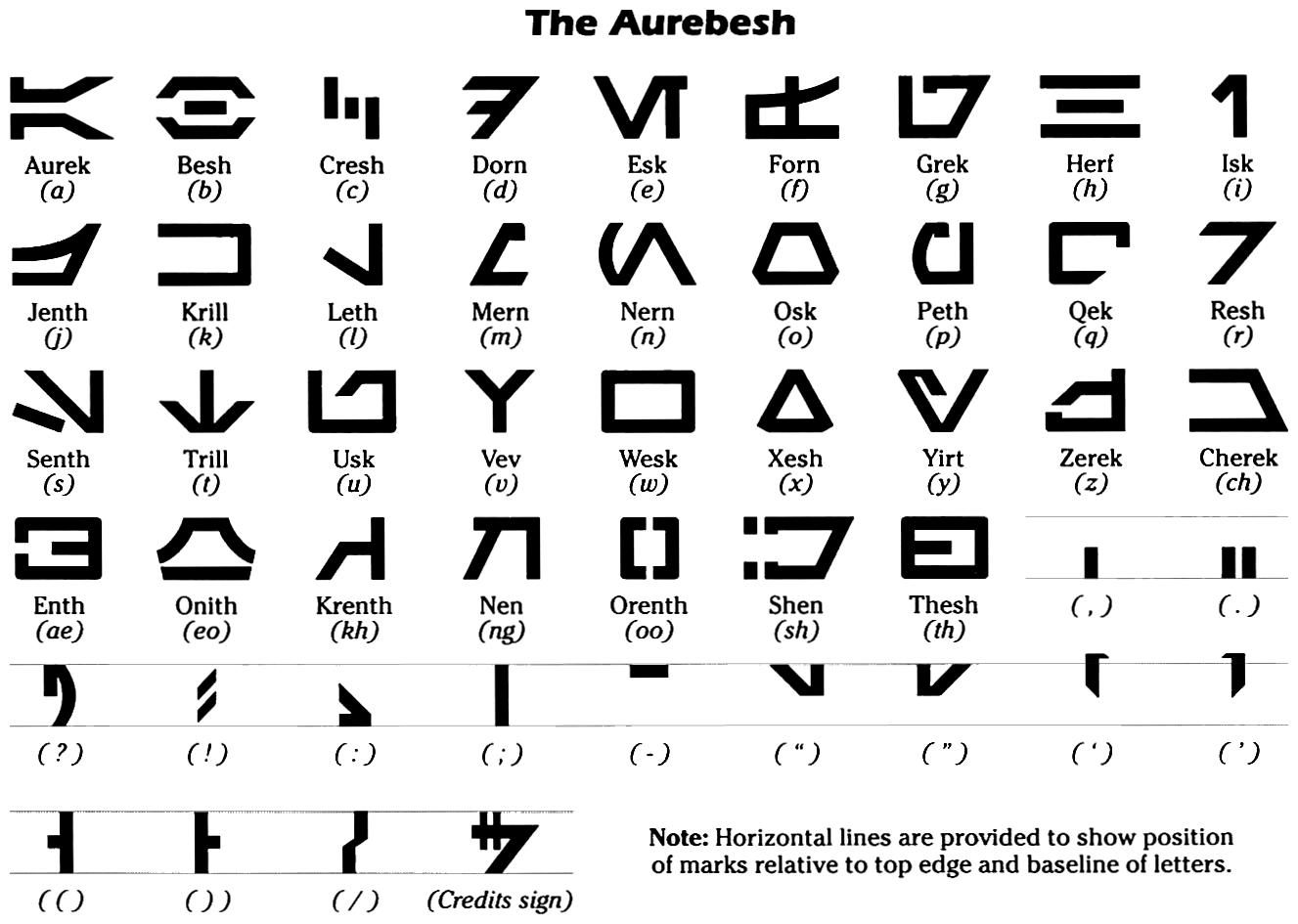
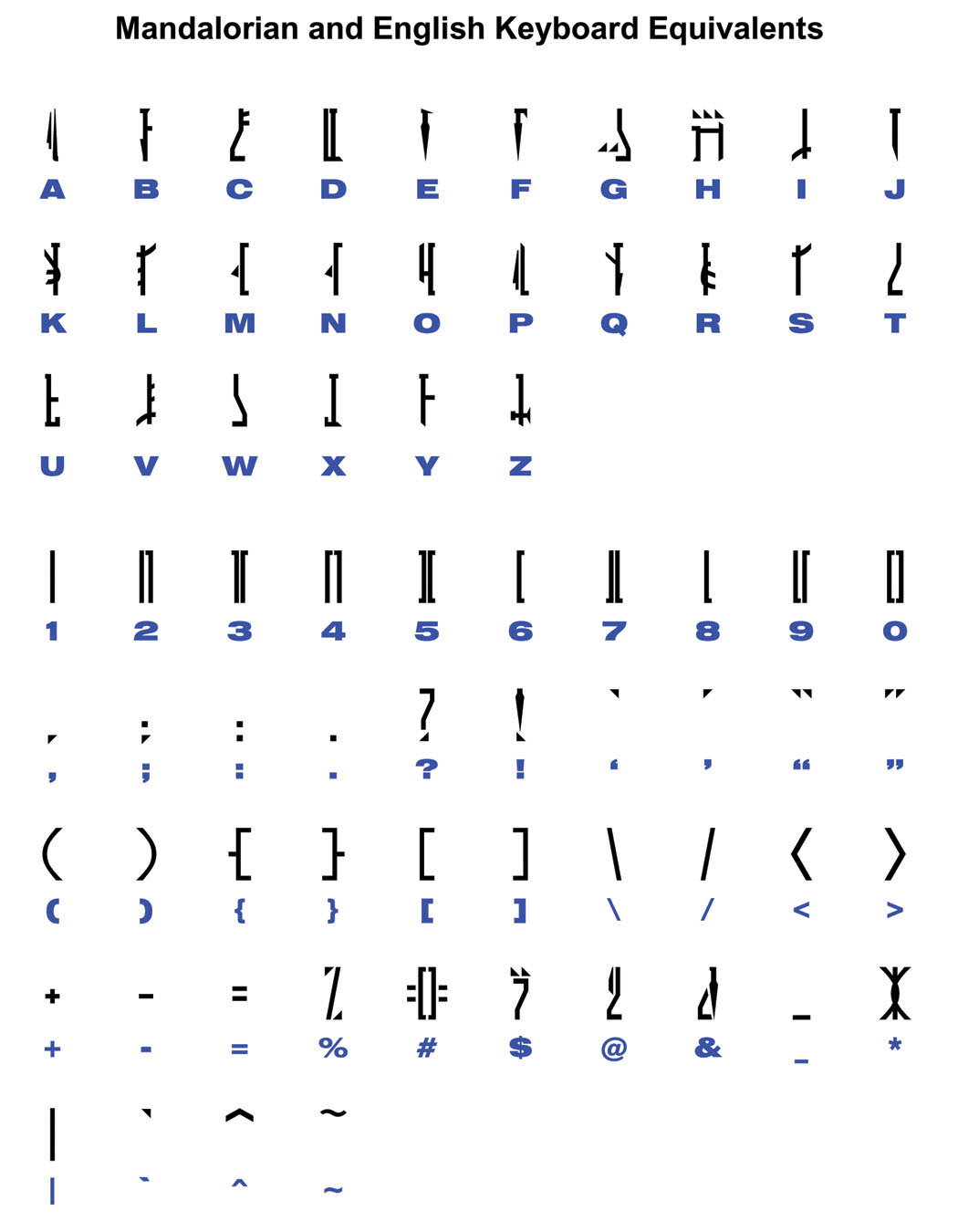
Star Wars.  My adult relationship with Star Wars is sort of weird.  After loving it to death as a child and teenager, I came to a sort of love-hate relationship in my twenties.  This post summed up my feelings about it for a long time.  I didn't like Star Wars anymore, and I felt mostly relief.  But that was never entirely true, and I think I've finally kind of figured out why I can't leave Star Wars alone.  In many ways, I value it the same way I value Disney (an ironic identity, now that Disney owns Star Wars): it teaches me to believe in magic.  I am currently teaching myself to read the aurebesh and Mandalorian alphabet by transliterating On Basilisk Station in Word and reading it in the different alphabets, one chapter at a time, on the subway to and from work.  It's hugely geeky, I know, to want to read fictional alphabets with the same facility with which I read the English alphabet (I'm getting pretty good at the aurebesh), and it's probably even geekier to read an Honor Harrington in a Star Wars script.  But it's cheap entertainment, and ... well, it's a touchstone.  I need to believe in magic.

KDF.  KDF takes up virtually my entire discretionary budget, and is actually rather more expensive than I would like.  I still love movies, and the ritual of eating out, and buying toys.  I would like to have some money to do those things, even if only once a month.  But in general, the expense is part of the point.  It's often said by swordspeople (as by many martial artists generally, I think) that the point of their discipline is ultimately control of the self.  Certainly that is what I primarily value KDF for: control, control, you must learn control.  Discipline in spending, working, exercising ... these are the things that KDF has become my touchstone for.

Monday, April 27, 2009

Let's Go Shopping

But all love was troubled and made cold, and Maleldil's voice became hard to hear so that wisdom grew little among them. - C.S. Lewis, in Perelandra

I heard a story once, in law school. I don't know if it's true or not. The story goes that a transactional lawyer much like myself was once at a presentation being given by another lawyer who did public interest work. After the presentation the transactional lawyer, much impressed, caught the presenter and expressed his sincere admiration for the cause he had just heard about, and the work that the presenter was doing. "Why don't you join us?" asked the presenter. "We could always use more attorneys on staff."

Feeling a little guilty, the transactional lawyer declined. "The work I'm doing here is important too," he said.

To his surprise, the presenter agreed. "Yes," he said. "The world needs people that do what you do. But if it ever feels less than heroic, give me a call."

For most of my life I have been - overall - quite content with where I was, and what I was doing. It was enough to keep my eyes on the present, because I was sure that what I was doing now was what God needed me to do, and that he would lead me in due time to what I needed to do in the future. I wasn't caught on the academic treadmill like some. I was fortunate in that I really did like school, but I never felt any pressure to take certain classes or to go to certain schools or even to perform well, except that I wanted to kick ass academically because I knew that I could. Gifts want to be used.

I was also fortunate in that most of my thinking spiritual life was conveniently broken up into bite-sized chunks. More or less the seasons of my spiritual life coincided with the major school changes - middle school, high school, undergrad. I just knew, without perhaps thinking it through very critically, that my life would change at those junctures, and roughly speaking they did. This being my conviction and my experience, it was difficult to feel too adrift. Whatever was going on now was what I needed to be doing now, and now was very probably going to end at or about the next graduation, which was never more than four years away.

I wrote home once that being at Stanford was like being on vacation all the time. From this point of retrospect, my entire life prior to graduation seems that way.

And then came law school, which was the next thing that I knew God needed me to do.
For the first time school was hard, intellectually and morally (not that there weren't intellectually hard things at Stanford, but I didn't feel called to chemistry, thank God, and my classics studies weren't hard - they merely required lots of effort). And not only were things hard, but for the first time, I wasn't sure I could do it. At all.

Something broke inside me during law school that still hasn't been put together. The confidence that I could do anything - maybe not easily, but that I could do it - was shattered. Not obliterated. But fractured. Unwhole. Something else was shattered at the same time: the sense that God was with me.

Please note that I said the sense. The great rhetra upon which Charismatics learn to rely grew hard to hear, and wisdom has perhaps grown little with me of late. And so I am left going to work many days, like today, feeling decidedly unheroic, wondering what it's all for, and not really convinced, deep down, that I can kick this job's ass if I really have to.

Mornings (and afternoons) like that are bleak, especially because I still feel like I'm where I need to be and doing what I need to do. My moral North Star feels like it's grown dimmer, but I'm still sure where it is.

So what's a guy to do?

A lot of things that Charismatics learn to rely on are like sex - they're great, and I think it's stupid to build a relationship without them, but it's equally stupid to build a relationship upon them. So it is with the voice of God. So it's hard to hear these days, is it? Well, what of it? What does that change?

It changes how brave I feel. It changes how safe I feel. But does it change what I know? What I trust?

Depends upon what my trust is founded. If my trust is founded upon the subjective religious experience of hearing the voice of God, then I am a) screwed and b) a great fool. But my trust is not founded upon that; it is founded upon Scripture, and buttressed by experience. And Scripture tells me that while God may speak to me, he won't necessarily - and it suggests that if I find him hard to hear, the problem is more likely on my end than his. Very well, there's plenty about my spiritual life that could be better. Very well, this sucks. Doesn't change what I know. What I trust.

So I don't always feel like I can do it, do I? Well, why did I feel that way before? If it was because I was a cocky smartass, well, losing that isn't a bad thing. If it was because I knew that what I had to do is something God has called me to do, or that my success - indeed, my very competence - rested on him more than me, well, that puts a different spin on the need to front up and get on with it.

So I don't feel heroic, do I? Well, who does? I don't actually think that heroism ever really feels heroic. Heroism is, as I know perfectly well, usually just getting on with the job in the face of what seem like very good reasons not to.

This isn't to say that there aren't things in me that truly are broken, and need to be fixed. And I do miss the old certainty that all was well because, if we had to, God and I could kick the ass of anything that came our way. But in the meantime, I need to focus on what I know.

Monday, March 31, 2008

I Got Married in the Morning

Well, the afternoon. And now ... I'm married. I'll talk about the honeymoon another time (Disneyland! I really need to come up with a blogname for ... er, that person I don't have a blogname for). For the moment, the wedding.

For the most part it went as I expected, which is to say that it rocked. There were a few surprises, though. I didn't expect to get to worship with my dad. But we did, which was really excellent, because nobody worships like my dad. I didn't expect the girls to have to fix my waistcoat's buttonholes with scissors and a hot glue gun. But that's okay. I got lots of compliments on it anyway, which made me happy for Thayet, and now it matches my tails even better. I certainly didn't expect everybody to forget about putting the communion elements out. But that's okay too. I value communion as something more than a mere symbol, but the body and blood of Christ are not grain and the fruit of the vine. We partook - we partake - of them anyway, because we are his.

And in the end, it was probably for the best. I would have been honored to have Vonsus perform our wedding, and I would have been honored to have the Cardinal do it too. But the actual solution worked out specially. To explain why I'll have to digress:

Not quite three years ago, The River (that's my church) had a message series on prayer, and one of the sermons challenged us to ask God for something really, really big - the sort of thing for which you hardly dare hope. They gave a little glass bead to everyone at the service, and put up a big glass hurricane jar at the front of the sanctuary, where it still stands. They challenged us to pray for our big thing until we felt God had answered, and when he did, to just put our little bead in that jar.

Those of you who remember that time will remember that Thayet and I were ... well, not going well. Pretty much everybody was of the opinion that we were bad for each other. And, just to keep the record straight, in a lot of ways we were bad for each other then (this is a useful lesson in interpreting the advice of friends, even when they speak with the voice of the Lord. Just because the prophet ties himself up doesn't mean you don't go to Jerusalem). So what did I pray for? I prayed for one day, someone to say that they saw God in our relationship.

And I prayed. And I prayed. And I kept that little glass bead in my special bronze box that my sister brought back from Rome. Maybe people saw it. Maybe they didn't. But the first person who said it was David Alvarez, who wouldn't have been there but for the communion mix-up, and he hadn't planned to say it. David's the kind of guy who knows how to respond to the promptings of the Holy Spirit even when he doesn't understand.

That's when I started crying.

I could give a blow-by-blow of the wedding and reception but I'm not sure I have anything to say about them other than squealing, so I think I'll hold off on that unless there's some kind of popular outcry. If you're reading this you were almost certainly there anyway. I will say, though, that the reception was an awesome party. Lots of people have said so, anyway, and I am of the same opinion. Everybody said you don't get to dance at your own reception. Well you do, so there. And ohhhhh, it was good. I didn't get to dance with everybody I wanted to, but if you dance, and you were there, you were invited at least in part to be part of the dance party. Because dancing gives form to the joy in my heart (more on that, hopefully, in the following post re: honeymoon). Because I understand the heart of David better when I dance. Your dancing helped me worship. Your dancing helped seal my marriage vows.

A co-worker asked me the other day if it felt different to be married. The correct answer, it seems, must surely be no. After all, if one has come this far, and if one has been sure, how much different can it be?

It feels different.

It's difficult to express why, or how. I have a sense of finally tipping over a threshold, and settling onto a foundation. I fit better into the world. As we sang at the marriage, here - here - I raise my ebenezer. This is where I belong.

But it's more than the feeling of finally arriving on station. I've felt that before. There is a sense of becoming that is different from other times in my life. Prior to now I have been able to look at myself and say, "I am this or that" or look back on a season of my life and say, "Ah yes, the Lord has been making me such and such." But I have never before felt these identity shifts in the way I do now, like I'd grown a ... not a new limb, that's too small. More like a new person.

Speaking Natalie that's now how I'd put it, but it describes how I feel. Let me attempt a more precise formulation. There is me, there is her, there is God, and there is a fourth entity in the room that is us, our family. The entity I refer to as "me" has expanded in a way I have no analogue for except for the Godhead; I am not just pledged to but am actually part of a real, suprapersonal entity. A living thing, not just a level of organization. It didn't exist before. Maybe it was growing - maybe in the instant before God joined us in the heavenlies it was substantially the same as the instant after. I imagine the same is true of babies being born - and that they feel the difference as strongly all the same.

Saturday, March 15, 2008

I'm Getting Married in the Morning ...

Anybody else remember that song? Anybody else feel like I should be singing that right now at the top of my lungs, with a group of guys around me laughing and swinging their beer mugs (or Mountain Dew cans)?

Okay, I know what you're actually thinking: it's 0200 the morning I'm going to get married, and I ought to be in bed. Well, yeah. But there's laundry to wash, and it ain't washing itself, and none of you are gonna wash it for me. Besides, by the time you all read this it'll be too late, so there.

At any rate, there's no singing, no guys, and certainly no Mountain Dew (I do want to go to bed tonight!). Just me, and the sound of my keyboard clicking away, and the hum of the washer and dryer. I have my headphones on, but I'm not listening to any music. Just me and God, alone in the dark and the quiet.

I'm getting married in the morning.

Let me stop here and say that I am really excited about getting married. I cannot wait. I am ready to rock - this is my wife we're talking about, my perfect companion. I want to get this party started; I want to do this; I want to be about it, because this, gentlemen, this is the moment you officially become ... well, you know the rest.

So if the tone of this post is solemn, don't think that I'm sitting around over here moping. I just needed some time to draw out the quieter thoughts in my heart right now. I hope the effect is poignant rather than sad.

I will get married wearing exactly what I wanted to be wearing. Most of it will not be new. I will be wearing my old trusty socks, and my old trusty shoes, in my old trusty tux pants and the tailcoat which has seen me through so many evenings. Most of it is neither fancy nor of the best quality - my lapel will still have the old familiar tear (which nobody will see, because nobody ever does). My trousers are not tailored. My socks will be comfortable, and I've either misplaced my shoe polish or it's been packed away already. The shirt will be new, and the waistcoat will be hand-sewn by my love. That's as it should be. The waistcoat should be new, and special. But the rest is and should be old and worn and familiar. Not shabby, mind. But not perfect. My trusty old tailcoat has its problems. But this is my tailcoat. There are many like it, but this one is mine.

Did I mention I'm getting married in the morning? Well, the afternoon?

Tomorrow there will be guys and laughing and noise and allusions, and I will fuss over my guys' clothing. And when I put on own clothes probably nobody will know that I am being thankful for the woman who will walk down the aisle to stand beside me. But I will be. And I will know.

The last momentous event in my life kind of overtook me before I was ready. I did better this time - I hope she did too - but it rather overtook me all the same. After all, I'm doing laundry right now instead of sleeping. The programs probably got done (if they're done) only just recently. There has been no time to reflect, to be quiet, to absorb what is coming before it comes. There probably never will be again. It's sad, in a way. That's how I used to live - absorbing and digesting the future in the present.

People sometimes like to joke with grooms that all they have to do is stand up there and say, "I do." I know those people mean well but I find such well-wishing offensive. That is not all I have to do. Weddings exist to solemnize our promises, because the truth is that promises carry more weight when they're solemnized. We dress in our finest, we invite our friends, we decorate, we choreograph ... why? To throw a party? For shame. We do it (or we should) to add weight and gravity to what we're doing. To make our promises more real. To sink them deeper into our bones. That's where they ought to live always, whatever the circumstances. But they don't.

Part of that solemnization, for me, is absorbing what's to come. Oh no, I most certainly do not just have to stand up there and say, "I do." There ought to be a good deal more to it than that.

Most of the ways I would have solemnized this event for myself did not get to happen. I didn't get to go down to the stone river to pray. I didn't get to sit in the cold at the feet of the Fallen Caryatid and mourn my mistakes and sink into God's grace. I played no Descent. I ate no dinner at my special table at Dave and Buster's. I did not get to worship while my father played the piano. There have been no long talks, no walks in the moonlight singing softly. I have not looked at the stars in the wide domed sky.

Instead there has been dull, paper-pushing work, and late nights staying up until 3:00 working on the wedding. Losing sleep. Being stressed. Not having enough time.

Which would you rather have? Now that they're both behind me, I choose the second.

It isn't idyllic, but it has one thing that the first option doesn't have: Thayet. We stayed up late together. We lost sleep together. We stressed together. We ran out of time together. And tonight, although we are in separate places, we are even doing laundry together.

This is the woman I first fell in love with, this warrior woman, this Lucy the Valiant. The one who loses sleep just so I won't have to stay up working alone. The one I can wade into problems with. The one who fights beside me - not before, not behind. Do you remember when I decided to propose to her, the song in a created language that I struggled to master that night? One of the lines goes Jorsoran kando a tome: we shall bear its weight together.

It isn't perfect. We'd both have liked to have been done by now - by this whole week, in fact. I wish I had done more - a lot more - in doing this together. But we did do it together, at the end of the day; we stuck with each other and acted like knights. Jorsoran kando a tome ib'tuur. I suppose to some people it looks like we've just been running around too distracted by planning to focus on the wedding. But we did a tome, and I can feel that sinking into my bones. I'll take weeks of losing sleep with my beloved over getting to perform all of my rituals alone any day. This is my wedding. There are many like it, but this one is ... ours.

Tomorrow I will arm in my tails one more time. I wouldn't want a new coat, I think. This one has carried me this far, and it deserves to carry me at least one step farther.

Monday, December 31, 2007

RE: The Word of God

I've recently had cause to reflect upon what exactly I think the Bible is. Here's a working definition: a collection of writings from antiquity that happen to be true, and whose truth God intends to control when in conflict with other purported truths. Parse:

That the Bible is a collection of writings from antiquity is, I think, noncontroversial. I don't think I know anybody who doubts that the entire thing was written in the window of 1500 BC - 200 AD (to give a century's or so margin for error on both ends). It's worth remembering, though, that these are really quite ordinary documents - or, at any rate, more ordinary than the name Holy Scripture tends to conjure. The documents are extraordinary in that they existed at all (in the case of the narrative histories, for example, which were pretty clearly written at least a hundred years before Greek historiography really took off) and in that they are extant and in their content, but the actual form of the documents is relatively mundane. Narrative histories, records of prophecy, lyric sheets, poetry, and semi-personal correspondence - none of those types of documents are especially weird, with the possible exception of records of prophecy, and even those aren't weird in the context of antiquity. "Holy Scripture" is not a form of document I am very familiar with, and I don't have the intellectual tools to deal with it. But I know more or less what to do with historical narrative, lyric sheets, and letters.

Next, I believe that the Bible "happens to be true." I don't mean to say that it is true by accident, of course; I think it's true because God spoke true things and so orchestrated the course of human events that those true things remain extant. By "happens" I mean to convey that I think the Bible is true because I think it is true, and not because it is Holy Scripture, or The Bible.* That is to say, I think the Bible is true because it is true, and not because it is the sort of thing that must be true. Granted it was, I think, spoken by an entity that only speaks truths - but that makes the Bible exactly as true as if God were to speak the Pythagorean Theorem, at least as far as I can work out.

And then we get to the question of "true." The common question here seems to be whether one believes that the Bible is "literally" true or not. I don't think that's a particularly sophisticated question, and I dislike the way it seems to have become a political codeword. One gets the distinct impression when listening to somebody ask whether one believes that the Bible is "literally" true that nobody in their right mind could possibly believe that anything is "literally" true. Here are examples of things that I believe in quite wholeheartedly but probably less than what seems to be meant by "literally:" my own existence as a contiguous individual, my family's love for me, the existence of George Washington, the course of the Battle of Gettysburg, the fact that I know how to dance, and the evidence of my senses that I am presently wearing a blue shirt.

I hope that will dispose of the "literally" label. To continue in the same vein, I would say this: I tend to believe the Bible more the more important the statement in question is to the author's purpose. For instance, I quite doubt that the Philistines had three thousand chariots when they faced Saul at Micmash (1 Sam. 13:4-6). I just don't see how the logistics of that would work, and it's wildly outside of military historical precedent. And because the author does not seem to be noting the size of the Philistine chariot arm as miraculous I am inclined to believe that somebody, at some time, made an error.

Contrast that with an episode where the author is plainly attempting to relate a purported miracle, such as the consumption by fire from heaven of a waterlogged bull upon waterlogged wood upon a waterlogged pile of rocks surrounded by a moat filled with water (1 Kings 18:30-38). That sort of thing strains credulity, to be sure. But in this case, the author is plainly aware that what he relates seems impossible, and is writing it down precisely because he is aware that it is an extraordinary event outside of normal human experience. Or at any rate that seems to me to be his perfectly obvious intent. It does me no good, in that case, to say that such an event is so outside of normal human experience that I will not believe it happened.

Now of course I might say that the author's obvious intent is to be allegorical, and many people do. In the face of reasoned and reasonable literary analysis to that effect, I'm perfectly willing to believe that a given passage of Scripture is allegorical. It is, after all, simply an ancient document. But it seems incredible to me to believe that the default for ancient writers was to be allegorical when they discussed miracles, as if the majority of the ancient world shared the modern skeptic's assumption that such things Simply Don't Happen, or have to have happened a hundred times before they can happen once.

And of course when I discuss "truth" in this context I mean something more than a recitation of historical facts. I think it is pretty plain that the Bible teaches that there is no entity equal to God, that the Holy Spirit is a person, that men and the natural world are not as they should be, or that neither men nor the natural world can be as they should be except through Jesus Christ, or that not being as they should be is pretty much the most terrible thing in existence. Those are factual assertions, but not of the historical kind, and they are the sort of assertions that I think the Bible is really much more concerned about than whether Elijah was "literally" taken into heaven by a chariot of fire or whether Mary was "literally" a "virgin."

Which brings us to that truth being controlling. I think Lewis had it right when he put it this way rather than some of the other, more common formulations. The Bible does not really make any factual assertions at all about chemistry, for instance (or at least, I don't think it does). Consequently I have no trouble at all believing what my chemistry professors tell me about the behavior of atoms and molecules (subject to the usual skepticism anybody should bring to academic assertions). On the other hand the Bible does quite clearly assert as fact that there is no entity equal to God. Consequently I have a good deal of trouble believing anybody, or any part of any religion, who tells me differently.

In addition, I think that the Bible is set above other assertions which may be "true" in the ordinary sense (this sense, combined with the previous sense of the Bible being controlling, comprise the greater part of what I mean when I say that the Bible is "holy"). For instance, the Bible does not explicitly teach me to be gentlemanly. It asserts as true fact that I ought to be kind, and good, and compassionate, and loving. But as for whether I should afford women more social rights than men, or treat them with separate but equal courtesy, or uphold my personal honor or that of my family name ... well, all of those are (I assert) good ideas which will profit me and those around me. But they aren't Biblical. They aren't the same level of true, if you will, as that I should be kind and good and compassionate.

* Precisely why I think the documents are true is outside the scope of this post.

Sunday, November 18, 2007

Veterans Day

This post comes quite late, but I didn't want Veterans Day to pass without some kind of reflection. I'm reading Republic Commando: True Colors (by the truly excellent Karen Traviss) and recently finished reading the Iliad all the way through (success at last!), both of which have touched me quite deeply, so it seemed like an appropriate time in my emotional life to deal with the subject of Veterans Day.

It's common on or around Veterans Day to hear people expressing thanks (to God or otherwise) for the men and women who have served to secure our liberties and our way of life. I recently read a number of DAR essays expressing such sentiments.

This kind of talk always makes me uncomfortable. Undoubtedly there have been a great many of American veterans who served and died with the result that our liberties and way of life were secured from direct attack. The veterans of the Revolutionary War come most immediately to mind. But even they ... I mean, how many of those men went to war for the purpose of securing the birth of the nascent nation? Certainly not the vast majority of the veterans of 1776. And what about the veterans of our other wars? Did the Spanish American War really threaten our liberties? Did even World War II (our way of life, perhaps. Our liberties? Who really thinks an Axis victory would have resulted in the conquest of America and not a peace treaty?)? Does the current war in Iraq really defend our liberties or our way of life?

I am thankful that for most of its history this nation has had the good sense to have a War Department rather than a Department of Defense. Not that I oppose the bureaucratic unification of the DoD, but the name ... I mean, really, come on. Whenever people talk about our wars as defensive in nature, I cringe. I suppose it's the classicist in me. In roughly two hundred years of history the Republic of Rome was at peace for twelve. All of those wars were, officially, to defend Roman liberties and the Roman way of life. Did you know that? And in the end? Rome had conquered, quite by accident, the whole of the Mediterranean. Oh, and the republican way of life was lost forever despite the efforts of some very talented well-meaning patriots.

I don't want that for America. I don't want us to go on making defensive war until our nation crashes down around our ears. I want us to call our wars what they are - defensive, aggressive, opportunistic, preemptive, vengeful, whatever. I doubt politicians will do so within my lifetime. But the American citizenry might.

And what about the soldiers? I'll tell you why I celebrate Veterans Day (in my quiet, internal, Natalian way). It's not because the millions of American veterans have secured my liberties (I won't even get into securing my way of life. Does it deserve to be secured?). Some of them have, and some of them haven't. Very few of those who have secured my liberties fought and died, when the chips were down, to secure the liberties of a stranger who would live decades or even centuries after they were dust and gone. Some of the veterans I would like to honor on Veterans Day didn't serve in any conflicts at all.

But they were all soldiers.

What is a soldier? In Knights of the Old Republic a soldier of the Old Republic, Carth Onasi, debates with a Mandalorian warrior the difference between a soldier and a warrior. Here's a definition of "warrior" that fits for the warriors of Mandalore and with the warriors of Homer:

A warrior fights for his good and the good of all his people.

Sarpedon was a warrior. Achilles was a warrior. And a soldier? Here's a definition of "soldier" that fits for the soldiers of the Grand Army of the Republic and for the United States of America:

A soldier fights for the good of his people and surrenders that good for himself.

Achilles was the greatest warrior of his age but not a soldier until the last year of his life. Rodger Young, now ... Rodger Young was a soldier.

Not all American soldiers have secured my liberties. All of them surrendered theirs when they signed up. An American soldier does not, like Achilles, reap the reward of his efforts. An American soldier might or might not do something that secures my liberty during his career, but one thing is sure: for the duration of that career he gives up most of the liberties that make America what she is. He gives up what he has for the chance to give to his people a spoil of war that he himself may never see.

Until, that is, he puts away his uniform, hangs up his weapon, and becomes a veteran.

I'm aware that it's more complicated than that. I'm aware that many citizens become soldiers with patriotism way down on the list of their motivations, and that some become soldiers with no patriotic motivations whatsoever. I'm aware, I think as much as a civilian can be, of why fighting men actually fight. But I also think that what I have written, even though it's only part of the story, is true. And that's why I celebrate Veterans Day.

Friday, July 20, 2007

What to Do

Before I get started, the previous post has been tweaked a bit. I'm much happier with it now.

On Tuesday I take the Bar, which is probably all the warning this blog is going to get. I was going to write a much more emotional stream-of-consciousness post on the subject, but I had the good fortune to talk it over with Thayet before I did anything so silly (not silly because acknowledging your feelings is silly, but because it's silly to post such things on a blog before talking them over with my closest supporter).

It's been an unpleasant experience. Well, it is an unpleasant experience, since it's not over. And I'm not at all sure that I'm going to make it.

"Do you mean you think everything will come right if we do untie him?" said Scrubb.

"I don't know about that," said Puddleglum. "You see, Aslan didn't tell Pole what would happen. He only told her what to do. That fellow will be the death of us once he's up, I shouldn't wonder. But that doesn't let us off following the Sign."


It wouldn't be so bad if I could convince myself that the Bar is a worthy opponent. But I just can't.

"I can't!"

"Aslan believed you could ... and so do I."


What I mean is, it's just so large. But that's all it is. It's like an army of conscripts led by a drooling idiot. It wouldn't be so bad, I suppose, to lose to professionals - or even to lose to amateurs led by a great general. But this ... it's just some great bloated thing. It's large and broad but intellectually shallow. Losing to the Bar (when I imagine it, as of course I do) feels less like being beaten and more like failing to conquer. It feels (to put it another way) like losing to myself.

"I thought you would be grand and terrible! I thought you would make us grow up, make us accept knighthood's duties and sacrifices. This is just mean - you're a nightmare device, bringing bad dreams to people who want to help others!"

And besides the sheer indignity of losing to such an inglorious foe, I feel robbed by it as well. I miss my friends. I miss the made-up glamor of arming in tails. I miss having a good church. I miss going out on dates. I miss cooking. I miss grocery shopping. I miss art. I want to dance again. I want to learn Irish on Monday nights. I want to play games and watch movies and be thrilled again with the beauty of it all. I want to tell stories again.

"Ye want. Ye want. 'Tis something different ye're learning here."

Instead I have furtive retreats to Azeroth so I can stumble back to my books and pretend that I'm training well, and snatches of the Iliad read at night, and movies stolen from study time. Not that World of WarCraft doesn't have art, and the Iliad is nothing but art, and Transformers thrilled me with the beauty of it all. But everything has happened under the shadow of this idiot foe, this Bar exam.

I find the sequentiality of my brain working against me here. It's just so big, and there's no way to knock it down. There is always more studying that one could do, and I chastise myself for being soft - for needing to drop into the familiar mastery of my druid, or to conjure the plain of the Troad, or slip into that strange trance that holds childlike wonder and film critic side by side in tension. For that matter, why can't I think about something else when there's an unfinished task still? Weakness, weakness, weakness all!

Another trudged with heavy thoughts
Until he disappeared from view,
To ruminate on what he'd done
And punishment, as was his due.


There is an insidious kind of elitism at work here. As I've remarked before, real combat isn't like the finely balanced game theoretical puzzles that developers love so much. It's messy. You fight what you face where you face it with what you've got in whatever shape it's in. And at the end of the day, it doesn't much matter whether you lost to a disorganized rabble or to a "worthy" opponent. The willingness to present an unfair fight is what sets apart a simulation from a sport - or real life from a game. The ability and desire to win an unfair fight (whether you hold the advantage or the disadvantage) is what separates the martial from the game theoretical.

"Well," answered Zim, "suppose all you have is a knife? Or maybe not even a knife? What do you do? Just say your prayers and die? Or wade in and make him buy it anyhow? Son, this is real - it's not a checker game you can concede if you find yourself too far behind."

"But that's just what I mean, sir. Suppose you aren't armed at all? Or just one of these toadstickers, say? And the man you're up against has all sorts of dangerous weapons? There's nothing you can do about it; he's got you licked on showdown."

Zim said almost gently, "You've got it all wrong, son. There's no such thing as a 'dangerous weapon.'"

"Huh? Sir?"

"There are no dangerous weapons; there are only dangerous men. We're trying to teach you to be dangerous."


My goddesses have ever had this martial spirit. Did Alanna the Lioness give up for no better reason than that the fight was unwinnable? Did Cimorene, or Keladry, or Honor Harrington? Did my sweet one refuse to win because what stood between him and victory was ignoble?

"Look, young Trebond - what did you think studying to be a knight was about?"

My life is full of duties fulfilled and unfulfilled. I have a duty to do my best. I have a duty to be prepared for anything. I have both done and not done that duty. I have a duty never to complain. I have a duty timely to complete every one of my tasks no matter how many there are or what they are. I have both done and not done these duties.

And, because I am a lawyer, I have to ask: what are the consequences of failure? There are consequences, of course. Large ones. But one thing does not change: keep going. Don't stop. This is both an artistic and a martial statement. As Xenophon said (and when has my Xenophon ever stopped because life was unfair?), "Now for it, brave sirs; bethink you that this race is for Hellas - now or never - to find your children, your wives; one small effort, and the rest of the march we shall pursue in peace, without ever a blow to strike; now for it!"

Keep going.

"You mean," said Lucy rather faintly, "that it would have turned out all right - somehow? But how? Please, Aslan! Am I not to know?"

"To know what
would have happened, child?" said Aslan. "No. Nobody is ever told that."

"Oh dear," said Lucy.

"But anyone can find out what
will happen," said Aslan. "If you go back to the others now, and wake them up; and tell them you have seen me again; and that you must all get up at once and follow me - what will happen? There is only one way of finding out."

Monday, June 11, 2007

Death

Here are some things I’ve learned regarding my beliefs about death in the last week or so. If we need an overarching theme, I suppose it’s that my beliefs about death (which are, I suppose, a subset of the Christian beliefs about death) are weird. That’s not to say paradoxical, or inconsistent, but I have to admit they are weird.

Here’s an example. It turns out that I view death as an almost wholly biological phenomenon. I am highly skeptical of claims that dying people are seeing those who have passed on, or heaven, or have any extraordinary insight that the rest of us don’t have. This is not to say that I think it’s impossible to see those who have passed on, or heaven, or to have literally superhuman insight. It’s just that I think those are relatively extraordinary events, and in any case I don’t see what at all they have to do with death. If anything, I suppose that the dying perceive less than the rest of us.

On the other hand, it’s very important to my conception of death (and, indeed, to my conception of humanity) to affirm that a person is bodily. In Phoenix Earth terms I would say that humans are animals; i.e., they are meant to have bodies and their bodies are an important part of who they are. I reject wholeheartedly the view that the body is merely a shell or a vessel, unconnected from the “real” or spiritual person. When a person dies, in my opinion, they are dying – death is not the mere release of a person’s true self from a wasted shell. When we say that a person dies, I think that they really are dying, and I prefer to call it that. Euphemisms (and I don’t mean the term perjoratively) such as passing away, going home, or even that most ancient of Christian euphemisms, falling asleep, make me uncomfortable.

Of course, it is equally important to my conception of death (and life) to affirm that people are spiritual. That is to say, I believe that we are animals, but also that we are animals with spirits, and those spirits are no less a part of us than our bodies. So while I believe that when a person dies it is they and not a container that is dying, I also believe that there is a part of the person who is not dying.

And what happens to that part after death? The truth is, in most of the ways a person observing a loved one dying might care about, I don’t know. My beliefs don’t include anything on the subject of whether the dead can or cannot hear us when we talk to them, or whether they care about what’s happening on Earth, or are aware of it, or just how it is they remain distinctly themselves separated from a vital part of themselves. My sacred texts are silent on those subjects, and I decline to speculate. My understanding of angels prevents me from imagining that the dead turn into angels (and I wouldn’t find the thought especially comforting even if I did, since as I understand angels they are a warlike and thoroughly inhuman race). But I don’t really know what a person does “turn into” when he or she dies.

For that matter, what do I mean when I say “death?” Christians frequently speak of the first human sin as allowing “death” into the world, and we look forward to a day when there will be no more dying. I look forward to a day when there will be no more dying. But what does that mean? Once upon a time, did organic life really never terminate? Is the existence of carnivores a result of the fallen state of the world (for that matter, is the entire animal scheme of feeding a result of the Fall)? Perhaps, although I admit I find it hard to believe that a lion’s feeding reflex (or a zebra’s) is evil simply because it results in the termination of the food’s biological existence. And were humans truly intended never to die of old age? Do our bodies wear out faster now than they were supposed to, or were they never supposed to wear out at all?

I don’t know the answers to those questions, but I suspect that when we say “death” in this context – death entered the world after the Fall, Jesus conquered death, there will come a day when there is no more dying – we mean something like destruction, and not the mere termination of biological life. So we can speak of the “second death,” when some human spirits will really be destroyed forever. And human death really is death, perhaps not because the animal part of the person is dying but because the person is being sundered.

It is conventional to assume that one holds one’s beliefs about death partially (if not chiefly) as a comfort. Here I am believing that death is merely biological – but also that people are inherently biological. I have no real clue as to what existence is like for a person who has died. I suppose that Christian people probably go to “heaven” (whatever that means, although it certainly sounds not-bad), but I’m not even positive of that (c.f. Ecc. 9:5). These are not especially comforting beliefs. I do have one belief about death which is comforting, and that is the advent of the Phoenix Earth.

It turns out that I really do believe in a day when the Earth (and perhaps, by implication, all of existence) is made new and all those people (or at least, all the ones who were Christian when they died – I’m agnostic about the rest, although I am firm in my belief that there is a bad outcome to this story as well) whose very humanity was sundered by death are given new bodies, when people can be spiritual animals again and in some cosmic not-very-well-understood sense, all is as it should be. I haven’t the slightest idea what those bodies will be like – I suppose they will resemble our current bodies as much as a seed resembles a sunflower. And I haven’t the slightest idea what that new Earth will be like, or whether that Earth will eventually be swallowed up by a dying star as this one is supposed to be, or how the laws of nature will have to change so that all is as it should be, except I imagine we will be surprised by the depth of the corruption worked when “death” entered the world. But it turns out it is enough for me to look forward to a day when the sundering is undone and will never be worked again.

As I said at the beginning, it seems to me that my view of death is pretty weird. But it turns out that it really is my view. And it turns out that it really is comforting after all.