Two years ago today I had my first KdF class. Two years have passed in my own timeline since I first began to practice in Prospect Park, in the mornings atop the knoll in the ring of trees.
A lot has happened since then. I've moved to Charlotte. I have students of my own. I own a sharp sword - the first weapon I have ever owned - and I own it on my terms. I've practiced with the langes messer and dagger, two weapons that I would never have thought I would be attracted to, and discovered that I really like one of them (the dagger) and really hate the other (the messer). I've started learning the use of the sidesword, a weapon I've wanted to learn for as long as I've wanted to learn longsword, which is the first time I've tried to learn a weapon without the benefit of in-person instruction.
I've attended two major tournaments and two minor ones. At one of the major ones I made it to the finals in the dagger tournament, I actually won a medal in a rapier tournament, and I made it to the eliminations in longsword.
Am I any good?
I don't really feel like it, to be honest. There are others from AHS who have been practicing for as long as I have, or very shortly longer, who are better than I am - better in technique, better in cutting, better in sparring. I suppose it is natural to compare myself to those of my peers whom I know to be the best. As for my students, I am not as far ahead of them as I would like.
Am I better?
Absolutely.
I have now executed cuts that I couldn't execute a year ago. The progress hasn't been entirely forward, but it has been forward in the aggregate. I understand the art better than I did a year ago. Whereas a year ago I could more or less explain pretty much all of the hauptstücke, I can now just explain all but a few of them, at least in a much deeper way than I could a year ago. And I understand the foundational concepts of the art better now too. I no longer think in terms of tempi, the Italian concept that forms the basis of so much modern fencing theory, and instead think in terms of vor and nach, the Liechtenauerian concept that serves the same purpose. I can exert pressure ... not well, perhaps, but much better than I could a year ago. And I can feel pressure better than I could, which is just as important.
The reasons I fence have changed somewhat. I started fencing as a thing for me - a corner of New York to make my own. I needed that, to keep me from succumbing to depression. I needed a tribe, and fencing gave me one. I needed a reason to exercise, and fencing gave me one.
I still fence for those reasons. The thing that keeps me eating well (well ... better than I otherwise would) and exercising is the need to do honor to my weapon. Here in Charlotte most of my tribe are students. And there are certainly times, even here with Thayet and Meshparjai, when I feel the weight crushing me down like one of Rodin's caryatids and I just need to feel Ruusaan's grip in my hands.
I also fence to teach. I'm still a lawyer, but I can teach through my fencing. It isn't really the same teaching peers as I think it would be teaching those younger, but it's still teaching. It gives me a chance to work on curriculum and lesson design, as well as my presentation skills and pacing. And this, as much as holding the sword in hand and hammering body and will to the demands of the art, helps to center me.
I am thirty-four now. The five years will be up when I am thirty-seven - too old, in all likelihood, to ever be a truly top-tier fencer in the competitive world. But I find that I remain determined to be a swordsman. It has morphed from an exploration of force into its own thing - I must fence because I must. I will be a swordsman. I am a swordsman - I'm just not a good one.
Three years to go.
Showing posts with label Thayet. Show all posts
Showing posts with label Thayet. Show all posts
Monday, June 08, 2015

Saturday, January 03, 2015
An Tion Jate?
"The very formula, 'Naus means ship' is wrong. Naus and ship both mean a thing, they do not mean one another. Behind naus, as behind navis or naca, we want to have a picture of a dark, slender mass with sail or oars, climbing the ridges, with no officious English word intruding.” - C.S. Lewis
An tion jate? This is a question I ask myself a lot lately. I in Mandalorian because it makes me think about them in a different way than if I ask in English. I ask it because it means, "Is everything okay?" And I am not okay. I am sick. The anxiety and depression, the "impaired executive function" - it's all back (I'm back on medication, but these things take a month or so to really kick in). Everything is not okay.
I ask it because, without additional context, it also means, "Was everything okay?" And I begin to wonder if perhaps it has not been okay for a long, long time. I am better prepared this time, more aware of when parts of my mind shut down and better able to re-route around the dark sectors or at least tread water until the lights come back on. One of the things I have learned that helps is to sing - to roar, the kind of singing that feels like a core workout, songs that are choked full of emotion, to thunder into the void. And I remember ... this is not the first time I have felt that way. I have always loved to roar (as my sophomore year dormmates can attest), but it has not always been out of desperation. But it was out of desperation in New York, when I started attending Hillsong NYC because I needed that space to roar in, a cathedral of light and smoke and sound and spirit. It was out of desperation in the worst times in California, when the smothering blanket of depression was so thick that I couldn't sing, even when I wanted to. It was out of desperation as far back as law school, when I first created a playlist of Disney songs that I could thunder because it was the only way I could feel something - anything at all.
And you know what? It wasn't out of desperation any further back than that, that I can recall.
So I ask it because it also means, "Is everything good?" And I wonder. Maybe this profession is not good for me. Certainly the sector of it in which I have worked almost my entire working life is not. I need to face up to the fact that I am sick, and this kind of job is not good for someone with my condition. I am not certainly it is good for anyone, to be honest, but perhaps I am being overly judgmental - or overly naive, which is sometimes just as good.
And I ask because when Meshparjai is sad, truly sad, I cradle her in my arms and stroke her hair and whisper, "An jate." And asking this question makes me remember that it will be okay. I think, "How long have I been sick like this?" and, armed with greater experience of my illness, I suspect that the answer is a good deal longer than you thought. But there was a time when I was not sick, and there have been times when I was at least asymptomatic. It can be okay again. I can be okay again.
I ask because as much as the answer is no - nayc, an nu jate - the answer is also a faithful, defiant elek. Yes.
No, everything is not good. My sickness is not good. But God is good, and God is above everything, and it will be okay.
A postscript digression: One of the things I have learned helps me keep it together when the lights go dim is fencing. This is, of course, why I have bothered to emblazon my gear with the phoenix earth; it's a way of reminding me that this is one of my anchors, not just a hobby. When I was making my sword pillows, Thayet jokingly reminded me not to forget to include embroidering a cheesy saying on them. So I did, and it is cheesy, but it's also quite serious. I embroidered them: Gotal'u an kebise evaar'la, from Revelations 21:5: "I make all things new." But thanks to Mandalorian conjugation, without specifying the subject, it also means: "He makes all things new." And he will.
Wednesday, December 24, 2014
Gotal'u An Kebise Evaar'la
Now it is Christmas.
This is the first Christmas in a long time that I have spent away from my immediate family. Certainly it is the first without Thayet or Meshparjai. I did not go to Dickens Fair. My house is empty and undecorated. There are no presents here. I may not be able to stay in Charlotte. There has been little about this Advent that has seemed Christmas-y.
But Christmas is not about family, nor love, nor togetherness, nor cheer. It is not about goodwill towards men. Those are all good things, and worthy trappings for Christmas. But what Christmas is - what the Black Pearl really is - is praise.
This is not a plea to keep the Christ in Christmas. Even in its most traditionally religious incarnation, Christmas is already an abstract memorial of events and ideas that the Church finds significant. If other people want to turn it into an abstract memorial of other events or ideas that they find significant, I shan't object; it doesn't diminish the sanctity of my own memorial. But for me, what Christmas memorializes is the invasion, the return of the king ... the promise that I make all things new.
And while I love spending time at the holidays with my aliit (moreso, truth be told, than with my family in the traditional sense), and I love spreading Christmas cheer at Dickens, and I love spreading a sense of magic with decorations and presents, the one thing that Christmas really needs for me is a memorial of that epic moment, when the trap was laid for the great enemy and the powers of heaven rolled forward upon the territory of the prince of the air with all the thunder of the angels of the one whose thunder and trumpet terrified the people at Sinai, spearheaded all by the cry of a newborn.
I need the sense of remembering with others who are remembering the same thing, and are similarly moved. It used to happen with Xenophon over Christmas carols at my parents' house. Then I moved away, and some years it never happened. Tonight it happened at St. Mark's Episcopal, filling that old church with carols and invoking the weight of generations past. And at home after midnight, in this empty house with the lights off, thundering songs of praise.
I may, as it happens, be trading in my accustomed low church tradition for something somewhat more liturgical. But I think that my cathedrals will always be made of thunder and smoke, light and shadow: full-throated worship roared to the heavens, a vocal salute. Tonight I build one of those in this empty house, and the home is full.
And now it is Christmas.
Saturday, April 26, 2014
Loathe Entirely
When I talk to people about New York, I try not to focus on the negative. It's unhealthy and unworthy to do so on a regular basis, and also quite possibly rude, since odds are good I'll be talking to a New Yorker. Instead I try to focus on the positive, such as the fact that I have a job (and a pretty decent job, taken on its own merits), AHS, or my church. This may give the impression that really, I don't think New York is that bad, or that I only don't like it because Thayet and Meshparjai are not here. This is untrue.
I hate this town. I hate it with an incandescent fury. I hate it with such passion that its very existence offends me. I hate its understocked little stores. I hate its endless, green-less stretches of concrete. I hate its weather. I hate its smoke-shrouded sidewalks. I hate its wretchedly cramped apartments, and the fact that even nice neighborhoods can't be counted on to have basic amenities like free laundry facilities, or level floors. But most of all, I hate the subway.
I am writing this instead of sparring right now because I just spent two and three quarters hours not getting to fencing, due to subway delays and reroutes caused by construction. I suppose I could have called a cab, but this infuriatingly self-absorbed town is expensive enough as it is. Eventually, I gave up and turned around, never having gotten more than a third of the way to my destination. You might think it's kind of ironic that I didn't make it to fencing when I could clearly stand to hit something right now, but fencing isn't really good for expressing anger, so I guess that's something.
I understand that the New York subway system is an attempt to make a public service out of what was originally a collection of for-profit proprietary networks. I understand that it runs 24/7. I understand that it is over one hundred years old and desperately needs renovation. I understand that it is still recovering from the effects of Hurricane Sandy. I understand that I hate public transit in general, because you can't sing on it and it runs on the opposite of lawyer hours. And I freely admit that, miserable as it is, the New York subway is far superior to BART. Nevertheless, the New York subway system has got to be the least reliable system of transportation I have ever experienced.
And it is the backbone of New York transportation. There is no comparable method of transportation available out here. I cannot simply go places in New York; I must subject myself to the vicissitudes of a public transportation system that is as reliable as it is pleasant. There is something deeply, personally offensive to me about a city that tries so very hard to prevent me from going wheresoever I please, but if it must, it could at least make its precious little miniature Niles run reliably.
So yes, there are good things to be found even in this swamp of human misery - even things that, individually, I will miss when I finally shake off the dust of this terrible cesspit. And I try to focus on the good things, because for now - for now - the alternative is a breach of duty, and that is unacceptable. But let there be no doubt that I hate, hate hate hate hate, this waterlogged trash-compacted smoke-impregnated railroad-dependent wretched excuse for a town.
I hate this town. I hate it with an incandescent fury. I hate it with such passion that its very existence offends me. I hate its understocked little stores. I hate its endless, green-less stretches of concrete. I hate its weather. I hate its smoke-shrouded sidewalks. I hate its wretchedly cramped apartments, and the fact that even nice neighborhoods can't be counted on to have basic amenities like free laundry facilities, or level floors. But most of all, I hate the subway.
I am writing this instead of sparring right now because I just spent two and three quarters hours not getting to fencing, due to subway delays and reroutes caused by construction. I suppose I could have called a cab, but this infuriatingly self-absorbed town is expensive enough as it is. Eventually, I gave up and turned around, never having gotten more than a third of the way to my destination. You might think it's kind of ironic that I didn't make it to fencing when I could clearly stand to hit something right now, but fencing isn't really good for expressing anger, so I guess that's something.
I understand that the New York subway system is an attempt to make a public service out of what was originally a collection of for-profit proprietary networks. I understand that it runs 24/7. I understand that it is over one hundred years old and desperately needs renovation. I understand that it is still recovering from the effects of Hurricane Sandy. I understand that I hate public transit in general, because you can't sing on it and it runs on the opposite of lawyer hours. And I freely admit that, miserable as it is, the New York subway is far superior to BART. Nevertheless, the New York subway system has got to be the least reliable system of transportation I have ever experienced.
And it is the backbone of New York transportation. There is no comparable method of transportation available out here. I cannot simply go places in New York; I must subject myself to the vicissitudes of a public transportation system that is as reliable as it is pleasant. There is something deeply, personally offensive to me about a city that tries so very hard to prevent me from going wheresoever I please, but if it must, it could at least make its precious little miniature Niles run reliably.
So yes, there are good things to be found even in this swamp of human misery - even things that, individually, I will miss when I finally shake off the dust of this terrible cesspit. And I try to focus on the good things, because for now - for now - the alternative is a breach of duty, and that is unacceptable. But let there be no doubt that I hate, hate hate hate hate, this waterlogged trash-compacted smoke-impregnated railroad-dependent wretched excuse for a town.
Thursday, October 24, 2013
Remembering Scott Bauer
Death has been much on my mind lately, and every time that happens I think of Pastor Scott. There have been other deaths in my life (not many, thankfully), and some of them have resulted in absences that I regret very much. But a fresh death, or the prospect of a fresh death, always brings me back to Scott in a way that those other deaths do not. I think it is because none of the others were so shocking to me, have felt so ... unfair.
I never wrote much about Scott on this blog, or about his death (I checked, and I can only find this post, this one, and this one. That's fine. As a record of my life, this blog quite intentionally has some very large holes in it. But today I think I need to fill that hole in a bit.
He died ten years ago today. He would have been 59. When I got the news, all I could think of was Whitman's "Oh Captain! My Captain!" I remember Chariessa asking me in the dining hall if I was okay. I was not. I had plans for Scott! He was my pastor - the first person I ever felt was my pastor, who really cared about me. He was supposed to meet my wife (he died two years before I met her). He was supposed to watch me grow up. Oh, how I valued his approval!
I remember him as a man full of prejudices - against videogames, against Catholicism, against Latino people. When I had been going to Chaminade for a while, we visited his house once. He stopped me in the foyer to ask me, in front of my parents, to do something Catholic. He was teasing, but only sort of. He was worried - genuinely, compassionately worried - about me becoming Catholicized. I wanted to die. I'm not sure I would have felt more uncomfortable if he'd called them Papists. I wasn't really around when his son started dating a Mexican girl, but I hear it was ... uncomfortable.
But I also remember him as a man who overcame his prejudices. He learned Spanish - painfully, but doggedly - to better connect with the woman who would become his daughter-in-law. He built one of the largest Spanish-speaking congregations in Los Angeles. And in 2003, when I was wrestling with the challenges posed by Reformed theology, I wrote to Scott. I wish I still had the e-mail he wrote back to me. It was the last thing I ever heard from him. This was one of the men who taught me to be academic about my religion, and I can't do this final letter justice without the actual text. But the gist of it was that he didn't hold with Reformed doctrine himself ... but if Scripture truly foreclosed either possibility, we wouldn't still be discussing it 400 years later. I don't know if I can express how profound an impact it made on me to hear him say that. Hopefully you can see it in me.
I remember the way he lead worship. I remember the way he was able to make church satisfy the heart and the mind without actually being about either of those things. I remember him being just square enough to be embarrassing (and that's coming from me, so ... you know). I remember his focused intensity. I remember the way everything was about Jesus to him, and how he could do that without being creepy. A little square, maybe. But he had the sort of faith you sometimes read about in books, the kind that you cannot engage with except by taking it seriously.
I remember the way he looked at me one Sunday evening at our youth group and I realized that the man actually cared about me, personally. To my knowledge it was the first time a pastor had ever cared about me except in a general way. At his memorial services one of his sons said that Scott was a great man because he cared about people. This is true. He cared. He cared like Honor Harrington. He cared so much that it transcended adverbs. Scott simply cared.
I think that is what I admired most about him. But what I remember most about him is the way he changed. As I said, as I child I remember him as a man full of prejudices. By the time he died, how he had changed in those regards! What impurities in that irrefutable care of his had he excised! But to say that he had excised them would be untrue. Scott is the reason I believe that people can change. He is also the reason I believe that people do not change people. God changes people. I have seen it. I never told him how absolutely clear it was to me that those prejudices were worked out of him not through the proximity of other opinions but through his continual, fumbling, earnest, consistent pursuit of communion with Jesus.
When I was a younger man, I wanted Scott to look at my choice of bride and tell me I'd done well. I wanted him to be the one who married me, because I wanted him to know that I wouldn't have been the sort of person a woman would want to marry without his influence. These desires are a little embarrassing to remember - the sort of thing a young man is wont to imagine before he has quite realized that the young lady in his imagination is going to be a person, too. I don't know if Thayet would have liked Scott. Maybe not. I think he was the sort of person whose faith and general goodness sort of demanded respect, but certainly not to everybody's tastes.
One thing about that is not embarrassing to remember. I do think that much of my problems with Thayet can essentially be attributed to a certain ... smallness of heart that my lady knight found rightly repellant. My prejudices are not the same as Scott's were, but I certainly had a lot of them, and Scott's example proved to me that authentic engagement with Jesus enlarges the heart. You can phrase this in a lot of ways. Some people would tell me that a person can't change unless they want to. Others would point out the influence of other people in my life in that time, or point to the seeds they had sown years before. Those things are all true. But what I would say is that none of it would have mattered without the work of the Holy Spirit. And I would say that I wouldn't have been open to that if not for the example I had seen in Scott Bauer.
I wish he had known that.
I never wrote much about Scott on this blog, or about his death (I checked, and I can only find this post, this one, and this one. That's fine. As a record of my life, this blog quite intentionally has some very large holes in it. But today I think I need to fill that hole in a bit.
He died ten years ago today. He would have been 59. When I got the news, all I could think of was Whitman's "Oh Captain! My Captain!" I remember Chariessa asking me in the dining hall if I was okay. I was not. I had plans for Scott! He was my pastor - the first person I ever felt was my pastor, who really cared about me. He was supposed to meet my wife (he died two years before I met her). He was supposed to watch me grow up. Oh, how I valued his approval!
I remember him as a man full of prejudices - against videogames, against Catholicism, against Latino people. When I had been going to Chaminade for a while, we visited his house once. He stopped me in the foyer to ask me, in front of my parents, to do something Catholic. He was teasing, but only sort of. He was worried - genuinely, compassionately worried - about me becoming Catholicized. I wanted to die. I'm not sure I would have felt more uncomfortable if he'd called them Papists. I wasn't really around when his son started dating a Mexican girl, but I hear it was ... uncomfortable.
But I also remember him as a man who overcame his prejudices. He learned Spanish - painfully, but doggedly - to better connect with the woman who would become his daughter-in-law. He built one of the largest Spanish-speaking congregations in Los Angeles. And in 2003, when I was wrestling with the challenges posed by Reformed theology, I wrote to Scott. I wish I still had the e-mail he wrote back to me. It was the last thing I ever heard from him. This was one of the men who taught me to be academic about my religion, and I can't do this final letter justice without the actual text. But the gist of it was that he didn't hold with Reformed doctrine himself ... but if Scripture truly foreclosed either possibility, we wouldn't still be discussing it 400 years later. I don't know if I can express how profound an impact it made on me to hear him say that. Hopefully you can see it in me.
I remember the way he lead worship. I remember the way he was able to make church satisfy the heart and the mind without actually being about either of those things. I remember him being just square enough to be embarrassing (and that's coming from me, so ... you know). I remember his focused intensity. I remember the way everything was about Jesus to him, and how he could do that without being creepy. A little square, maybe. But he had the sort of faith you sometimes read about in books, the kind that you cannot engage with except by taking it seriously.
I remember the way he looked at me one Sunday evening at our youth group and I realized that the man actually cared about me, personally. To my knowledge it was the first time a pastor had ever cared about me except in a general way. At his memorial services one of his sons said that Scott was a great man because he cared about people. This is true. He cared. He cared like Honor Harrington. He cared so much that it transcended adverbs. Scott simply cared.
I think that is what I admired most about him. But what I remember most about him is the way he changed. As I said, as I child I remember him as a man full of prejudices. By the time he died, how he had changed in those regards! What impurities in that irrefutable care of his had he excised! But to say that he had excised them would be untrue. Scott is the reason I believe that people can change. He is also the reason I believe that people do not change people. God changes people. I have seen it. I never told him how absolutely clear it was to me that those prejudices were worked out of him not through the proximity of other opinions but through his continual, fumbling, earnest, consistent pursuit of communion with Jesus.
When I was a younger man, I wanted Scott to look at my choice of bride and tell me I'd done well. I wanted him to be the one who married me, because I wanted him to know that I wouldn't have been the sort of person a woman would want to marry without his influence. These desires are a little embarrassing to remember - the sort of thing a young man is wont to imagine before he has quite realized that the young lady in his imagination is going to be a person, too. I don't know if Thayet would have liked Scott. Maybe not. I think he was the sort of person whose faith and general goodness sort of demanded respect, but certainly not to everybody's tastes.
One thing about that is not embarrassing to remember. I do think that much of my problems with Thayet can essentially be attributed to a certain ... smallness of heart that my lady knight found rightly repellant. My prejudices are not the same as Scott's were, but I certainly had a lot of them, and Scott's example proved to me that authentic engagement with Jesus enlarges the heart. You can phrase this in a lot of ways. Some people would tell me that a person can't change unless they want to. Others would point out the influence of other people in my life in that time, or point to the seeds they had sown years before. Those things are all true. But what I would say is that none of it would have mattered without the work of the Holy Spirit. And I would say that I wouldn't have been open to that if not for the example I had seen in Scott Bauer.
I wish he had known that.
Friday, August 23, 2013
Bajur bal Beskar'gam
People sometimes ask how it is being separated from Thayet and Meshparjai. Not my favorite thing, I say. Not the worst thing, I say. I say that the necessity sort of crowds out other emotions. All these things are true. It is like going to work on the subway every day. It is like going back to the knoll every morning and the studio twice a week to have a sword in my hand. I don't tell them that it is a prison. I don't tell them what it is also like.
I am working out of San Francisco this week. This is not a vacation; I'm still going in to the office. I am working east coast time, of course. This makes my daily routine rise at 0400 for drill, be in the office at 0600, go to sleep at 2000.
I had a dream last night. I was a sex slave in a townhouse run by three men. My chief captor looks like Tom Cruise in Tropic Thunder and is about as pleasant. There are a lot of us held there, maybe two dozen. I am one of the newer ones, new enough that despair has not yet overtaken the coldly furious need to split my captors' skulls. I have been there long enough for it to feel normal, though. We are let out of the house for errands and always trudge back. I think to myself one day as a group of us - mostly women - trudge to the downstairs library (apparently the townhouse has a library) - that people will wonder why we don't just walk out the door one day and never return. I observe with clinical detachment that the fact we don't means this has become our new normal. And it is not so bad, I tell myself. There is a couple here (in my dream they are played by friends) who were raised as slaves by another couple (played by the parents of a guy I havent seen since high school).
In the library there is a book that has a few pages hollowed out for a plastic milk cap and a sticky note on which is written the number for the local police station. This is our escape route. Everybody knows about it. Nobody takes it. "Do you know how many calls like this they get each day?" asks one of the veteran women. "Like 700. And the penalty for trying is severe." She says this with a glance upstairs. I think about it for a long time. The odds are very against me. But I want to believe the police will come. I have been raised to believe they will come.
In the end, I put the book back and trudge upstairs. It isn't so bad here, I tell myself. It is harrowing.
I wake up to Meshparjai screaming for me. "Dad! Dad!"
It is late. I stayed up late to watch Sesame Street with her (Elmo's Elfabet Challenge), then skipped morning drill to hold a sleeping Thayet for half an hour, and fell asleep with my arms around her. I should have been on the train half an hour ago.
I hurry over to Meshparjai's room. Last night we talked about how I would already be at work when she woke up. She has been brave to stay in her bed like I told her to instead of running into our room. "Yes, ad'ika? Daddy is late for work. I need to take a shower and get ready to go."
She thinks about this. Her bottom lip quivers. "I'll come with you, " she declares. This will slow me down. I explain that Daddy needs to get ready to go very quickly.
She enunciates her response carefully. She is using a formulation I have never heard her use before, and wants to be certain I understand.
"I just ... need to."
We head down the hall, and for a moment all other emotions are crowded out; she is filled with relief and happiness as only a fairy or toddler can be filled. She chants, "I'm following you, Dad!"
The relief is ephemeral, as all such fillings must be. In the bathroom she finds sunglasses and puts them on against the sudden brightness. I throw myself into and out of the shower and find her curled up on the bathmat. She struggles to her feet, determined not to miss anything I do. I get dressed while Thayet slumbers, explaining to her what I am doing. The concept of work is new to her, and I want to reinforce it. "These are the clothes Daddy is going to wear to work." I debate saying I have to dress up for work.
"And that shirt?" she asks as I button my shirt.
"Yup," I say. "This is the shirt I will wear to work."
"You look cool, Dad," she says with a big smile.
In the kitchen I explain that Daddy has to make breakfast and lunch because I will still be at work for lunch. "But where will I be for dinner?" She thinks but cannot remember or deduce. "Home. Home for dinner."
She has seen sandwiches before but is fascinated as I make mine. "You put butter on the bread?" she asks.
Yup, the peanut butter goes on the bread. And the jam goes on the other side. Toddler mind blown.
Yup, the peanut butter goes on the bread. And the jam goes on the other side. Toddler mind blown.
We go back to the bathroom to collect my electronics. I explain that, now that Daddy has his food packed, I have to pack my backpack. She frowns at this and looks like she is fighting back tears. She associates backpacks with trips, and she knows I am on a long trip somewhere far away from her. I am not going on a trip. I promised I would tell her before I go back on my trip so it would not be a surprise. I am going to work. I place a veritable snake's nest of power cords into my backpack. "See? Daddy is going to take his backpack to work." Oh. That's beginning to be okay.
It's time to go. I pull her onto my lap on the couch. She is holding it together so far, and clearly tired, so I ask if she would like to go back to her own room to sleep. "Yes," she says with a little wail, but it costs her something. Her room is where she goes to be abandoned, a magical prison chamber from which she emerges to find parents missing. She knows it is what I want to hear, though. Her face begins to crumple.
I can't take it. I've been trying to be quiet all morning because Thayet has been having trouble sleeping, joking in whispers with Meshparjai about not waking Mommy up, but for an instant all that flies out of my head. I am not thinking about how a crying girl will probably wake my wife up just as I have to leave. I only that my little girl is sad. Ne'briikase.
"Or," I say, "you can sleep with Mommy, but you have to let her sleep." (This concession has helped me recover my wits somewhat.)
She jumps at that. "Okay," she sniffles. I lead her back to the bedroom and help her into bed. She tucks herself in, and I pull the covers up to her chin. Thayet stirs. "Remember," I whisper, "you have to let Mommy sleep."
"Okay," she says. I can hear the dejectedness creeping into her voice.
"And where is Daddy going?"
She gets it now. "To work!" She has trouble forming the unfamiliar word, but she says it with a smile.
"And after work, where will I be?"
She thinks about that one. She doesn't know.
"Home."
Sunday, July 21, 2013
Touchstones
People ask me with some regularity how things are going in New York. This is a difficult question to answer since the vast majority of things I do here are work. There's only so much I can talk about work period, and I know a lot more people who want to know "how I'm doing" than I do who want to hear about the nuts and bolts of a lawyer's life, anyway.
In a lot of ways I don't really feel like I'm in New York. I don't really have the time to explore the free places (I have not gotten to explore any more of Prospect Park, although it remains on my to-do list), and I don't have anywhere near enough money to explore the local restaurants (even the cheap ones), museums, theaters, or any of those things. That is to say, I could have enough money, but that would mean cutting down on saving, which is the whole reason I'm here.
Nevertheless, the emotional reality that I am Away From Home remains, lurking on the periphery of my soul. This makes it extra necessary to pay attention to my touchstones. These are things I have had as long as I can remember, although the actual touchstones themselves have changed from season to season in my life - the things that help me remember that I am still me. They aren't the things that make me me, just reminders. These are things that I expect everybody has, but I am by nature very sensitive to symbols, so I think about them a lot.
Here are some of my touchstones in New York:
My signature seal. This is something Thayet had made for me a long time ago. It's a pewter seal with my initials carved into it in a design she did herself. Seals are like flowers - despite the outward appearance of their function, their real function (at least, in Natalie) is to honor the recipient. My signature seal reminds me to honor others.
My Phoenix Earth seal. Every week, I send a letter to Thayet signed with my signature seal, and seal the envelope with my Phoenix Earth seal. This has various ritualistic layers of significance - the colors of the waxes, the act of letter-writing itself, the use of seals, and so forth, most of which are an idiosyncratic Natalian mix of meanings culled from various sources. One of the layers that actually has nothing to do with Thayet at all, though, is the opportunity to handle the Phoenix Earth symbol itself. The Phoenix Earth symbol was designed by my sister for the roleplaying game of the same name, but it actually holds very little significance for me as a symbol for all those bonds forged around the table and stories told (though those bonds and stories are, in their own right, very dear to me). The Phoenix Earth itself, rather, is my personal expression that I still believe in the Second Coming of Christ, that the king will return, that God is in his heaven and still in charge of the universe, that things will get better, that he is here.
The mythosaur. Another symbolic touchstone these days is the mythosaur. This one really crystallized when my cousin bought me a set of Star Wars pins from Disneyland, one of which is a red mythosaur skull on a yellow field. As the prototypical symbol of Mandalorian culture, the mythosaur emblem stands for the application of will to the concept of family: of choosing to make a person your spouse, child, or parent (that is, loving them as those things), and doing what has to be done for them. I wore this pin to every job interview when I was looking for work, pinned to my tie under my left collar, and I still sometimes wear it to work when I feel like wearing a tie. There are a set of mythosaur cufflinks on eBay that I'd like to buy one day.
Star Wars. My adult relationship with Star Wars is sort of weird. After loving it to death as a child and teenager, I came to a sort of love-hate relationship in my twenties. This post summed up my feelings about it for a long time. I didn't like Star Wars anymore, and I felt mostly relief. But that was never entirely true, and I think I've finally kind of figured out why I can't leave Star Wars alone. In many ways, I value it the same way I value Disney (an ironic identity, now that Disney owns Star Wars): it teaches me to believe in magic. I am currently teaching myself to read the aurebesh and Mandalorian alphabet by transliterating On Basilisk Station in Word and reading it in the different alphabets, one chapter at a time, on the subway to and from work. It's hugely geeky, I know, to want to read fictional alphabets with the same facility with which I read the English alphabet (I'm getting pretty good at the aurebesh), and it's probably even geekier to read an Honor Harrington in a Star Wars script. But it's cheap entertainment, and ... well, it's a touchstone. I need to believe in magic.
KDF. KDF takes up virtually my entire discretionary budget, and is actually rather more expensive than I would like. I still love movies, and the ritual of eating out, and buying toys. I would like to have some money to do those things, even if only once a month. But in general, the expense is part of the point. It's often said by swordspeople (as by many martial artists generally, I think) that the point of their discipline is ultimately control of the self. Certainly that is what I primarily value KDF for: control, control, you must learn control. Discipline in spending, working, exercising ... these are the things that KDF has become my touchstone for.
In a lot of ways I don't really feel like I'm in New York. I don't really have the time to explore the free places (I have not gotten to explore any more of Prospect Park, although it remains on my to-do list), and I don't have anywhere near enough money to explore the local restaurants (even the cheap ones), museums, theaters, or any of those things. That is to say, I could have enough money, but that would mean cutting down on saving, which is the whole reason I'm here.
Nevertheless, the emotional reality that I am Away From Home remains, lurking on the periphery of my soul. This makes it extra necessary to pay attention to my touchstones. These are things I have had as long as I can remember, although the actual touchstones themselves have changed from season to season in my life - the things that help me remember that I am still me. They aren't the things that make me me, just reminders. These are things that I expect everybody has, but I am by nature very sensitive to symbols, so I think about them a lot.
Here are some of my touchstones in New York:
My signature seal. This is something Thayet had made for me a long time ago. It's a pewter seal with my initials carved into it in a design she did herself. Seals are like flowers - despite the outward appearance of their function, their real function (at least, in Natalie) is to honor the recipient. My signature seal reminds me to honor others.
My Phoenix Earth seal. Every week, I send a letter to Thayet signed with my signature seal, and seal the envelope with my Phoenix Earth seal. This has various ritualistic layers of significance - the colors of the waxes, the act of letter-writing itself, the use of seals, and so forth, most of which are an idiosyncratic Natalian mix of meanings culled from various sources. One of the layers that actually has nothing to do with Thayet at all, though, is the opportunity to handle the Phoenix Earth symbol itself. The Phoenix Earth symbol was designed by my sister for the roleplaying game of the same name, but it actually holds very little significance for me as a symbol for all those bonds forged around the table and stories told (though those bonds and stories are, in their own right, very dear to me). The Phoenix Earth itself, rather, is my personal expression that I still believe in the Second Coming of Christ, that the king will return, that God is in his heaven and still in charge of the universe, that things will get better, that he is here.
The mythosaur. Another symbolic touchstone these days is the mythosaur. This one really crystallized when my cousin bought me a set of Star Wars pins from Disneyland, one of which is a red mythosaur skull on a yellow field. As the prototypical symbol of Mandalorian culture, the mythosaur emblem stands for the application of will to the concept of family: of choosing to make a person your spouse, child, or parent (that is, loving them as those things), and doing what has to be done for them. I wore this pin to every job interview when I was looking for work, pinned to my tie under my left collar, and I still sometimes wear it to work when I feel like wearing a tie. There are a set of mythosaur cufflinks on eBay that I'd like to buy one day.

Star Wars. My adult relationship with Star Wars is sort of weird. After loving it to death as a child and teenager, I came to a sort of love-hate relationship in my twenties. This post summed up my feelings about it for a long time. I didn't like Star Wars anymore, and I felt mostly relief. But that was never entirely true, and I think I've finally kind of figured out why I can't leave Star Wars alone. In many ways, I value it the same way I value Disney (an ironic identity, now that Disney owns Star Wars): it teaches me to believe in magic. I am currently teaching myself to read the aurebesh and Mandalorian alphabet by transliterating On Basilisk Station in Word and reading it in the different alphabets, one chapter at a time, on the subway to and from work. It's hugely geeky, I know, to want to read fictional alphabets with the same facility with which I read the English alphabet (I'm getting pretty good at the aurebesh), and it's probably even geekier to read an Honor Harrington in a Star Wars script. But it's cheap entertainment, and ... well, it's a touchstone. I need to believe in magic.
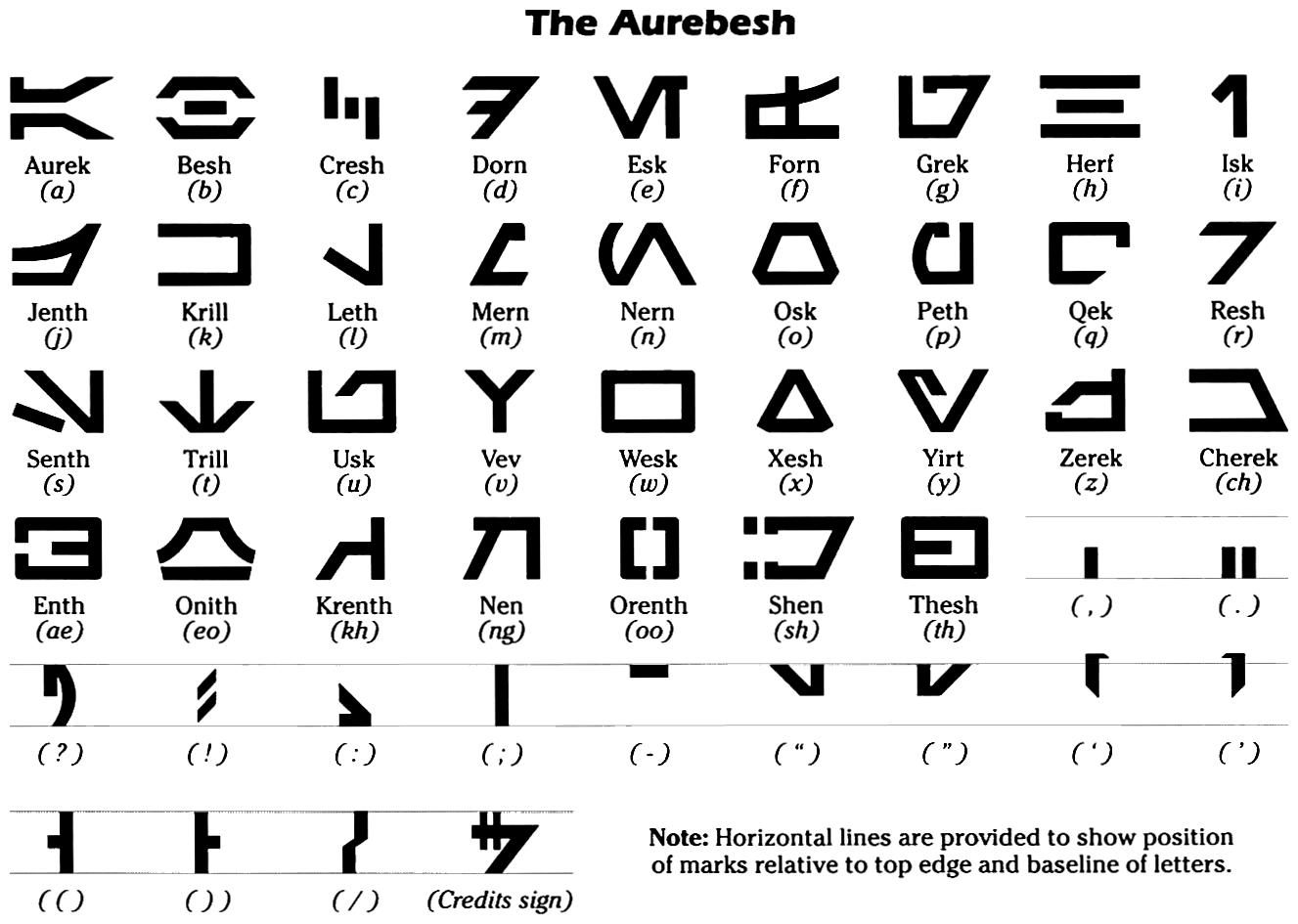
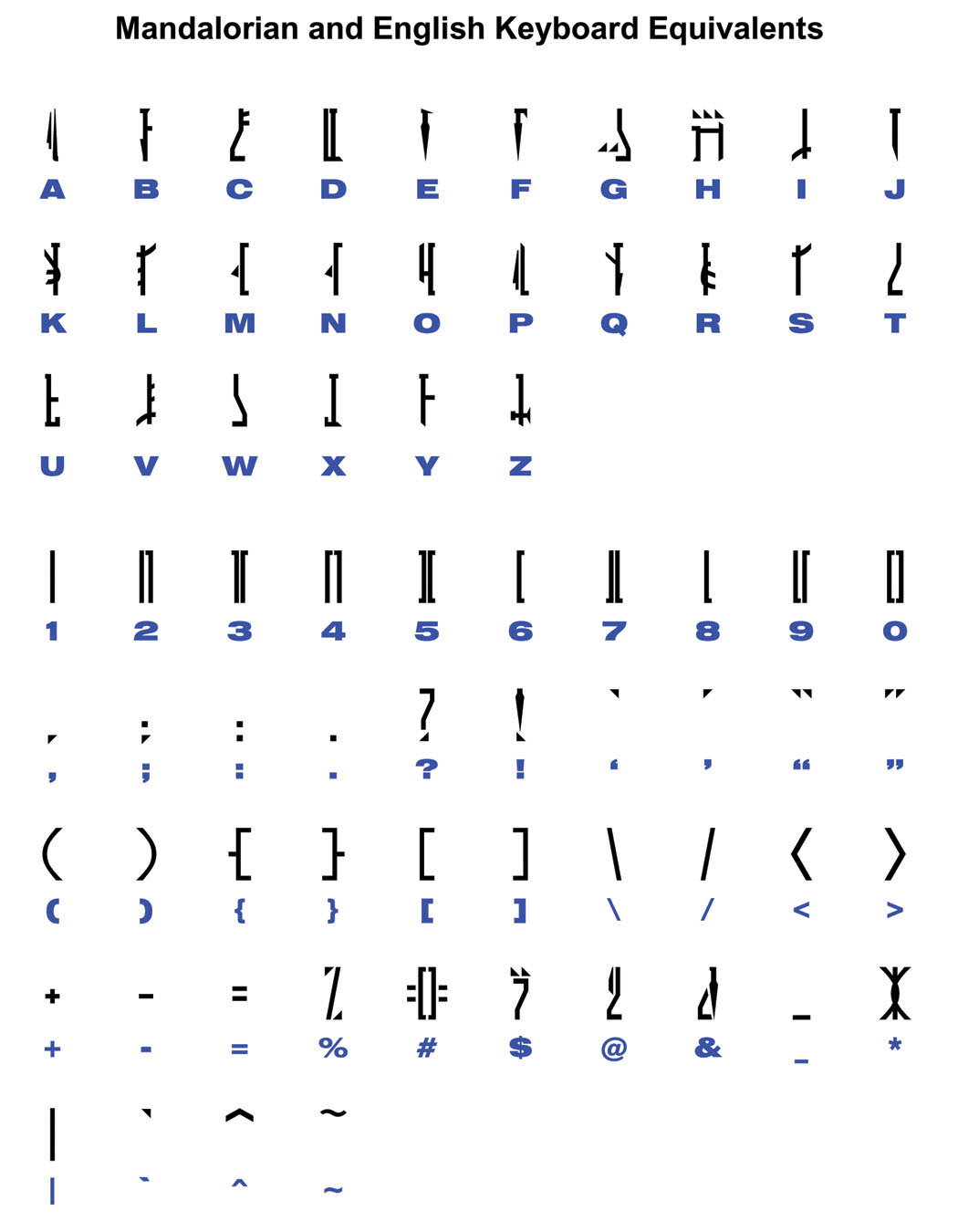
KDF. KDF takes up virtually my entire discretionary budget, and is actually rather more expensive than I would like. I still love movies, and the ritual of eating out, and buying toys. I would like to have some money to do those things, even if only once a month. But in general, the expense is part of the point. It's often said by swordspeople (as by many martial artists generally, I think) that the point of their discipline is ultimately control of the self. Certainly that is what I primarily value KDF for: control, control, you must learn control. Discipline in spending, working, exercising ... these are the things that KDF has become my touchstone for.
Thursday, June 06, 2013
The Art of Fighting
This Saturday I’m going to have my first lesson in German longsword fencing, which I have high hopes for as a source of exercise, entertainment, and organization while here in New York. I don’t know if I will like it, or if it will turn out to be affordable in the long term, but let’s say that I will and it will. Why fencing, and why German longsword in particular?
I’ve been vaguely interested in fencing for a long time, as I suppose anybody is who consumes much fantasy literature or roleplays in any pre-modern setting. But more than that, it has long seemed to me that a proper philosophical appreciation of force requires - or at least significantly benefits from - experience with a killing art. Force may be much more than killing, forming (I think) an essential part of character, morality, honor, spirituality, sex appeal, good parenting - but I don’t think it can be divorced from killing. If I want to study all the various aspects of force, at some point I need to do at least some study of killing.
I suppose it’s worth mentioning at this point that I am not unaware of the many benefits martial arts study brings even to those who never kill or attempt to kill anybody. Many of those benefits, I think, are still force-related. But I am getting ahead of myself.
In addition to the philosophical study, there is also the need for athletic activity. I think I was probably in the best shape of my life during college, when I was generally dancing at least three and sometimes seven days a week, and I rediscovered something then that I think a lot of people (especially geeks) forget when they leave childhood: athletic activity is fun. I like being in shape. Muscles want to be used. It feels good to know that my body is ready to do whatever I want it to do. It feels manly. It feels mando. It feels right.
That said, I hate exercising, and I do not yet have sufficient self-discipline to exercise in order to stay in shape. I am much better at exercising in order to achieve some other goal - in order to dance, in order to attract a girl. As New York is apparently something of a vintage dance wasteland compared to the Bay Area, that may not be possible, and while I do want to be physically attractive for Thayet, being in love with somebody doesn’t provide the same neurological feedback as courting somebody. Exercising in order to fence seems like it might be an achievable goal, though, since I take it as axiomatic that all martial activity, be it harness fighting or tank driving, is founded on physical fitness.
So why German longsword in particular? The kunst des fechtens, as it was called when actually practiced, has a few features that are particularly attractive to me. The first is that it is about killing - that is to say, it is not an art that is aimed primarily at achieving physical fitness, spiritual enlightenment, or athletic or exhibitionist skill. Those are all valid goals for athletic activity, but they don’t appeal to me. They feel like sports, like games, and I have never been particularly motivated by sports or games. Then too, I don’t think that force is a game. Force - even if only used to build character - is deadly serious. Actually attacking somebody, especially with a weapon, is at least as serious as building character. I want to study a martial art that is comfortable with, and will invite me to wrestle with, the fact that the use of force in defense of oneself or others is serious business. (This is why I sometimes call it “fencing,” from the 16th century English usage, meaning, roughly, the art of self-defence.)
The second appealing feature of the kunst des fechtens is that it is the kunst des fechtens; that is, the art of fighting. It is not actually the art of swordfighting (another reason I prefer the term “fencing,” which in original usage was not sword-specific even though it is now). As I understand it, KDF (like all the medieval and Renaissance-era European martial traditions I’m aware of and, I shouldn’t be surprised to learn, all non-sport martial traditions everywhere) attempts not so much to teach students how to fight with this weapon or that weapon as to teach students how to fight, period - which happens to entail the use of weapons. This seems to me like a much more martially authentic approach than one focused solely on a given implement, even if the longsword is the basic or exemplar weapon of the tradition. It also seems much more athletically authentic to me, based on my very limited experience with athletic activity. Certainly I don’t feel like a waltz dancer or a polka dancer or a swing dancer - all the kinds of dance I know influence all the other kinds of dance I know.
Nevertheless, a third appealing feature of KDF certainly is that it teaches how to kill people specifically with swords. I cannot deny that I think swords (and polearms, etc.) are cool. I would like to expand my martial education into how to kill people with firearms as well, which may well be the more practical pursuit of the two (even if both are, I think, mere variations on the art of fighting). It may well be equally profitable in terms of exercise. Why start with KDF? It’s cheaper, for one thing, which is certainly an attraction. But to be honest, I just think it sounds cooler.
And fourth, there’s a historical appeal as well. KDF is, as far as I know, the earliest European martial art for which we have enough period texts (that is, texts written by actual practitioners who lived when the tradition still had an unbroken history of practice) of sufficient quality to attempt reconstruction. It isn’t the earliest historical European martial art, not by a long shot, but it is the earliest one for which reconstruction can be attempted - and I think that’s pretty cool too.
So ... here's hoping.
I’ve been vaguely interested in fencing for a long time, as I suppose anybody is who consumes much fantasy literature or roleplays in any pre-modern setting. But more than that, it has long seemed to me that a proper philosophical appreciation of force requires - or at least significantly benefits from - experience with a killing art. Force may be much more than killing, forming (I think) an essential part of character, morality, honor, spirituality, sex appeal, good parenting - but I don’t think it can be divorced from killing. If I want to study all the various aspects of force, at some point I need to do at least some study of killing.
I suppose it’s worth mentioning at this point that I am not unaware of the many benefits martial arts study brings even to those who never kill or attempt to kill anybody. Many of those benefits, I think, are still force-related. But I am getting ahead of myself.
In addition to the philosophical study, there is also the need for athletic activity. I think I was probably in the best shape of my life during college, when I was generally dancing at least three and sometimes seven days a week, and I rediscovered something then that I think a lot of people (especially geeks) forget when they leave childhood: athletic activity is fun. I like being in shape. Muscles want to be used. It feels good to know that my body is ready to do whatever I want it to do. It feels manly. It feels mando. It feels right.
That said, I hate exercising, and I do not yet have sufficient self-discipline to exercise in order to stay in shape. I am much better at exercising in order to achieve some other goal - in order to dance, in order to attract a girl. As New York is apparently something of a vintage dance wasteland compared to the Bay Area, that may not be possible, and while I do want to be physically attractive for Thayet, being in love with somebody doesn’t provide the same neurological feedback as courting somebody. Exercising in order to fence seems like it might be an achievable goal, though, since I take it as axiomatic that all martial activity, be it harness fighting or tank driving, is founded on physical fitness.
So why German longsword in particular? The kunst des fechtens, as it was called when actually practiced, has a few features that are particularly attractive to me. The first is that it is about killing - that is to say, it is not an art that is aimed primarily at achieving physical fitness, spiritual enlightenment, or athletic or exhibitionist skill. Those are all valid goals for athletic activity, but they don’t appeal to me. They feel like sports, like games, and I have never been particularly motivated by sports or games. Then too, I don’t think that force is a game. Force - even if only used to build character - is deadly serious. Actually attacking somebody, especially with a weapon, is at least as serious as building character. I want to study a martial art that is comfortable with, and will invite me to wrestle with, the fact that the use of force in defense of oneself or others is serious business. (This is why I sometimes call it “fencing,” from the 16th century English usage, meaning, roughly, the art of self-defence.)
The second appealing feature of the kunst des fechtens is that it is the kunst des fechtens; that is, the art of fighting. It is not actually the art of swordfighting (another reason I prefer the term “fencing,” which in original usage was not sword-specific even though it is now). As I understand it, KDF (like all the medieval and Renaissance-era European martial traditions I’m aware of and, I shouldn’t be surprised to learn, all non-sport martial traditions everywhere) attempts not so much to teach students how to fight with this weapon or that weapon as to teach students how to fight, period - which happens to entail the use of weapons. This seems to me like a much more martially authentic approach than one focused solely on a given implement, even if the longsword is the basic or exemplar weapon of the tradition. It also seems much more athletically authentic to me, based on my very limited experience with athletic activity. Certainly I don’t feel like a waltz dancer or a polka dancer or a swing dancer - all the kinds of dance I know influence all the other kinds of dance I know.
Nevertheless, a third appealing feature of KDF certainly is that it teaches how to kill people specifically with swords. I cannot deny that I think swords (and polearms, etc.) are cool. I would like to expand my martial education into how to kill people with firearms as well, which may well be the more practical pursuit of the two (even if both are, I think, mere variations on the art of fighting). It may well be equally profitable in terms of exercise. Why start with KDF? It’s cheaper, for one thing, which is certainly an attraction. But to be honest, I just think it sounds cooler.
And fourth, there’s a historical appeal as well. KDF is, as far as I know, the earliest European martial art for which we have enough period texts (that is, texts written by actual practitioners who lived when the tradition still had an unbroken history of practice) of sufficient quality to attempt reconstruction. It isn’t the earliest historical European martial art, not by a long shot, but it is the earliest one for which reconstruction can be attempted - and I think that’s pretty cool too.
So ... here's hoping.
Saturday, June 01, 2013
Impressions
People seem curious to know how "New York" is, or how I feel about the whole thing. I don't really have useful answers to either of those questions. I have no idea how "New York" is beyond my tiny little slice of Brooklyn. I am gathering that New York is essentially preindustrial in that most people live in settlements whose geography is defined by the local river (I mean, easily accessible subway routes), and only a few people can afford to feed their mules enough to go any appreciable distance by land (I mean, car). While I am amazed at how much land-starved people can cram into walking distance (and am grateful for the chance to walk more), this seems distinctly primitive.
As for how I feel about the whole thing ... I need more time to develop feelings about this other than, "My little girl is going to miss me!" I am sure those feelings are there, but they haven't surfaced yet. Also, I have not really been able to complete the talismanic rituals that say, "I am here." My faithful desktop/gaming PC, Monica, arrived somewhat the worse for wear, with a cracked subwoofer, monitor that won't adjust, a RAM DIMM whose heat sink cracked off, and a case that is sufficiently battered that it won't close or hold my hard drives anymore. She is still operable, but kind of sad. As I write this, she is is supine atop my 40K models and missing her right side panel, like a surgery patient in stasis. I have been able to stock the kitchen, bring my Honor Harrington pictures out of retirement, and do those other such things, but ... no Monica. So I myself am a little bit in stasis still.
I do have some feelings, but they are mostly impressions. I spent most of the flight over devouring The Night Circus (which I strongly recommend to anybody who enjoys the fantastical, the romantical, or the fantastical romantical - to put it another way, it is the most Natalian book I have read in years), because ever since my sophomore year of college, "west" has been the direction to go. West is chasing the sunset. West is home. East is retrograde motion (though I did take some comfort in the thought that east is also greeting the sunset). I stopped reading to watch the landing out of a sense of duty. There is a moment in any landing that I have never been able to define in which the people and structures below stop being a mere representation of the ground, as you might find on a model train table, and become real - another moment, similarly indefinable, in which one ceases to be "flying" and becomes simply rather high off the ground. A gentle bump, a sense of incredible speed as the air brakes deploy, and then one is down with a finality so real that it takes the brain several minutes to catch up.
In my case, the sense of transmission was marred by my increasingly desperate need to pee.
It was raining when I arrived and wrestled my luggage into the back of a taxi. No city shows itself to its best advantage in the rain, so perhaps Brooklyn can be forgiven if its first impression was rather dismal. Years ago, I remarked to my family how much I hate the brick architecture that dominates the middle colonies, and I found my hatred intact. The red brick seems to suck the light out of even the sunniest streets, and with no unbroken surfaces even the largest buildings seem crowded and cramped. I realized on the cab ride over that it is not just the brick I hate - I also despise block house architecture. On the west coast (except for parts of San Francisco, which I also loathe), lots slope up away from the street. Here, the buildings tend to present themselves straight up and down right from the sidewalk, their baleful monolithic faces making even the broad Brooklyn avenues seem like the urban canyons I have assiduously avoided all my life. On my street the houses (I cannot really think of them as "apartments") at least have stairs that lead up and away from the sidewalk, which has an outsized psychological impact.
I do not intend to write much about my housemates, although I have only positive things to say.
I am very close to Prospect Park, but owing to computer-related issues and staying up practically all night to play the X-Wing miniatures game with my father I didn't get a chance to explore it until fairly recently. I went in search of greenery and a place to practice fencing between lessons (more on that later). I had a much more detailed running narrative in my mind as I wandered, but I'm afraid it has largely devolved into flashes now. I remember trying to remember the wretched east coast humidity and the heat of the sun - really remember, trying to place myself on Nova. The map of the park, glanced over and then ignored. The enormity of the tree branches - not the trees, but the branches, heavy and thick, arcing overhead - I finally understand why trees can be a symbol of strength and not just endurance. The rough-hewn ashlar wall that borders the park, good cover in a firefight. A playground near the 9th St. entrance that Meshparjai would like. The wide open spaces of grass beneath the trees that she might like even more. I pass couples picnicking on the grass, and think, I could bring Thayet here. More children than I have seen in one place in a long, long time. A little girl running through a shower of delicate golden leaves blown in the breeze.
Beyond the children is the so-called Long Meadow, full of actual baseball diamonds occupied by what appear to be pick-up games of baseball. People actually play pick-up baseball here? On the other side of the Long Meadow, inviting and mysterious trees. I wander through them, following the trail as it winds up and down hills. This would be a good place to run, I think. A man who can only run on flat paved surfaces cannot run at all. I relish the sense of being surrounded by trees filled with actual birdsong. I close my eyes and try to add the sounds of monkeys and tigers, again attempting to seize this moment for Nova. This is my life, now, and all life must eventually come to the story, to the game. Somebody has constructed a shelter beneath the canopy, lovingly piled branches against the spine of a fallen tree to form a sort of cave in which are three small logs, clearly intended as benches. It is not my space. I enter anyway and begin to understand how centuries ago people could fall in love with this coast, with its wretched waterlogged air and magnified heat and greenery that is resplendent even now.
There is a road on the other side of the trees, and I cross it. I am on a path again, one that climbs a small hill with three sets of quasimonumental stairs. Somebody put these stairs here with a foreign country in mind, I am certain in that moment. They remind me of Cambodia, not that I have ever been there. The long stone steps actually sag in the middle. Remember that detail. I take the first set of stairs two at a time. I am compelled to jog up the second and third.
I continue to wander and find myself back at the Long Meadow. This time I walk its length, past the baseball games and towards an even greater concentration of children. It must be school, I think, then realize no - these are summer camps. So this is how the children of the city enjoy their resplendent greenery. Near the children is a hillock, the top of which is too shaded for grass by a ring of trees that enclose the space. I remember the walls I excavated at Monte Polizzo and have a similar impression of sacred demarcation. Broken glass is ground into the dirt, but here - this is the spot. I have not yet taken up fencing, and I do not know for sure there will be drills I can do in the early morning if I do, or even if I will be able to get up in the early morning before work - but standing on this spot as the breeze blows back my hair I can see myself, patiently drilling in the morning gloom before the children arrive. It took me two and a half years to get any good at dancing, practicing four and often seven days a week - the only athletic endeavor to which I can compare. I mentally give myself five years to get any good at fencing, and smile at my own optimism.
I leave the ring of trees and wander through the summer camps. The children ignore me and this suits me. Past the picnic house I go, a great brick block in the middle of the park. Now I am on a pathway of grey hexagonal bricks instead of plain asphalt, and this pleases me. I wander until I reach Grand Army Plaza, then turn around to wander back through the park listening to worship songs.
I discover afterwards that I have explored about 25% of the park.
As for how I feel about the whole thing ... I need more time to develop feelings about this other than, "My little girl is going to miss me!" I am sure those feelings are there, but they haven't surfaced yet. Also, I have not really been able to complete the talismanic rituals that say, "I am here." My faithful desktop/gaming PC, Monica, arrived somewhat the worse for wear, with a cracked subwoofer, monitor that won't adjust, a RAM DIMM whose heat sink cracked off, and a case that is sufficiently battered that it won't close or hold my hard drives anymore. She is still operable, but kind of sad. As I write this, she is is supine atop my 40K models and missing her right side panel, like a surgery patient in stasis. I have been able to stock the kitchen, bring my Honor Harrington pictures out of retirement, and do those other such things, but ... no Monica. So I myself am a little bit in stasis still.
I do have some feelings, but they are mostly impressions. I spent most of the flight over devouring The Night Circus (which I strongly recommend to anybody who enjoys the fantastical, the romantical, or the fantastical romantical - to put it another way, it is the most Natalian book I have read in years), because ever since my sophomore year of college, "west" has been the direction to go. West is chasing the sunset. West is home. East is retrograde motion (though I did take some comfort in the thought that east is also greeting the sunset). I stopped reading to watch the landing out of a sense of duty. There is a moment in any landing that I have never been able to define in which the people and structures below stop being a mere representation of the ground, as you might find on a model train table, and become real - another moment, similarly indefinable, in which one ceases to be "flying" and becomes simply rather high off the ground. A gentle bump, a sense of incredible speed as the air brakes deploy, and then one is down with a finality so real that it takes the brain several minutes to catch up.
In my case, the sense of transmission was marred by my increasingly desperate need to pee.
It was raining when I arrived and wrestled my luggage into the back of a taxi. No city shows itself to its best advantage in the rain, so perhaps Brooklyn can be forgiven if its first impression was rather dismal. Years ago, I remarked to my family how much I hate the brick architecture that dominates the middle colonies, and I found my hatred intact. The red brick seems to suck the light out of even the sunniest streets, and with no unbroken surfaces even the largest buildings seem crowded and cramped. I realized on the cab ride over that it is not just the brick I hate - I also despise block house architecture. On the west coast (except for parts of San Francisco, which I also loathe), lots slope up away from the street. Here, the buildings tend to present themselves straight up and down right from the sidewalk, their baleful monolithic faces making even the broad Brooklyn avenues seem like the urban canyons I have assiduously avoided all my life. On my street the houses (I cannot really think of them as "apartments") at least have stairs that lead up and away from the sidewalk, which has an outsized psychological impact.
I do not intend to write much about my housemates, although I have only positive things to say.
I am very close to Prospect Park, but owing to computer-related issues and staying up practically all night to play the X-Wing miniatures game with my father I didn't get a chance to explore it until fairly recently. I went in search of greenery and a place to practice fencing between lessons (more on that later). I had a much more detailed running narrative in my mind as I wandered, but I'm afraid it has largely devolved into flashes now. I remember trying to remember the wretched east coast humidity and the heat of the sun - really remember, trying to place myself on Nova. The map of the park, glanced over and then ignored. The enormity of the tree branches - not the trees, but the branches, heavy and thick, arcing overhead - I finally understand why trees can be a symbol of strength and not just endurance. The rough-hewn ashlar wall that borders the park, good cover in a firefight. A playground near the 9th St. entrance that Meshparjai would like. The wide open spaces of grass beneath the trees that she might like even more. I pass couples picnicking on the grass, and think, I could bring Thayet here. More children than I have seen in one place in a long, long time. A little girl running through a shower of delicate golden leaves blown in the breeze.
Beyond the children is the so-called Long Meadow, full of actual baseball diamonds occupied by what appear to be pick-up games of baseball. People actually play pick-up baseball here? On the other side of the Long Meadow, inviting and mysterious trees. I wander through them, following the trail as it winds up and down hills. This would be a good place to run, I think. A man who can only run on flat paved surfaces cannot run at all. I relish the sense of being surrounded by trees filled with actual birdsong. I close my eyes and try to add the sounds of monkeys and tigers, again attempting to seize this moment for Nova. This is my life, now, and all life must eventually come to the story, to the game. Somebody has constructed a shelter beneath the canopy, lovingly piled branches against the spine of a fallen tree to form a sort of cave in which are three small logs, clearly intended as benches. It is not my space. I enter anyway and begin to understand how centuries ago people could fall in love with this coast, with its wretched waterlogged air and magnified heat and greenery that is resplendent even now.
There is a road on the other side of the trees, and I cross it. I am on a path again, one that climbs a small hill with three sets of quasimonumental stairs. Somebody put these stairs here with a foreign country in mind, I am certain in that moment. They remind me of Cambodia, not that I have ever been there. The long stone steps actually sag in the middle. Remember that detail. I take the first set of stairs two at a time. I am compelled to jog up the second and third.
I continue to wander and find myself back at the Long Meadow. This time I walk its length, past the baseball games and towards an even greater concentration of children. It must be school, I think, then realize no - these are summer camps. So this is how the children of the city enjoy their resplendent greenery. Near the children is a hillock, the top of which is too shaded for grass by a ring of trees that enclose the space. I remember the walls I excavated at Monte Polizzo and have a similar impression of sacred demarcation. Broken glass is ground into the dirt, but here - this is the spot. I have not yet taken up fencing, and I do not know for sure there will be drills I can do in the early morning if I do, or even if I will be able to get up in the early morning before work - but standing on this spot as the breeze blows back my hair I can see myself, patiently drilling in the morning gloom before the children arrive. It took me two and a half years to get any good at dancing, practicing four and often seven days a week - the only athletic endeavor to which I can compare. I mentally give myself five years to get any good at fencing, and smile at my own optimism.
I leave the ring of trees and wander through the summer camps. The children ignore me and this suits me. Past the picnic house I go, a great brick block in the middle of the park. Now I am on a pathway of grey hexagonal bricks instead of plain asphalt, and this pleases me. I wander until I reach Grand Army Plaza, then turn around to wander back through the park listening to worship songs.
I discover afterwards that I have explored about 25% of the park.
Thursday, April 05, 2012
A Dalyc'ade Kotla'shya
It is late, and behind me, Meshparjai sleeps on the couch while Kendall Payne plays on my iPhone. We have just finished watching Tinker Bell.
Meshparjai is almost sixteen months old now. She walks, she climbs, she begins to run. She begins to speak, and certainly understands some of the words that Thayet and I use. Mostly those words are English. When we are alone, I still speak some mando'a. In part it is for my own practice. But only in part.
There is a Mando saying, "Raise your children: raise your sons to be strong, but your daughters to be stronger." The Natalian appeal should be obvious, but it's probably less obvious that there's nothing about Mando culture that is pro-female or anti-male. This is one of the many reasons the Mando mindset appeals to me. It's ... a lens, I guess, through which to process my fatherhood.
In what does fatherhood consist? When I vowed to Thayet, "Mhi bajuri verde" (well, in my heart anyway; I try to avoid vocalizing too much Mando stuff lest it become silly), what exactly did I have in mind for a sixteen month old? She still needs her diapers changed and the turmoils of babyhood soothed, but now that she begins to understand ... what? How do you teach a sixteen month old to be a lady knight, a verd mandokarla?
I can't articulate an answer to that doesn't seem immediately incomplete. But I can name little things to do. Sing to her songs that explain who Jesus is. Watch movies and read books that dream of a better place than here - so she will know that here can be made better.
Meshparjai is almost sixteen months old now. She walks, she climbs, she begins to run. She begins to speak, and certainly understands some of the words that Thayet and I use. Mostly those words are English. When we are alone, I still speak some mando'a. In part it is for my own practice. But only in part.
There is a Mando saying, "Raise your children: raise your sons to be strong, but your daughters to be stronger." The Natalian appeal should be obvious, but it's probably less obvious that there's nothing about Mando culture that is pro-female or anti-male. This is one of the many reasons the Mando mindset appeals to me. It's ... a lens, I guess, through which to process my fatherhood.
In what does fatherhood consist? When I vowed to Thayet, "Mhi bajuri verde" (well, in my heart anyway; I try to avoid vocalizing too much Mando stuff lest it become silly), what exactly did I have in mind for a sixteen month old? She still needs her diapers changed and the turmoils of babyhood soothed, but now that she begins to understand ... what? How do you teach a sixteen month old to be a lady knight, a verd mandokarla?
I can't articulate an answer to that doesn't seem immediately incomplete. But I can name little things to do. Sing to her songs that explain who Jesus is. Watch movies and read books that dream of a better place than here - so she will know that here can be made better.
Sunday, December 26, 2010
On Fatherhood
I woke this morning without waking. I was submerged, lost in the words of a book, and when I rose, I realized that my family slept beside me, and I was blessed.
The seasons of my life used to be marked by school-time. It was in time to the academic calendar that I lived and breathed, and in time to that calendar that God taught me and grew me. When school was ended I felt rootless - or more accurately, shallow-rooted - for I did not know how the seasons of my life would be marked anymore, or how I would be taught, and it seemed the voice of God grew cold. Now I think perhaps I see. I had previously thought I understood a certain initiation into the lonely world of men. If I try to put my finger on how I know this world exists, I can only point to fragments - a remembered image here, a trope there - but I believe it does. The world of men who every morning leave the things that really matter to spend the best part of their day apart from them, and when they return are too weary to love and drink those things as they should - the world of men who accept this as not only a worldly necessity but their duty - I believe this world exists. And I am part of it. I say men; perhaps I should say providers - but I do not know. I am still exploring these cold, harsh badlands of the soul.
And now ... perhaps a new age of my life begins as well, and with it new lessons to be taught, new parts of me to be coaxed out of dormancy and nurtured. Surely my father realized with a start some mornings that his wife and child slept beside him, and all was well. Surely my mother as well ... is it the same feeling, for women? I do not know. I am inclined to doubt it, though I suppose they must be similar. But I know that I experienced such a moment this morning and felt a kinship with all the men who had experienced it before me, running through my breast like a spike of metal that shot through time, pinning me, anchoring me, to another world of men.
They say that everything changes when you have a child. That is not how I would describe it, although I suppose it is literally true. I have been a father for sixteen days now, and thus far my actual child-rearing duties have consisted largely of soothing my daughter when she is upset and changing her diapers, and both of these feel as natural as breathing (though I will admit to a certain mystification at how my daughter's poop gets some of the places it does. I can understand a projectile rebounding in the confines of a diaper, but I am being forcibly disabused of my naive notion that a human butt can only point in one direction at a time). There is, oddly enough, no sense of change. The evidence is present in the reorganization of my priorities, but the reorganization feels so pervasive that I can already scarcely remember a time when it was not so.
No, it is not my daughter who occasions a sense that everything has changed. The sense of change - for there is a sense of change - is to Thayet's account, not our girl's.
Esther Selene once told me that before I could be a father I would have to learn to be a husband. I expect she meant it prosaically at the time, but I have been reminded of her words often, these past two weeks. You see, it is not when I am changing my daughter's diaper or holding her close to assure her that all is well with the world that I most feel like a father. It is when I can soothe her so that Thayet can sleep - when I feed Thayet because her hands are busy with the baby - when I can interpose myself between my wife and the world's desolation so that she can rally herself for our child.
I do not mean to suggest that taking care of our daughter is "women's work," or yet that Thayet does not interpose herself between me and the world's desolation. Of course her shield shadows me. She is my queen, my wife, my riduur, bal mhi juri kando an a tome. It cannot be otherwise. And yet ... to shelter Thayet in this way, to create space for her to be who she is meant to be ... that is when I feel most like a father. This is not news, of course. My own father told me once that this was how he understood Biblical headship, and I understood it at the time. But I understand it again, and differently. To pour out one's self so that one's beloved can be about it may not be "men's work," but it is certainly - at least - a man's work. As it was, and is, the Lord's work.
It is not a work that I perform all the time, of course, nor yet perfectly. But I think I understand what it is. Like a redowa, the strings of my soul thrum when I get it right. Like a redowa, it leaves me wanting more. Unlike a redowa, it makes my soulstrings sound with joy, not delight.
I have it on good authority that I am besotted with my little girl. This is undoubtedly true, but it describes a whole galaxy of things that are happening in my heart. One of them is the joy of discovering a new person. Another is the joy of discovering my daughter. And another is wonder at the ways of the Lord, for shining enough light that I can better see the structure of my life, and its path more clearly. This is the work I was made for. This undergirds the things I do, and even my profession, like worship undergirds dance. My family sleeps, and all is well.
The seasons of my life used to be marked by school-time. It was in time to the academic calendar that I lived and breathed, and in time to that calendar that God taught me and grew me. When school was ended I felt rootless - or more accurately, shallow-rooted - for I did not know how the seasons of my life would be marked anymore, or how I would be taught, and it seemed the voice of God grew cold. Now I think perhaps I see. I had previously thought I understood a certain initiation into the lonely world of men. If I try to put my finger on how I know this world exists, I can only point to fragments - a remembered image here, a trope there - but I believe it does. The world of men who every morning leave the things that really matter to spend the best part of their day apart from them, and when they return are too weary to love and drink those things as they should - the world of men who accept this as not only a worldly necessity but their duty - I believe this world exists. And I am part of it. I say men; perhaps I should say providers - but I do not know. I am still exploring these cold, harsh badlands of the soul.
And now ... perhaps a new age of my life begins as well, and with it new lessons to be taught, new parts of me to be coaxed out of dormancy and nurtured. Surely my father realized with a start some mornings that his wife and child slept beside him, and all was well. Surely my mother as well ... is it the same feeling, for women? I do not know. I am inclined to doubt it, though I suppose they must be similar. But I know that I experienced such a moment this morning and felt a kinship with all the men who had experienced it before me, running through my breast like a spike of metal that shot through time, pinning me, anchoring me, to another world of men.
They say that everything changes when you have a child. That is not how I would describe it, although I suppose it is literally true. I have been a father for sixteen days now, and thus far my actual child-rearing duties have consisted largely of soothing my daughter when she is upset and changing her diapers, and both of these feel as natural as breathing (though I will admit to a certain mystification at how my daughter's poop gets some of the places it does. I can understand a projectile rebounding in the confines of a diaper, but I am being forcibly disabused of my naive notion that a human butt can only point in one direction at a time). There is, oddly enough, no sense of change. The evidence is present in the reorganization of my priorities, but the reorganization feels so pervasive that I can already scarcely remember a time when it was not so.
No, it is not my daughter who occasions a sense that everything has changed. The sense of change - for there is a sense of change - is to Thayet's account, not our girl's.
Esther Selene once told me that before I could be a father I would have to learn to be a husband. I expect she meant it prosaically at the time, but I have been reminded of her words often, these past two weeks. You see, it is not when I am changing my daughter's diaper or holding her close to assure her that all is well with the world that I most feel like a father. It is when I can soothe her so that Thayet can sleep - when I feed Thayet because her hands are busy with the baby - when I can interpose myself between my wife and the world's desolation so that she can rally herself for our child.
I do not mean to suggest that taking care of our daughter is "women's work," or yet that Thayet does not interpose herself between me and the world's desolation. Of course her shield shadows me. She is my queen, my wife, my riduur, bal mhi juri kando an a tome. It cannot be otherwise. And yet ... to shelter Thayet in this way, to create space for her to be who she is meant to be ... that is when I feel most like a father. This is not news, of course. My own father told me once that this was how he understood Biblical headship, and I understood it at the time. But I understand it again, and differently. To pour out one's self so that one's beloved can be about it may not be "men's work," but it is certainly - at least - a man's work. As it was, and is, the Lord's work.
It is not a work that I perform all the time, of course, nor yet perfectly. But I think I understand what it is. Like a redowa, the strings of my soul thrum when I get it right. Like a redowa, it leaves me wanting more. Unlike a redowa, it makes my soulstrings sound with joy, not delight.
I have it on good authority that I am besotted with my little girl. This is undoubtedly true, but it describes a whole galaxy of things that are happening in my heart. One of them is the joy of discovering a new person. Another is the joy of discovering my daughter. And another is wonder at the ways of the Lord, for shining enough light that I can better see the structure of my life, and its path more clearly. This is the work I was made for. This undergirds the things I do, and even my profession, like worship undergirds dance. My family sleeps, and all is well.
Sunday, March 28, 2010
Easter and the Winnable Life
I went to church today for the first time in over a year, and found out when I got there it was Palm Sunday. Now, since I knew that next Sunday was Easter, you might think it would be obvious that today is Palm Sunday. But I've never had much of a head for calendars, let alone liturgical ones, and ... well, really, it's been a long time. But since we're here, and since God hasn't stopped speaking just because I've been away from church for a long time, I thought it might be an opportune time to post about what Easter means to me.
Once upon a time I was joyful pretty much all the time, and happy most of the time, and delighted frequently. None of those three statements has been presently true of my life for a long time. Well, that's not true - I might be happy at least 51% of the time. I'm not sure. But the point is, the emotional tenor of my life has been comparatively gloomy for a while. There is no time for games, because I barely have enough time for art. There is no time for art, because I barely have enough time for friends. There is no time for friends, because I barely have enough time for family. There is no time for family, because I barely have enough time for Thayet (who is family, of course, but you know what I mean). There is no time for Thayet, because I have to work or I'll get fired and I can't get fired because we need to pay off my loans and this is the only way I know how to do that and I try so hard to provide for my family but it doesn't matter because there's always work work work and it never goes away no matter how hard I work or how much sleep I give up and it's never going to get any better and I'm stuck here so I might as well give up but I can't give up because I have a wife and I want to be a dad but there's always work work work and it never goes away no matter what I do.
Or that's what it feels like, anyway. That's what I spend every day telling to shut up shut up shut up that's not true.
Oh yeah, and where's Jesus in that litany of things I don't have time for? Well, he isn't really anywhere, which of course is the point, which brings me to Easter.
Okay, I lied. First, a digression. This - the emotional tenor of my life - is not anybody's fault. There is no action, or failure to act, that is responsible for this. I have a wife and friends and family who love me, actively love me. This is not about me not being loved. This is about facts. Which actually brings me to Easter.
I believe in religions of facts. My religion is a series of descriptive statements that purport to describe facts that are true about the world (I'm about 90% certain that that's what a religion is, but that's a post for another day). The sense in which "belief" enters into my religion is only the sense in which facts must be believed to be of use. Something may be a fact, but if somebody does not believe it to be a fact, it will do them no good.
To give a quick example, it is a fact that Xenophon the Athenian led a small assault force of Greeks in a successful race to secure an obscure hill before a small assault force of Achaemenid soldiers could do the same. You probably didn't know that anybody claimed this as a factual statement. Assuming you didn't know that anybody claimed it, you surely had no beliefs one way or the other about its veracity. If you had no beliefs about its veracity, then I think it is safe to assume that this fact did not benefit you in any way, despite the fact that it is true. I did know that people claimed it as a factual statement, I am of the belief that it is a true factual statement (it is, if you will, what is commonly called a "fact"), and I derive great encouragement from it.
That is a trivial example. Let me give a more significant one, which touches on why I have not been joyful for some time. I used to believe that what I was supposed to be doing (that is, what God had told me I was supposed to be doing) was fully compatible with living a fulfilling human life. Another way of stating that belief would be that I believed it was possible to succeed simultaneously in everything that God had told me to do at any given time. I say believe, but do not get hung up on that word just because we are now talking about spiritual beliefs. I believed it as a fact about the world. I believed it for the same sorts of reasons, and in the same sort of way, that I believe Xenophon led those Greeks up that forgotten hill.
Which means I was aware of evidence to the contrary. And that not everybody who was aware of the so-called "fact" believed it to be a fact. And that some people had never thought one way or another about whether it was a fact at all. And still, bending all of my will and intellect and education to bear on the question, believed it to be a fact. And this was of enormous, life-changing comfort to me. If I can put it this way without trivializing it, it made life a game in the very best sense. One doesn't give up in a game because no matter how hard things get, and no matter how grand or impossible or epic one's task, one has a fundamental faith that success is possible. Games can be won - not because they're games, but because they are designed to be winnable by people who knew what they were doing when they made the [game] world. If you have never believed this to be a fact about the real world, I assure you, it is profoundly liberating.
And then ... well, things changed. I became unsure that this was really a true fact about the world. If you have never thought it a fact that the world is "winnable," then perhaps this will not strike you as any great thing. But facts have consequences. Some consequences are emotional. As you might imagine (or maybe you can't; I don't know), the emotional contrast between a world which is definitely winnable and a world which is not is ... immense.
Some consequences are implications - facts don't exist in a vacuum, after all. You might call an unwinnable world my version of the problem of evil. If I can't succeed at the tasks God has put before me, why should I even try? So that I can fail less spectacularly than if I had not tried? There's something to that, but it's not the sort of thing that motivates a man. One begins to ask of command, "Why am I even here? Why did you put me here to die with no way out? What is wrong with you? I thought you loved me!" Except that command is also one's greatly beloved, and one can't bear to ask those questions. So one just stops talking. And that kills one from the inside just as surely as an unwinnable world kills one from the outside. This is what the death of faith looks like.
What does Easter have to do with all of this? Easter - the not-permanent voluntary sacrificial death of one of the persons of God - is the point at which God stepped into an unwinnable world and made it winnable. (( Side note the first: perhaps in another post I can share some thoughts as to why I think it means that; for now, suffice it to say that I think that it does. )) Remember that I am speaking of facts about the world. Though it may seem strange to you, I believe (and I think this is a true statement of Christian belief, though I'm sure not all of my coreligionists would put it this way) that once upon a time it really was true about the universe that there were really only two choices - to fail at the life God had made for one, or for God not to make a life at all. (( Side note the second: do I believe that the mercy of God extended even to that sort of situation? Yes - but that, too, is a post for another time. ))
Easter is the point at which God bulldozed a third option into the fabric of existence: for God to make a life for one that one could live. A life that was winnable.
Easter means that life is winnable. Easter means that I can have art. Easter means that I can have games. Easter means that I can have friends, and family, and be a good husband, and be a good father, and be a good lawyer, all at the same time, because that is the life that God has made for me. (( Side note the third: this is not to say that I can have whatever life I want; that's silly. It is to say that the life God has made for me can be lived to the full. Depending on what one thinks of that life, this may or may not be a comforting thought. For me, it is comforting. ))
How? Well, I confess, I don't know. But Easter means that it can be done, that the answer is out there even if I don't know what it looks like, that life is winnable. From this it follows that if Easter is a fact - if there really was a not-permanent voluntary sacrificial death of one of the persons of God - then it cannot be true that life is unwinnable.
So here is the question for me: do I believe that Easter is a fact? Here is the answer: yes, I do. Nothing that has transpired in the last six years has caused me to doubt the veracity of the central fact of Easter.
Facts are true or not true whether or not we believe them. But believing them does have consequences. I'm a gamer. I know what to do with problems that are definitely winnable, even if they're really hard and I fail at them over and over and over again. I remember the words of Xenophon the Athenian:
"Now for it, boys, and remember that this race is for home! Now or never, to see your children again, to see your wives - one small effort, and the rest of the march we shall pursue in peace, with never a blow to strike; now for it!"
Once upon a time I was joyful pretty much all the time, and happy most of the time, and delighted frequently. None of those three statements has been presently true of my life for a long time. Well, that's not true - I might be happy at least 51% of the time. I'm not sure. But the point is, the emotional tenor of my life has been comparatively gloomy for a while. There is no time for games, because I barely have enough time for art. There is no time for art, because I barely have enough time for friends. There is no time for friends, because I barely have enough time for family. There is no time for family, because I barely have enough time for Thayet (who is family, of course, but you know what I mean). There is no time for Thayet, because I have to work or I'll get fired and I can't get fired because we need to pay off my loans and this is the only way I know how to do that and I try so hard to provide for my family but it doesn't matter because there's always work work work and it never goes away no matter how hard I work or how much sleep I give up and it's never going to get any better and I'm stuck here so I might as well give up but I can't give up because I have a wife and I want to be a dad but there's always work work work and it never goes away no matter what I do.
Or that's what it feels like, anyway. That's what I spend every day telling to shut up shut up shut up that's not true.
Oh yeah, and where's Jesus in that litany of things I don't have time for? Well, he isn't really anywhere, which of course is the point, which brings me to Easter.
Okay, I lied. First, a digression. This - the emotional tenor of my life - is not anybody's fault. There is no action, or failure to act, that is responsible for this. I have a wife and friends and family who love me, actively love me. This is not about me not being loved. This is about facts. Which actually brings me to Easter.
I believe in religions of facts. My religion is a series of descriptive statements that purport to describe facts that are true about the world (I'm about 90% certain that that's what a religion is, but that's a post for another day). The sense in which "belief" enters into my religion is only the sense in which facts must be believed to be of use. Something may be a fact, but if somebody does not believe it to be a fact, it will do them no good.
To give a quick example, it is a fact that Xenophon the Athenian led a small assault force of Greeks in a successful race to secure an obscure hill before a small assault force of Achaemenid soldiers could do the same. You probably didn't know that anybody claimed this as a factual statement. Assuming you didn't know that anybody claimed it, you surely had no beliefs one way or the other about its veracity. If you had no beliefs about its veracity, then I think it is safe to assume that this fact did not benefit you in any way, despite the fact that it is true. I did know that people claimed it as a factual statement, I am of the belief that it is a true factual statement (it is, if you will, what is commonly called a "fact"), and I derive great encouragement from it.
That is a trivial example. Let me give a more significant one, which touches on why I have not been joyful for some time. I used to believe that what I was supposed to be doing (that is, what God had told me I was supposed to be doing) was fully compatible with living a fulfilling human life. Another way of stating that belief would be that I believed it was possible to succeed simultaneously in everything that God had told me to do at any given time. I say believe, but do not get hung up on that word just because we are now talking about spiritual beliefs. I believed it as a fact about the world. I believed it for the same sorts of reasons, and in the same sort of way, that I believe Xenophon led those Greeks up that forgotten hill.
Which means I was aware of evidence to the contrary. And that not everybody who was aware of the so-called "fact" believed it to be a fact. And that some people had never thought one way or another about whether it was a fact at all. And still, bending all of my will and intellect and education to bear on the question, believed it to be a fact. And this was of enormous, life-changing comfort to me. If I can put it this way without trivializing it, it made life a game in the very best sense. One doesn't give up in a game because no matter how hard things get, and no matter how grand or impossible or epic one's task, one has a fundamental faith that success is possible. Games can be won - not because they're games, but because they are designed to be winnable by people who knew what they were doing when they made the [game] world. If you have never believed this to be a fact about the real world, I assure you, it is profoundly liberating.
And then ... well, things changed. I became unsure that this was really a true fact about the world. If you have never thought it a fact that the world is "winnable," then perhaps this will not strike you as any great thing. But facts have consequences. Some consequences are emotional. As you might imagine (or maybe you can't; I don't know), the emotional contrast between a world which is definitely winnable and a world which is not is ... immense.
Some consequences are implications - facts don't exist in a vacuum, after all. You might call an unwinnable world my version of the problem of evil. If I can't succeed at the tasks God has put before me, why should I even try? So that I can fail less spectacularly than if I had not tried? There's something to that, but it's not the sort of thing that motivates a man. One begins to ask of command, "Why am I even here? Why did you put me here to die with no way out? What is wrong with you? I thought you loved me!" Except that command is also one's greatly beloved, and one can't bear to ask those questions. So one just stops talking. And that kills one from the inside just as surely as an unwinnable world kills one from the outside. This is what the death of faith looks like.
What does Easter have to do with all of this? Easter - the not-permanent voluntary sacrificial death of one of the persons of God - is the point at which God stepped into an unwinnable world and made it winnable. (( Side note the first: perhaps in another post I can share some thoughts as to why I think it means that; for now, suffice it to say that I think that it does. )) Remember that I am speaking of facts about the world. Though it may seem strange to you, I believe (and I think this is a true statement of Christian belief, though I'm sure not all of my coreligionists would put it this way) that once upon a time it really was true about the universe that there were really only two choices - to fail at the life God had made for one, or for God not to make a life at all. (( Side note the second: do I believe that the mercy of God extended even to that sort of situation? Yes - but that, too, is a post for another time. ))
Easter is the point at which God bulldozed a third option into the fabric of existence: for God to make a life for one that one could live. A life that was winnable.
Easter means that life is winnable. Easter means that I can have art. Easter means that I can have games. Easter means that I can have friends, and family, and be a good husband, and be a good father, and be a good lawyer, all at the same time, because that is the life that God has made for me. (( Side note the third: this is not to say that I can have whatever life I want; that's silly. It is to say that the life God has made for me can be lived to the full. Depending on what one thinks of that life, this may or may not be a comforting thought. For me, it is comforting. ))
How? Well, I confess, I don't know. But Easter means that it can be done, that the answer is out there even if I don't know what it looks like, that life is winnable. From this it follows that if Easter is a fact - if there really was a not-permanent voluntary sacrificial death of one of the persons of God - then it cannot be true that life is unwinnable.
So here is the question for me: do I believe that Easter is a fact? Here is the answer: yes, I do. Nothing that has transpired in the last six years has caused me to doubt the veracity of the central fact of Easter.
Facts are true or not true whether or not we believe them. But believing them does have consequences. I'm a gamer. I know what to do with problems that are definitely winnable, even if they're really hard and I fail at them over and over and over again. I remember the words of Xenophon the Athenian:
"Now for it, boys, and remember that this race is for home! Now or never, to see your children again, to see your wives - one small effort, and the rest of the march we shall pursue in peace, with never a blow to strike; now for it!"
Tuesday, December 16, 2008
On Homosexuality
Previously, I mentioned that I had a rant reserved for people who think that the Bible expresses any views about homosexuality, or homosexuals, or "being" homosexual, but that I would skip over that part. Recently, somebody asked if I would elaborate.
I wish that this wasn't a sensitive topic, but I've found that people have an unfortunate inability to discuss theology academically. So if this is a sensitive topic for you, I suggest you just stop reading now. Alternatively, if academic discussions of theology are boring or offensive to you, I likewise suggest that you just stop reading now.
The commenter I refer to asked a couple of questions, which I would group as follows:
1. What is my aforementioned rant?
2. What combination of genetic and environmental factors do I think shapes sexual orientation?
3. Do I agree with research showing that orientation can be changed?
4. Do I think the above has any bearing on a theological understanding of homosexuality?
Most of these questions I am not going to address here in any detail. To briefly dispose of those:
2. I am not a biologist, let alone a biologist with a specialization that bears on the development of sexual orientation. I do know that Robert Sapolsky, who meets at least some of those requirements, took only one class to convince me that "genetic vs. environmental" is not a useful opposition. I consider it common sense that sexual orientation is shaped by a combination of genetic and environmental factors, and I consider myself spectacularly unqualified to hold an opinion beyond that.
3. I don't agree with that research for the two simple reasons that a) I have not seen any, and b) I do not have the intellectual equipment to evaluate it critically even if somebody did show it to me. To give an example I'm somewhat more qualified to discuss, if I showed somebody the work of William Tarn on Alexander the Great, and told them (truthfully) that Tarn was one of the great classicists of the 20th century, they might come to the conclusion that Alexander the Great was one of humanity's great heroes. They would probably have little to no knowledge of subsequent work on Alexander that has severely criticized Tarn's vision as idealistic and even naive. In a similar way, showing me research concluding that orientation can be changed, even if done in a reputable way by a reputable research team, would be insufficient. I do not begin to have either the breadth or depth of education to critically evaluate conversion therapy research, and therefore I decline to have an opinion about it.
4. I think that knowledge about the world "bears on" the theological understanding of anything, so yes. But I don't really think there is much of a theological understanding of homosexuality, specifically.
Which brings me to 1: what is my rant?
EDIT: Thayet points out that I never actually summarize my conclusions, which makes this post a pain to read. So here's the summary:
I don't think the Bible says anything about homosexuality or homosexual orientation. This is no surprise; the concept of homosexuality as a fact of a person's identity was simply not an ancient concept, so we should not expect to find anything about it in ancient works. About half of the texts historically used to support a supposed Biblical ban on homosexuality do not even apply to Christian morality. The most I think you can get from the passages that do apply to Christian morality is a disapproval of homosexual sex. This is how I read those passages, but I recognize that that isn't the only plausible way to read them.
So, there's the summary. Here's what underlies it:
Any time a person says that "the Bible says" something, it's important to look at the actual text. In the case of the Bible's statements on homosexuality, we might identify the following passages:
Genesis 19
Leviticus 18:22
Leviticus 20:13
Judges 19
Romans 1:26-27
1 Corinthians 6:9-10
1 Timothy 1:8-11
I'm not going to bother quoting the passages; you can look them up yourself easily enough, and if for some reason you don't have a Bible handy you can still look them up. But I do encourage you to keep the text on hand in the discussion that follows. I hope it goes without saying, but although I am sometimes citing particular verses, I intend them to be read in their larger context.
The first and most obvious thing to notice about the list above is that the first three references are found in the Torah. This should immediately (but alas, seldom does) raise a red flag in the mind of anybody reading those passages for their application to Christian morality (which is roughly what "the Bible says" really means). Anything found in the Law should immediately bring to mind passages such as:
Acts 13:38-39
Acts 15 (particularly vv. 23-29)
Romans 2-8:11 (particularly 6:14)
Galatians 2:15-16
Ephesians 2:14-16
Those passages, and others like them, are the textual foundation for the well-settled but often-ignored Christian principle that Christians, qua Christians, are not subject to the Mosaic Law. Ordinarily this would be a commonsense principle - nobody expects Hindus to imagine themselves bound by the teachings of Islam, for instance - but because of Christianity's peculiar relationship with Judaism people sometimes forget that Christians do not imagine themselves bound by the strictures of Judaism (this misunderstanding lies at the root of the lamentably common "shellfish argument," I shouldn't wonder).
We need to take a digression at this point to discuss why, if the principle that Christians are not under the Law is so well-settled, Christians are so curiously concerned with the Old Testament in general, and the Torah in particular. A simple answer would be to refer to 1 Corinthians 10:11, but let me try to elaborate on one particular aspect. We care, I venture to say, because plainly enough God cared too, at one time, for one people - and we are interested in what God cares about. This is often phrased in Christianese as looking for the "spiritual principle" behind the text. This is commonsensical enough when applied to books like Samuel, Kings, and Chronicles, which are in the form of history - even so-called "liberal" scholars of the Bible would agree that the authors of those books wrote them down to illustrate particular principles they considered important. When one conceives of God as having person-like qualities, though ("personal" in Christianese), it makes sense to apply the same type of analysis to other types of books as well. If you want to know what sort of man was Robert E. Lee, reading everything he wrote is a good place to start, even if the letters and orders weren't addressed to you. If you want to know what sort of god is ours, we argue, reading everything he wrote is likewise a good place to start, even if the Law you're reading doesn't apply to you.
But it is of course only a good place to start, and introduces a dangerous amount of reader judgment into the picture. What do you conclude from Lee's writings? Reasonable people could conclude different things. What spiritual principle is behind the Levitical Code? Reasonable people could conclude different things. The text still matters, of course - reasonable people cannot, for instance, conclude from Lee's writings that he considered loyalty to one's home state of no account. But the result is still highly sensitive to the individual reader's personal proclivities and outside influences.
That isn't to say that this sort of analysis should never be engaged in, but it is to say that it calls for a great deal of humility. This is particularly true when discussing the conclusions from such analysis with other people.
With these thoughts in mind, let us return to the text.
Each of the Old Testament passages in question relates to homosexual activity. The reference is always to action, and particularly to sexual intercourse. For instance, Leviticus 18:22 by its terms relates to sex "with a male as with a woman." The most obvious literal meaning of "as with a woman," vaginal intercourse, is impossible, but it seems to me that the text is pretty clearly talking about sex of some sort - perhaps as specific as anal intercourse, perhaps as broad as any sort of ejaculatory activity. The reference is specifically to sex, though. Our definition of "lie with" would need to be very broad indeed to bring, say, homosexual kissing within the purview of this passage (and any sort of ban on males kissing males seems unlikely given the cultural context of Leviticus, in any case).
I want to emphasize, for this is a theme to which I shall return, that the Old Testament passages refer to homosexual activity, rather than to homosexual states of being. Leviticus does not say, "Thou shalt not be gay." It seems to say something along the lines of "Don't insert your penis into the bodily cavities of a man." (EDIT: Alanna tells me that there isn't even a word for "homosexual" in ancient Hebrew, and points me to this helpful discussion of what precisely Leviticus might be saying and why.) In two cases - the rapes recounted in Genesis 19 and Judges 19 - the homosexual acts were demanded by mobs that were apparently just as happy to rape women as men, which certainly casts doubt on any attempt to label the activity in those stories as homosexual. Indeed, the emphasis in the rape stories seems to me to be on the perfectly obvious horror of rowdy mobs demanding rape victims, rather than on the gender of the victims or the sexual orientation of their attackers. There's also probably an emphasis in the author's mind on the horror of attacking strangers who are under the hospitality of a local - but I don't think there's anything here talking about homosexual sex, let alone homosexuality.
Setting these observations aside for a moment, let us turn to the New Testament passages.
The New Testament passages are of a different character than the Old Testament ones. They aren't stories, as in Genesis and Judges; neither are they in the form of statutes, as in Leviticus. Instead they are almost asides. Romans 1:26-27 uses homosexual activity as an example of a society gone wrong; 1 Corinthians 6:9-10 assumes that the reader knows or ought to know that those who engage in homosexual activity are unrighteous persons who will not inherit the kingdom of God, and 1 Timothy 1:8-11 likewise lists those who engage in homosexual activity are not righteous persons.
Let me stop here and acknowledge that these are troubling passages. My commitment to them as the Word of God doesn't make me blind to that fact. I decline to say "troubling passages to modern eyes" because I don't think they are any more troubling to modern eyes than they would have been to ancient ones. Again, if this is upsetting to you, I suggest you either stop reading entirely or at least take a break and come back to this post another time.
The Old Testament passages are, in my opinion, fairly easily dismissed. Two of them have only the most tenuous connection to homosexual sex, and the other two are part of a body of law the New Testament specifically states Christians are not bound by. These dodges are not available for the New Testament passages, though. So what do these passages actually say?
The chief observation I would make about them is that they are, again, about homosexual activity. I have heard it argued that the phrase "burned in their lust for one another" in Romans 1:27 suggests that homosexual desire is also seen as sinful by God. I disagree. That argument seems to me to conflate desire with lust. It is neither surprising not controversial to find Scripture stating that God finds lust to be sinful. The word usually translated "lust" here is orexis, which does simply mean "yearning" rather than "lust" specifically (in fact I don't know of any really good Greek equivalent to the English "lust" in its modern vernacular sense; that meaning usually has to be selected by context). But other words in the passage, particularly "burned," make me fairly certain that Paul meant orexis in the sense of "lust" rather than in its tamer sense of "strongly desired." So the Romans passage appears to use women having sex with women, men having sex with men, and both lusting after the aforesaid, as evidence of a degenerate society.
The 1 Corinthians and 1 Timothy passages use a curious word, arsenokoitês, and much ink has been spilled about its meaning. Arsenokoitês is a noun, and it is usually translated something like "sodomites" or "homosexual offenders" in English. Translating it is somewhat difficult because it is not a common word, and ancient Greek is a dead language. The two halves of the word mean "male" and "sleeps with," and it bears a striking structural similarity to mêtêrkoitês, "mother-fucker" (with roughly equivalent profane connotations in both Greek and English). A literal translation of arsenokoitês would therefore be something along the lines of "men who sleep with men." I don't think there's enough context to say for sure whether Paul meant the term as a profanity (something like "men-fuckers") or not.
Religioustolerance.org has a more or less useful discourse on possible meanings of arsenokoitês which probably deserves to be mentioned here, since it's the first hit on a Google search for "Bible homosexuality." I disagree with that article in places - chiefly, I think that arsenokoitês may well have been used in place of a paederasty-related word precisely because the author wanted to get at the homosexual sex act itself, rather than limiting his scope to paederasty or expanding it to include the relational aspects of paederasty, and I don't know how you get "masturbators" out of arsenokoitês - but if you're curious, you can take a look.
It is precisely because arsenokoitês is a difficult word to translate that I prefer to default to the literal definition of men who sleep with men, and indeed that is the definition settled upon by the leading academic Greek lexicon. Religioustolerance.org and I agree on at least one point, though, which is that the word's emphasis is on the sex act.
Which brings us to my main point.
Modern discourse about homosexuality assumes that homosexuality is a status. A person's sexual orientation is a part of their identity. A person "is" homosexual or heterosexual. As near as I have been able to determine, the very concept of homosexuality, or homosexuals, is essentially a 19th-century concept. I am quite certain, from my classics education, that the ancients did not think of things in that way. I have no doubt they would recognize that certain people had sex with men more than with women, or vice versa, but that's just it - the focus would have been on the sex act itself and the gender of the sex actees, not on the sex actor. As my professors at Stanford pointed out, gender itself in the ancient Greek conception wasn't really a binary (or even trinary) concept. It was a continuum. We can see this reflected in ancient Greek sexual practice, where it would not be at all uncommon for individuals we would think of as "heterosexual" having "homosexual" sex, and vice versa. You could phrase it as everybody in ancient Greece being bisexual, but even that is missing the point. There simply was no ancient concept equivalent to the modern one of sexual orientation.
When we keep this in mind, it's no surprise to find our New Testament passages talking about specific types of sex acts rather than about sexual orientation. How is Paul supposed to write about something for which he has no concept, let alone a word? Even if he could, why would he, if his readers had no concept of sexual orientation either? For this reason, I think it's very dangerous to assume that when Paul writes about homosexual activity, he is also by implication writing about sexual orientation.
My personal conviction is that everybody who looks for what "the Bible says" about homosexuality using the modern status-based conception is on a fool's errand, for two reasons. The first is that the status-based conception is simply not an ancient one, which I think is seen plainly enough by the fact that Scripture consistently appears to be discussing sex acts rather than types of people. The orientation discussion simply isn't there. The second is that I'm not at all sure that the status-based conception of sexual orientation is even a good way to think about these issues. Personally I am inclined to take a page from the ancients and think of sexual orientation as a continuum, and I'm also strongly tempted to take another page from them and not think that sexual orientation is one of a person's defining characteristics, period.
If I've convinced you thus far, we've arrived at a point where we see no Scriptural passages discussing homosexuality - in short, we've concluded that "the Bible says" nothing on the subject of sexual orientation one way or another. But what about homosexual sex?
I think you'll agree with me by now that there is some room for doubt when it comes to what I think of as the three main Biblical passages on this issue - the Romans, 1 Corinthians, and 1 Timothy passages we've been discussing. Personally, I think the best reading of those passages is to conclude that God doesn't like homosexual sex. There are all sorts of issues one can raise about that reading (e.g., are we to believe that God is okay with people wanting to have sex but not okay with them having it?), but on the whole I think it's more true to the text than any other. I can certainly see how other people can (and have) reached different conclusions, and to the extent that those different conclusions are the honest results of a good faith effort to read the text for what it actually says, I have no problem with them. As for different conclusions that are otherwise held, well, I have a problem with all opinions held as a result of intellectual dishonesty, and I think most people are with me on that one.
It's worth pointing out at the end of this post that the most overwhelming response I have when I search Scripture on this topic is a powerful, humbling response of I don't know. I think we are called to interpret Scripture as best we can, and my best efforts lead me to the conclusion that God has some sort of problem with homosexual sex. Thankfully, not many people crave my approval of their homosexual sex acts (and why should they?), so the issue doesn't come up very often. To the extent that it does, my best answer is this: get to know Jesus, read the Bible, and tell me what you think.
As for the other issues that are current today - such as whether or not it's okay to "be" homosexual, or whether homosexuals can marry - I don't think the Bible says anything specific at all. I can only conclude that either I'm being exceptionally dense in my reading of Scripture, or else God didn't consider those issues noteworthy enough to address in Scripture. I suspect it's the latter, which means I think it would be dangerous for me to make them too big a deal. That leaves me to remember humbly that a) God knows more than I do, and b) God loves "homosexuals" as much as he loves me, and I know from experience that he loves me a great deal indeed. That is enough for me.
I wish that this wasn't a sensitive topic, but I've found that people have an unfortunate inability to discuss theology academically. So if this is a sensitive topic for you, I suggest you just stop reading now. Alternatively, if academic discussions of theology are boring or offensive to you, I likewise suggest that you just stop reading now.
The commenter I refer to asked a couple of questions, which I would group as follows:
1. What is my aforementioned rant?
2. What combination of genetic and environmental factors do I think shapes sexual orientation?
3. Do I agree with research showing that orientation can be changed?
4. Do I think the above has any bearing on a theological understanding of homosexuality?
Most of these questions I am not going to address here in any detail. To briefly dispose of those:
2. I am not a biologist, let alone a biologist with a specialization that bears on the development of sexual orientation. I do know that Robert Sapolsky, who meets at least some of those requirements, took only one class to convince me that "genetic vs. environmental" is not a useful opposition. I consider it common sense that sexual orientation is shaped by a combination of genetic and environmental factors, and I consider myself spectacularly unqualified to hold an opinion beyond that.
3. I don't agree with that research for the two simple reasons that a) I have not seen any, and b) I do not have the intellectual equipment to evaluate it critically even if somebody did show it to me. To give an example I'm somewhat more qualified to discuss, if I showed somebody the work of William Tarn on Alexander the Great, and told them (truthfully) that Tarn was one of the great classicists of the 20th century, they might come to the conclusion that Alexander the Great was one of humanity's great heroes. They would probably have little to no knowledge of subsequent work on Alexander that has severely criticized Tarn's vision as idealistic and even naive. In a similar way, showing me research concluding that orientation can be changed, even if done in a reputable way by a reputable research team, would be insufficient. I do not begin to have either the breadth or depth of education to critically evaluate conversion therapy research, and therefore I decline to have an opinion about it.
4. I think that knowledge about the world "bears on" the theological understanding of anything, so yes. But I don't really think there is much of a theological understanding of homosexuality, specifically.
Which brings me to 1: what is my rant?
EDIT: Thayet points out that I never actually summarize my conclusions, which makes this post a pain to read. So here's the summary:
I don't think the Bible says anything about homosexuality or homosexual orientation. This is no surprise; the concept of homosexuality as a fact of a person's identity was simply not an ancient concept, so we should not expect to find anything about it in ancient works. About half of the texts historically used to support a supposed Biblical ban on homosexuality do not even apply to Christian morality. The most I think you can get from the passages that do apply to Christian morality is a disapproval of homosexual sex. This is how I read those passages, but I recognize that that isn't the only plausible way to read them.
So, there's the summary. Here's what underlies it:
Any time a person says that "the Bible says" something, it's important to look at the actual text. In the case of the Bible's statements on homosexuality, we might identify the following passages:
Genesis 19
Leviticus 18:22
Leviticus 20:13
Judges 19
Romans 1:26-27
1 Corinthians 6:9-10
1 Timothy 1:8-11
I'm not going to bother quoting the passages; you can look them up yourself easily enough, and if for some reason you don't have a Bible handy you can still look them up. But I do encourage you to keep the text on hand in the discussion that follows. I hope it goes without saying, but although I am sometimes citing particular verses, I intend them to be read in their larger context.
The first and most obvious thing to notice about the list above is that the first three references are found in the Torah. This should immediately (but alas, seldom does) raise a red flag in the mind of anybody reading those passages for their application to Christian morality (which is roughly what "the Bible says" really means). Anything found in the Law should immediately bring to mind passages such as:
Acts 13:38-39
Acts 15 (particularly vv. 23-29)
Romans 2-8:11 (particularly 6:14)
Galatians 2:15-16
Ephesians 2:14-16
Those passages, and others like them, are the textual foundation for the well-settled but often-ignored Christian principle that Christians, qua Christians, are not subject to the Mosaic Law. Ordinarily this would be a commonsense principle - nobody expects Hindus to imagine themselves bound by the teachings of Islam, for instance - but because of Christianity's peculiar relationship with Judaism people sometimes forget that Christians do not imagine themselves bound by the strictures of Judaism (this misunderstanding lies at the root of the lamentably common "shellfish argument," I shouldn't wonder).
We need to take a digression at this point to discuss why, if the principle that Christians are not under the Law is so well-settled, Christians are so curiously concerned with the Old Testament in general, and the Torah in particular. A simple answer would be to refer to 1 Corinthians 10:11, but let me try to elaborate on one particular aspect. We care, I venture to say, because plainly enough God cared too, at one time, for one people - and we are interested in what God cares about. This is often phrased in Christianese as looking for the "spiritual principle" behind the text. This is commonsensical enough when applied to books like Samuel, Kings, and Chronicles, which are in the form of history - even so-called "liberal" scholars of the Bible would agree that the authors of those books wrote them down to illustrate particular principles they considered important. When one conceives of God as having person-like qualities, though ("personal" in Christianese), it makes sense to apply the same type of analysis to other types of books as well. If you want to know what sort of man was Robert E. Lee, reading everything he wrote is a good place to start, even if the letters and orders weren't addressed to you. If you want to know what sort of god is ours, we argue, reading everything he wrote is likewise a good place to start, even if the Law you're reading doesn't apply to you.
But it is of course only a good place to start, and introduces a dangerous amount of reader judgment into the picture. What do you conclude from Lee's writings? Reasonable people could conclude different things. What spiritual principle is behind the Levitical Code? Reasonable people could conclude different things. The text still matters, of course - reasonable people cannot, for instance, conclude from Lee's writings that he considered loyalty to one's home state of no account. But the result is still highly sensitive to the individual reader's personal proclivities and outside influences.
That isn't to say that this sort of analysis should never be engaged in, but it is to say that it calls for a great deal of humility. This is particularly true when discussing the conclusions from such analysis with other people.
With these thoughts in mind, let us return to the text.
Each of the Old Testament passages in question relates to homosexual activity. The reference is always to action, and particularly to sexual intercourse. For instance, Leviticus 18:22 by its terms relates to sex "with a male as with a woman." The most obvious literal meaning of "as with a woman," vaginal intercourse, is impossible, but it seems to me that the text is pretty clearly talking about sex of some sort - perhaps as specific as anal intercourse, perhaps as broad as any sort of ejaculatory activity. The reference is specifically to sex, though. Our definition of "lie with" would need to be very broad indeed to bring, say, homosexual kissing within the purview of this passage (and any sort of ban on males kissing males seems unlikely given the cultural context of Leviticus, in any case).
I want to emphasize, for this is a theme to which I shall return, that the Old Testament passages refer to homosexual activity, rather than to homosexual states of being. Leviticus does not say, "Thou shalt not be gay." It seems to say something along the lines of "Don't insert your penis into the bodily cavities of a man." (EDIT: Alanna tells me that there isn't even a word for "homosexual" in ancient Hebrew, and points me to this helpful discussion of what precisely Leviticus might be saying and why.) In two cases - the rapes recounted in Genesis 19 and Judges 19 - the homosexual acts were demanded by mobs that were apparently just as happy to rape women as men, which certainly casts doubt on any attempt to label the activity in those stories as homosexual. Indeed, the emphasis in the rape stories seems to me to be on the perfectly obvious horror of rowdy mobs demanding rape victims, rather than on the gender of the victims or the sexual orientation of their attackers. There's also probably an emphasis in the author's mind on the horror of attacking strangers who are under the hospitality of a local - but I don't think there's anything here talking about homosexual sex, let alone homosexuality.
Setting these observations aside for a moment, let us turn to the New Testament passages.
The New Testament passages are of a different character than the Old Testament ones. They aren't stories, as in Genesis and Judges; neither are they in the form of statutes, as in Leviticus. Instead they are almost asides. Romans 1:26-27 uses homosexual activity as an example of a society gone wrong; 1 Corinthians 6:9-10 assumes that the reader knows or ought to know that those who engage in homosexual activity are unrighteous persons who will not inherit the kingdom of God, and 1 Timothy 1:8-11 likewise lists those who engage in homosexual activity are not righteous persons.
Let me stop here and acknowledge that these are troubling passages. My commitment to them as the Word of God doesn't make me blind to that fact. I decline to say "troubling passages to modern eyes" because I don't think they are any more troubling to modern eyes than they would have been to ancient ones. Again, if this is upsetting to you, I suggest you either stop reading entirely or at least take a break and come back to this post another time.
The Old Testament passages are, in my opinion, fairly easily dismissed. Two of them have only the most tenuous connection to homosexual sex, and the other two are part of a body of law the New Testament specifically states Christians are not bound by. These dodges are not available for the New Testament passages, though. So what do these passages actually say?
The chief observation I would make about them is that they are, again, about homosexual activity. I have heard it argued that the phrase "burned in their lust for one another" in Romans 1:27 suggests that homosexual desire is also seen as sinful by God. I disagree. That argument seems to me to conflate desire with lust. It is neither surprising not controversial to find Scripture stating that God finds lust to be sinful. The word usually translated "lust" here is orexis, which does simply mean "yearning" rather than "lust" specifically (in fact I don't know of any really good Greek equivalent to the English "lust" in its modern vernacular sense; that meaning usually has to be selected by context). But other words in the passage, particularly "burned," make me fairly certain that Paul meant orexis in the sense of "lust" rather than in its tamer sense of "strongly desired." So the Romans passage appears to use women having sex with women, men having sex with men, and both lusting after the aforesaid, as evidence of a degenerate society.
The 1 Corinthians and 1 Timothy passages use a curious word, arsenokoitês, and much ink has been spilled about its meaning. Arsenokoitês is a noun, and it is usually translated something like "sodomites" or "homosexual offenders" in English. Translating it is somewhat difficult because it is not a common word, and ancient Greek is a dead language. The two halves of the word mean "male" and "sleeps with," and it bears a striking structural similarity to mêtêrkoitês, "mother-fucker" (with roughly equivalent profane connotations in both Greek and English). A literal translation of arsenokoitês would therefore be something along the lines of "men who sleep with men." I don't think there's enough context to say for sure whether Paul meant the term as a profanity (something like "men-fuckers") or not.
Religioustolerance.org has a more or less useful discourse on possible meanings of arsenokoitês which probably deserves to be mentioned here, since it's the first hit on a Google search for "Bible homosexuality." I disagree with that article in places - chiefly, I think that arsenokoitês may well have been used in place of a paederasty-related word precisely because the author wanted to get at the homosexual sex act itself, rather than limiting his scope to paederasty or expanding it to include the relational aspects of paederasty, and I don't know how you get "masturbators" out of arsenokoitês - but if you're curious, you can take a look.
It is precisely because arsenokoitês is a difficult word to translate that I prefer to default to the literal definition of men who sleep with men, and indeed that is the definition settled upon by the leading academic Greek lexicon. Religioustolerance.org and I agree on at least one point, though, which is that the word's emphasis is on the sex act.
Which brings us to my main point.
Modern discourse about homosexuality assumes that homosexuality is a status. A person's sexual orientation is a part of their identity. A person "is" homosexual or heterosexual. As near as I have been able to determine, the very concept of homosexuality, or homosexuals, is essentially a 19th-century concept. I am quite certain, from my classics education, that the ancients did not think of things in that way. I have no doubt they would recognize that certain people had sex with men more than with women, or vice versa, but that's just it - the focus would have been on the sex act itself and the gender of the sex actees, not on the sex actor. As my professors at Stanford pointed out, gender itself in the ancient Greek conception wasn't really a binary (or even trinary) concept. It was a continuum. We can see this reflected in ancient Greek sexual practice, where it would not be at all uncommon for individuals we would think of as "heterosexual" having "homosexual" sex, and vice versa. You could phrase it as everybody in ancient Greece being bisexual, but even that is missing the point. There simply was no ancient concept equivalent to the modern one of sexual orientation.
When we keep this in mind, it's no surprise to find our New Testament passages talking about specific types of sex acts rather than about sexual orientation. How is Paul supposed to write about something for which he has no concept, let alone a word? Even if he could, why would he, if his readers had no concept of sexual orientation either? For this reason, I think it's very dangerous to assume that when Paul writes about homosexual activity, he is also by implication writing about sexual orientation.
My personal conviction is that everybody who looks for what "the Bible says" about homosexuality using the modern status-based conception is on a fool's errand, for two reasons. The first is that the status-based conception is simply not an ancient one, which I think is seen plainly enough by the fact that Scripture consistently appears to be discussing sex acts rather than types of people. The orientation discussion simply isn't there. The second is that I'm not at all sure that the status-based conception of sexual orientation is even a good way to think about these issues. Personally I am inclined to take a page from the ancients and think of sexual orientation as a continuum, and I'm also strongly tempted to take another page from them and not think that sexual orientation is one of a person's defining characteristics, period.
If I've convinced you thus far, we've arrived at a point where we see no Scriptural passages discussing homosexuality - in short, we've concluded that "the Bible says" nothing on the subject of sexual orientation one way or another. But what about homosexual sex?
I think you'll agree with me by now that there is some room for doubt when it comes to what I think of as the three main Biblical passages on this issue - the Romans, 1 Corinthians, and 1 Timothy passages we've been discussing. Personally, I think the best reading of those passages is to conclude that God doesn't like homosexual sex. There are all sorts of issues one can raise about that reading (e.g., are we to believe that God is okay with people wanting to have sex but not okay with them having it?), but on the whole I think it's more true to the text than any other. I can certainly see how other people can (and have) reached different conclusions, and to the extent that those different conclusions are the honest results of a good faith effort to read the text for what it actually says, I have no problem with them. As for different conclusions that are otherwise held, well, I have a problem with all opinions held as a result of intellectual dishonesty, and I think most people are with me on that one.
It's worth pointing out at the end of this post that the most overwhelming response I have when I search Scripture on this topic is a powerful, humbling response of I don't know. I think we are called to interpret Scripture as best we can, and my best efforts lead me to the conclusion that God has some sort of problem with homosexual sex. Thankfully, not many people crave my approval of their homosexual sex acts (and why should they?), so the issue doesn't come up very often. To the extent that it does, my best answer is this: get to know Jesus, read the Bible, and tell me what you think.
As for the other issues that are current today - such as whether or not it's okay to "be" homosexual, or whether homosexuals can marry - I don't think the Bible says anything specific at all. I can only conclude that either I'm being exceptionally dense in my reading of Scripture, or else God didn't consider those issues noteworthy enough to address in Scripture. I suspect it's the latter, which means I think it would be dangerous for me to make them too big a deal. That leaves me to remember humbly that a) God knows more than I do, and b) God loves "homosexuals" as much as he loves me, and I know from experience that he loves me a great deal indeed. That is enough for me.
Wednesday, November 19, 2008
Breaking News
Two things that are of critical importance:
1. First, and most importantly: I beat Thayet in Scrabble last night (11/18/08), 330 to 277. This was my win at Scrabble ever. It was also my first bingo (using all 7 letters in a single play) - "ditties," on the bottom triple word score, with the S connecting with another word. Archimedes (and Thayet) would be so proud (I think).
2. Second, the Supreme Court has denied the petitioners' request in Strauss v Horton to stay Proposition 8 until the case was resolved. This means that Proposition 8 will be in effect until the resolution of the case against it, although it doesn't necessarily imply anything about how the court is feeling regarding the merits of that case. All it really means is that the court was unpersuaded that leaving Proposition 8 in place for a few months would cause anybody "irreparable harm."
1. First, and most importantly: I beat Thayet in Scrabble last night (11/18/08), 330 to 277. This was my win at Scrabble ever. It was also my first bingo (using all 7 letters in a single play) - "ditties," on the bottom triple word score, with the S connecting with another word. Archimedes (and Thayet) would be so proud (I think).
2. Second, the Supreme Court has denied the petitioners' request in Strauss v Horton to stay Proposition 8 until the case was resolved. This means that Proposition 8 will be in effect until the resolution of the case against it, although it doesn't necessarily imply anything about how the court is feeling regarding the merits of that case. All it really means is that the court was unpersuaded that leaving Proposition 8 in place for a few months would cause anybody "irreparable harm."
Wednesday, October 29, 2008
Proposition 8, Part Two
I wanted to take a moment to go back to the issue of Proposition 8, which I introduced in my last post. After some further helpful discussions with Marion and Thayet, I've decided how I'm going to vote (unless, of course, an unforeseeably persuasive argument is presented between now and November). Ordinarily I don't discuss these sorts of things, but ordinarily that's because I'm afraid of being ostracized for my unfashionable (in northern California) views, not because I think it's none of anybody's business.
So let me get this out of the way: I'm going to vote no on 8. This means I will be voting not to have the word "marriage" defined as pertaining only to a man and a woman for purposes of California state law.
Why am I telling you this? For two reasons. One, because I hope that my friends who read this might find my reasoning useful if they haven't made up their own minds already. Two, because I hope that this post will help promote tolerance of conservative Christianity in anybody who reads this, friend or not.
I should be clear that I don't mean "tolerance" in the all-too-fashionable modern senses of either a) relativity or b) acceptance. I mean "tolerance" in the sense of live-and-let-live, and hopefully, in the sense of understanding. My hope is that at least one person who hates, is frustrated by, cannot comprehend, or otherwise is unable to engage with theologically conservative Christians on the issue of gay marriage as fellow constituents of The People (both of the state of California and of the United States) will read this post and come away with at least marginally less hatred and frustration, and a little more comprehension and ability to engage. Maybe even some empathy.
If this is going to work I'll need to explain a few things about myself theologically. Friends and family can skip this paragraph, but for our hypothetical new readers, a few salutary identity statements are in order. First, I'm a Christian. I have been so, in a thinking sense, for something like 15 years. I am a Pentecostal Christian (actually Charismatic, if you care to make the distinction). I am an evangelical Christian. I speak in tongues (or, for the skeptics, I believe I speak in tongues). I believe in modern-day prophecy, and I believe I have engaged in it myself. I believe that Jesus is the only route by which human beings may be saved. I believe that homosexual sex saddens the heart of God (I have a rant reserved for people of any stripe who think the Bible expresses any views whatever on homosexuality, or on being homosexual, or on homosexuals, but I'll spare you). I should also mention, in case anybody cares, that I hold a bachelor's degree in classics and a juris doctorate, both from Stanford.
If none of these facts strike you as at all incongruous with the fact that I am voting against Proposition 8 then you might as well stop reading now; this post is not for you. Otherwise, I hope you will find it edifying to know why somebody with my religious background intends to vote as I do.
Table of Contents
Arguments I Credit
1. The Political Focus of Christianity
2. Moral Priority in Christian Thought
3. What’s Loving?
Arguments I Don’t Credit, For
1. We Need to Defend the Dignity of Marriage
2. We Need to Protect the Institution of Marriage
3. Homosexual Marriage is Wrong
4. Restoring the Right of the People
Arguments I Don’t Credit, Against
1. Proposition 8 is Unfair
2. Equality
3. Marriage is a Fundamental Right
4. Gay Marriage is Coming
Arguments I Credit
1. The Political Focus of Christianity
Let's start with the positive. The telling question, for me, is this: what should the main goal of Christianity be in a democracy? As a devout Christian, I might phrase that question another way: what do I think is God's main goal for America?
There are plenty of answers a conservative Christian might have to the question of what I think God's goals are for America. Peace, within our borders and with other countries. A reduction in the total incidence of sin in the nation. An increase in the lovingness Americans have towards their fellow men. Improvement of the public morals. That all Americans choose to become Christians. But the answer to the question of what the main goal is, I think, has to be this: that Americans fall in love with Jesus and then begin to become more like him.
I submit, then, that the basic question an evangelical Christian should ask is this: which way will Proposition 8 tend to push the Californian (and perhaps the American) public? Towards falling in love with Jesus? Away from falling in love with Jesus? Neutral?
Given the highly charged nature of the amendment, I think we can do away with neutral.
If Proposition 8 passes, how will people tend to view the Californian church (and, by extension, California Christians like me)? Will they tend to see us as a people who love all human beings, regardless of identity or behavior, and seek their good? I don't think they will. I think they'll tend to see us more as paranoid bigots, and frankly just plain mean social bullies. And they will tend to see Christ the way they see us.
Now of course that isn't fair, or remotely intellectually honest. Christ is who Christ is (or again, for the skeptics, Christ isn't who Christ isn't) regardless of how people who call themselves Christians behave. But that's the way it is, and indeed we are explicitly charged with acting like Christ to the world around us, so fair or not (idiotic or not) I think that's how it should be. I think it's clear that Proposition 8 will hinder, rather than help, the people of California and America from seeing in Jesus as he really is and falling in love with him. As a result, I oppose it.
Top
2. Moral Priority in Christian Thought
A word deserves to be said here about the order in which I think Christians should be concerned about moral issues. Recall that I said “that Americans fall in love with Jesus and then begin to become more like him.”
I didn't say, “For people to begin to become more like Jesus and then fall in love with him.”
Because it isn't supposed to work that way. Christian morality - the principles that govern right and wrong behavior and interpersonal interaction as we see it - is not supposed to be prescriptive. That's orthopraxy, and we are not an orthopraxic religion. Antilles explained it to Violet perfectly way back when we were freshmen in Rinconada: Christian morality is supposed to be voluntary, and given not from the fear of disobedience but from the joy of doing what pleases God. This is a perfectly ordinary dynamic of human relationships, but the opposite perception is rooted so deeply in American culture that I need to make it explicit here.
It isn't that I think who you have sex with is a morally neutral issue; I don't. It also isn't that I think the moral propriety of who you have sex with is determined solely by whether or not the two of you love and are committed to one another; I don't. But who you have sex with is much less important to me than whether I am helping or hindering you from seeing Jesus as he really is and falling in love with him.
Let me deploy a bit of Christianese here. We say in Christian circles that God sees the heart. We also say that God judges the heart. Let us now stipulate, for the sake of argument, that God doesn't like homosexual sex. Would he then be pleased with a society where people want to have homosexual sex but don't because it's illegal? Of course not. Would he even care that it had been made illegal? I doubt it.
Of course, making it illegal could possibly reduce the number of people who want to do it. If we had any credible reason to believe that I might even support the amendment. But we don't - and we have lots of reason to believe precisely the opposite.
Top
3. What’s Loving?
You’ll notice I said that I don’t think God would care whether we made homosexual sex illegal. It’s a short jump from there to saying that I don’t think God will care if we make homosexual marriage illegal. I make that jump. If Proposition 8 passes I don’t think God will be pleased. I don’t think it will increase the numbers of people acting out of a desire to please him. If anything I think it will do the opposite, and God will find that a tragedy.
So far I’ve said I think the California public will unfairly judge Christians if Proposition 8 passes, and that I don’t think passing it will please God or cause people to please him at a greater rate than they presently do. Not exactly compelling, morally epic reasons for voting against Proposition 8.
Here’s what I think is the most compelling, morally epic question to ask. I hinted at it earlier: what’s loving?
What is the loving thing to do for our homosexual fellow-citizens?
I probably wouldn’t be asking this question if I thought that passing Proposition 8 would be pleasing to God (instead I’d be asking what was the most loving way to pass it), but I don’t. So I am asking this question, because my conviction that passing Proposition 8 will not please God gives me the wonderful freedom to do so. And in fact I think it is partly in order to give me the freedom to choose the loving thing to do that God feels as he does on the issue of Proposition 8.
As a lawyer, I can’t help but feel it’s a little bit silly to care so deeply about what name the state government puts on your paperwork (which is, as I’ve said several times already, all this proposition actually amounts to). But as a man, and a married man at that, I understand. The name does matter to the heart, and it matters even if it’s only the state government using the name. It would matter even if it were one individual using the name. Maybe it matters more than it “should.” But it matters, and that’s the important thing.
I do not support homosexual sex. I am sorry if that makes me an unfeeling ogre or a hopeless yokel in some people’s eyes. My commitment to Jesus’ will as revealed in Scripture is what it is, and my reading of Scripture is what it is. I cannot change my principles, and so far my reading of the text has not changed (although of course it could, and of course I am open to debate on the point).
What I can do consistent with my principles is vote against Proposition 8. I am sure that this seems a very poor gift to many, who wish that my principles or my reading of Scripture were different, or both. But it is the only gift that I have, and I give it freely.
Top
Arguments I Don't Credit, For
1. We Need to Defend the Dignity of Marriage
I'll be honest, I'm not exactly sure what this one means. The dignity of marriage? Who gets married because they want to lay hold of some dignity? I certainly didn't. I got married because I was in love with my wife, because I wanted to honor that love by strengthening it every way I knew how, and because God told me to do so.
If that's what people mean by “the dignity of marriage,” then I'm not really see how Proposition 8 is relevant at all. So maybe I'm going at the problem backwards. What will Proposition 8 weaken? Maybe if I can identify that, I'll know what people mean by “the dignity of marriage.”
As you know or should know by now, Proposition 8 is solely a question of names. It isn't a question of the rights afforded to homosexual couples; that was settled in 2003 with the Domestic Partnership Act. I also doubt very strongly that it is a question of societal acceptance. If constitutional amendments could dictate how society feels about certain groups, then the history of the civil rights movement from 1865 onward would have been radically different.
But what Proposition 8 is a question of is a question of how broadly the word “marriage” can be applied by the state of California. Which means that the thing - the only thing, in my view - that it will weaken is how exclusive is the right to have the state government call you “married.”
I italicize state government because it’s important to remember that the constitution does not, by and large, affect the behavior of non-state actors. If Proposition 8 passes, individual citizens will still be perfectly within their rights to call homosexual couples “married.” If Proposition 8 does not pass, individual citizens will still be perfectly within their rights to refuse to call homosexual couples married. Doing either of these things might be considered deeply insulting to some people, and also may create some verbal confusion. But there is nothing illegal or unconstitutional about individual citizens being deeply insulting to some people or using imprecise and improper terms to discuss legal concepts. Both of those happen all the time; the campaigns around Proposition 8 are themselves perfect examples.
Some people will object that this point is splitting hairs. Perhaps those people feel a deep desire to conform their behavior even to those areas of the constitution which do not apply to them, whether or not doing so agrees with their principles. That’s fine, and maybe even admirable, but it’s their choice to act as if they are bound by something which does not purport to bind them. Perhaps instead there are some who feel that, as a practical matter, society will over time tend to follow the constitution. That may be so, but if that movement of society’s overrides society’s principles, then shame on society for not having the moral fortitude to stick to its guns.
So it is the state government alone upon whose actions we are being called to vote restrictions up or down. Let us try to imagine the state of mind of someone who thinks that because his right to be called “married” by the state government is now less exclusive than it was his marriage has less “dignity.” What can we say of this person's state of mind? Quite a lot, I imagine, and little of it flattering. I submit that we can definitely say he is not viewing the world or his place in it as Christ sees it. And so I decline, as a Christian, to think that way.
Top
2. We Need to Protect the Institution of Marriage
This is a subtly different argument from the “dignity” one, but ultimately I pay it no more heed. The argument here goes that the institution of marriage has some benefit, and that Proposition 8 will somehow reduce that benefit.
What benefits does marriage have? Certainly it has personal benefits. Will Proposition 8 reduce those? I think the analysis here is the same as it is for dignity. No, it will not, because Proposition 8 does not speak to the individual.
Marriage also has societal benefits. Will Proposition 8 reduce those? I submit that it will not. If there were any sort of credible research consensus that homosexual families are less likely to produce valuable citizens than heterosexual families, then I might consider voting against Proposition 8 on that basis. But to my knowledge no such consensus exists (though there are some conflicting studies both ways). My personal expectation is that with another couple decades of data available, homosexual families will turn out to be every bit as lousy at turning out valuable citizens as heterosexual families have, but only time will tell.
In any case, Proposition 8 will not alter the existing equality between homosexual and heterosexual families as child-rearing units. Homosexual couples did not gain any child-rearing rights when In Re Marriage Cases was decided, and so Proposition 8 will not take any child-rearing rights away.
Some people argue that we need to preserve the institution of marriage because upon that rock our whole society is founded, and without it our society will flounder. What they really mean by “preserve” is restricting the class of relationships the state government calls “marriage,” which I think makes this argument look pretty silly just on its face. But because a lot of well-meaning people seem to put a lot of stock in this interpretation, let me spend some more time with it.
First off, I’d like to point out that we have enacted lots and lots of laws that could be viewed as undercutting the institution of marriage. No-fault divorce means legalized adultery – the law cares not one whit who my wife sleeps with. Don’t we think that undercuts the institution of marriage pretty strongly? The elimination of bastardy laws means marriage no longer confers the right to have legitimate children. That one looks pretty heinous from the perspective of, say, six hundred years ago. Or how about separate property states? You mean to tell me that my wife and I are one flesh but our property stays separate? Blasphemy!
And yet, somehow, society has endured.
Second, I’d like to point out that the institution of marriage is not the rock upon which our whole society is founded. As a Christian, I do not believe that marriage is what ultimately upholds and preserves the United States of America. As a Christian, I believe that Jesus Christ is what upholds and preserves the United States of America, as he does the rest of existence. He is my rock, not the laws of my state or even my country. Now of course, that’s no excuse to move my country in ways that will displease him. But as I explain throughout the rest of this post, I don’t believe that voting against Proposition 8 will displease him.
So far I have skipped what some might consider an important Christian objection to the benefits of marriage. That is because I think it deserves its own topic, and I turn to it next.
Top
3. Homosexual Marriage is Wrong
This is my way of phrasing the objection that homosexual marriage is simply sinful, and therefore ought to be outlawed. I don't credit this objection, but I consider it very serious, so I want to give my views of it in some detail.
To begin with, I don't think that homosexual marriage is sinful, and I don't think the Bible thinks that either. I promised to spare you my rant on this subject, so for the moment allow me to simply state in conclusory fashion that the Bible thinks homosexual sex is sinful (I will also spare you my rant on the misperceptions, unwarranted enlargements, and abuses of the word “sinful”). As I understand it, plenty of marriages involve practically no sex or very infrequent sex, and I see no reason to believe that homosexual marriages will turn out to be any different. But let us for the moment, and strictly for the sake of argument, conflate marriage and sex, as so many do. Ought we then to outlaw homosexual marriage, on the basis that it is sinful?
As a matter of positive law, we don't outlaw lots of things on the mere basis of sinfulness. We don't outlaw covetousness or adultery at all, and we outlaw only certain kinds of lying. We also don't outlaw being non-Christian or blaspheming the Holy Spirit. Some of these, of course, present practical difficulties - how exactly do you write a bill outlawing “blaspheming the Holy Spirit” or “covetousness?” But others - such as adultery - are the sorts of things that are perfectly easy to outlaw, and indeed have been outlawed in the past, and we don't outlaw them today despite what I suspect would be a national consensus that they are indeed at least usually morally wrong.
There is a sense that some Christian circles sometimes develop that we ought to reduce the total instance of sin in our land. Now, don’t get me wrong, I agree that a reduction in the total instance of sin in America would be good for the nation, as it would be good for any nation. But have we ever, as Christians, been called by God to effect that reduction on a national scale? I submit that we have not.
One thinks immediately of passages like 2 Chronicles 7:14: “if My people who are called by My name will humble themselves, and pray and seek My face, and turn from their wicked ways, then I will hear from heaven, and will forgive their sin and heal their land.” This is a promise which was spoken to Hebrews rather than Gentiles, as most American Christians are, but I would agree that it portrays something timeless about the heart of God. I would also agree that America is my land, within the meaning of the promise. But the passage does not call for me to make “my land” turn from its wicked ways. It calls on My people who are called by My name. The promise is not that God will heal America if I stop my non-Christian neighbor from being in a gay marriage. The promise is that God will heal America if I, and other Christians, will humble ourselves, pray and seek the face of God, and turn from our wicked ways.
Another way to arrive at this same conclusion would be to simply ask what sin is, and whether Proposition 8 bears on sin at all. Sin is not fundamentally an action, as I think we all know. Again, for the sake of argument, let us stipulate that gay marriage is sinful. Would a man in such a universe who wished with all his heart to be married to another man be any different from the man in Matthew 5:28 who looks at a woman wishing with all his heart to have sex with her? Of course not. The existence or absence of a legal barrier to gay marriage is immaterial to that question; the essence of sin is in the heart. The state constitution has no sway, and does not purport to have any sway, over the hearts of the residents of California.
Top
4. Restoring the Right of the People
This one usually starts something like “four activist judges …” and references the fact that 61.4% of Californians voted Proposition 8’s exact language into law in 2000. I’ve harped on this before, so I hope nobody reading this is so ignorant as to believe that a statute passed by initiative is immune to judicial review. The easiest counter-example is to imagine that 61.4% of Californians had voted into law in 2000 language that said, “All persons of African descent shall be chattel property in California.” Suppose a majority of the California Supreme Court struck down that law as violative of the constitution. Would it be valid to say, “But 61.4% of Californians voted for that law?”
Of course not. Constitutions take certain laws off the table no matter how many people vote for them. That’s what constitutions do; it’s what they’re for. And one of the most important jobs of a supreme court is to announce when a law has crossed the line into unconstitutionality. That’s all In Re Marriage Cases was.
Now of course, the people are allowed to disagree with the supreme court. If they do, they’re supposed to enact a constitutional amendment to clarify their position on what the constitution says or should say. That’s exactly what Proposition 8 is; it’s asking the people of California whether the state supreme court got it right, or whether they disagree with the court’s reading. We’ll find out soon enough if the people of California still feel the way they did in 2000, or if they have changed their minds. In the meantime, it’s idiotic to argue that because the people voted one way in 2000, they should vote the same way in 2008.
Top
Arguments I Don't Credit, Against
1. Proposition 8 is Unfair
Working in San Francisco, I hear this one a lot. “Vote no on 8; it’s unfair and wrong.” This one makes no more sense to me than the “dignity of marriage” objection on the other side. “Unfair?” By what benchmark? By the benchmark that says “marriage is for all people?” That’s begging the question.
Begging the question is hard to avoid in the debate over Proposition 8, because a lot of that debate boils down to what people think the word “marriage” means or should mean. That’s no excuse, though. If you assume that marriage is for all people then yes, Proposition 8 is unfair. But whether marriage is for all people is precisely what the people of California are being asked to decide. It does not add to the debate to simply repeat one’s conclusion that yes, marriage is for all people. That does not tell people why one thinks that. It isn’t an argument. Understandably, I find it unpersuasive.
Top
2. Equality
This one is also popular, because of the unspoken rule that you can’t vote against “equality” in America without being an ignorant bigot.
Of course, you can vote against equality. The principal of equality we’re supposed to hold to is treating equal things equally. We don’t object to the inability of committed 14-year olds to marry because we have some sense, as a society, that 14-year olds are different than adults. If they’re different, they have no claim to being treated equally. We would object to the inability of interracial couples to marry because we have some sense, as a society, that race is not a material difference when it comes to marriage.
Many opponents of Proposition 8 believe that homosexuality isn’t a material difference either. I happen to agree with them in many respects. But this isn’t an argument; it’s a conclusion. Again, the question is what the people of California think marriage should mean. To rephrase, the question is whether the people of California think homosexuality is a material difference. If a person is unsure, then it does no good to throw the equality slogan in that person’s face, because the equality slogan assumes that homosexuality is not a material difference. It’s begging the question.
A similar issue is the “discrimination” slogan. “It’s about discrimination and we must always say NO to that,” says Senator Feinstein. Stirring words, but plainly untrue. We discriminate between minors and adults, and nobody complains about that. Why? Because we think majority is a material difference; it justifies different treatment. Apparently Sen. Feinstein thinks homosexuality is not a material difference. That’s fine, but again, it isn’t an argument. It’s just begging the question and hoping that people won’t notice.
Top
3. Marriage is a Fundamental Right
This is a slightly more intellectually coherent version of “Proposition 8 is unfair.” This argument goes that marriage is a fundamental right, and so we shouldn’t take it away. Sometimes it’s phrased as “restricting the freedoms” of homosexuals, or something like that. And we in America Do Not Take Away Fundamental Rights.
This one seems to have a lot of traction among the people I hang out with, but I cannot for the life of me see what is so persuasive about it.
For one thing, we do take away fundamental rights. We take away the fundamental rights of criminals all the time. Oh, but they did something to deserve it, comes the objection. We don’t take away the fundamental rights of people just because of who they are! This is America!
Except that of course we do take away the fundamental rights of people just because of who they are. Committed fourteen year olds cannot marry, though marriage is a fundamental right. Uncommitted eighteen year olds can. An eighteen year old man has a fundamental right to marry a forty year old woman – but not if she’s his mother. Or already married. Why take away the fundamental right of the one and not the fundamental right of the other? After all, it’s a fundamental right, right? Fundamental!
Marriage may be a fundamental right, but that doesn’t tell us who the right should extend to, and who the right should extend to is the question at issue. So it does no good to prate on and on about how marriage is a fundamental right. That is true, but utterly beside the point.
Now of course it is true that, in a very literal sense and if one holds to a certain kind of legal philosophy, Proposition 8 is “taking away” the fundamental right of homosexuals to marry (i.e., have the state government use the word “marriage” in reference to them if they jump through certain hoops) in California. But it is insidious in the extreme to label invalid, on that basis alone, the efforts of those trying to do so.
That is, from a legal realist’s standpoint. If we stick to the way the law views itself, then Proposition 8 isn’t taking away anything at all. It’s simply correcting the state supreme court’s reading, pointing out that “in fact” homosexuals have never had a fundamental right to marry in California. As a matter of legal fiction, the right to marry guaranteed by the California constitution has always applied to homosexuals. That’s an important legal fiction and too few people give it the weight it deserves.
But if we put our realists’ hats on, we can recognize that the California right to marry had not been interpreted as applying to homosexuals until 2008. We can further recognize that, in reality, four human beings read the state constitution and said, in effect, “Wow, I never noticed this, but this right applies to homosexuals! Who knew?!” From a certain point of view, those four human beings “conferred” a right upon homosexuals by reading the constitution in that way.
If Proposition 8 passes – if the people of California in effect say to our supreme court, “No, that is not the way we want our constitution to be read” – then, from that same certain point of view, the people of California will have “taken away” a right from homosexuals. I recognize that. I get that.
But here’s the thing. The people of California must be allowed to do so. Otherwise the final say as to what the constitution means lies not with the people of California, but with the state supreme court. That strikes at the very heart of what a constitution is supposed to be: the supreme expression of the will of the people. It is precisely because the constitution is the supreme expression of the will of the people that the supreme court invalidated a law passed by popular vote to begin with. You cannot have it both ways. If the constitution is the supreme expression of the will of the people, then In Re Marriage Cases was validly decided, and the people of California must be allowed to “take away” the fundamental right of marriage. And if the constitution is not the supreme expression of the will of the people, then by the same fundamental principles that justified the Revolution the people are not bound by it, and marriage is not a fundamental right at all.
Top
4. Gay Marriage is Coming
This is my category for the class of arguments that say, in one form or another, “Gay marriage is coming whether you like it or not, and we should help social change along with the constitution.” I want to distinguish it from the class of arguments that say, “Gay marriage is coming whether you like it or not, and we should keep the constitution in line with social change.”
The latter I think is a perfectly reasonable statement, though it doesn’t tell one how to vote on Proposition 8. The former, though – the idea that we should use the state constitution as an instrument to promote social change – is deeply distasteful to me.
As I’ve said elsewhere in this post, Proposition 8 applies only to the behavior of the state government. Nevertheless it is natural for many people on both sides of the debate to view it as a proxy for social change. Boiled down to its essentials I think the hope is this: that guaranteeing the right of homosexual couples to be called “married” by the state government of California will strike a blow for the ultimate cause of homosexuals not being seen as abnormal by private individuals.
And the truth is that maybe it will. People are weird like that. But I don’t think it should, and I think it evinces a deep disrespect for the rule of law to alter the state constitution in the hopes that it will change the beliefs of private individuals. That’s not how I want my constitutional law to be made.
One might object that, on this philosophy, I ought to object to the 13th, 14th, and 15th amendments. That is not so. I would encourage somebody to vote for those amendments if they were of the personal conviction that slavery ought to be abolished in America, that the rights of the federal constitution should be imposed upon the state constitutions, that the franchise should be extended irrespective of race, etc. But I would have objected to somebody voting for those amendments because they hoped by doing so to force people to change their minds.
That is not to say I think people should not try to change their fellow citizens’ minds. It is to say I think they should have the courage to do so through debate and example rather than the coercion of the laws. It is not to say I think that no law should be voted for which may compel a person to act contrary to his personal beliefs. It is to say I think no law should be voted for because it will compel a person to act contrary to his personal beliefs, in the hopes that eventually he will give his beliefs up.
Top
So let me get this out of the way: I'm going to vote no on 8. This means I will be voting not to have the word "marriage" defined as pertaining only to a man and a woman for purposes of California state law.
Why am I telling you this? For two reasons. One, because I hope that my friends who read this might find my reasoning useful if they haven't made up their own minds already. Two, because I hope that this post will help promote tolerance of conservative Christianity in anybody who reads this, friend or not.
I should be clear that I don't mean "tolerance" in the all-too-fashionable modern senses of either a) relativity or b) acceptance. I mean "tolerance" in the sense of live-and-let-live, and hopefully, in the sense of understanding. My hope is that at least one person who hates, is frustrated by, cannot comprehend, or otherwise is unable to engage with theologically conservative Christians on the issue of gay marriage as fellow constituents of The People (both of the state of California and of the United States) will read this post and come away with at least marginally less hatred and frustration, and a little more comprehension and ability to engage. Maybe even some empathy.
If this is going to work I'll need to explain a few things about myself theologically. Friends and family can skip this paragraph, but for our hypothetical new readers, a few salutary identity statements are in order. First, I'm a Christian. I have been so, in a thinking sense, for something like 15 years. I am a Pentecostal Christian (actually Charismatic, if you care to make the distinction). I am an evangelical Christian. I speak in tongues (or, for the skeptics, I believe I speak in tongues). I believe in modern-day prophecy, and I believe I have engaged in it myself. I believe that Jesus is the only route by which human beings may be saved. I believe that homosexual sex saddens the heart of God (I have a rant reserved for people of any stripe who think the Bible expresses any views whatever on homosexuality, or on being homosexual, or on homosexuals, but I'll spare you). I should also mention, in case anybody cares, that I hold a bachelor's degree in classics and a juris doctorate, both from Stanford.
If none of these facts strike you as at all incongruous with the fact that I am voting against Proposition 8 then you might as well stop reading now; this post is not for you. Otherwise, I hope you will find it edifying to know why somebody with my religious background intends to vote as I do.
Table of Contents
Arguments I Credit
1. The Political Focus of Christianity
2. Moral Priority in Christian Thought
3. What’s Loving?
Arguments I Don’t Credit, For
1. We Need to Defend the Dignity of Marriage
2. We Need to Protect the Institution of Marriage
3. Homosexual Marriage is Wrong
4. Restoring the Right of the People
Arguments I Don’t Credit, Against
1. Proposition 8 is Unfair
2. Equality
3. Marriage is a Fundamental Right
4. Gay Marriage is Coming
Arguments I Credit
1. The Political Focus of Christianity
Let's start with the positive. The telling question, for me, is this: what should the main goal of Christianity be in a democracy? As a devout Christian, I might phrase that question another way: what do I think is God's main goal for America?
There are plenty of answers a conservative Christian might have to the question of what I think God's goals are for America. Peace, within our borders and with other countries. A reduction in the total incidence of sin in the nation. An increase in the lovingness Americans have towards their fellow men. Improvement of the public morals. That all Americans choose to become Christians. But the answer to the question of what the main goal is, I think, has to be this: that Americans fall in love with Jesus and then begin to become more like him.
I submit, then, that the basic question an evangelical Christian should ask is this: which way will Proposition 8 tend to push the Californian (and perhaps the American) public? Towards falling in love with Jesus? Away from falling in love with Jesus? Neutral?
Given the highly charged nature of the amendment, I think we can do away with neutral.
If Proposition 8 passes, how will people tend to view the Californian church (and, by extension, California Christians like me)? Will they tend to see us as a people who love all human beings, regardless of identity or behavior, and seek their good? I don't think they will. I think they'll tend to see us more as paranoid bigots, and frankly just plain mean social bullies. And they will tend to see Christ the way they see us.
Now of course that isn't fair, or remotely intellectually honest. Christ is who Christ is (or again, for the skeptics, Christ isn't who Christ isn't) regardless of how people who call themselves Christians behave. But that's the way it is, and indeed we are explicitly charged with acting like Christ to the world around us, so fair or not (idiotic or not) I think that's how it should be. I think it's clear that Proposition 8 will hinder, rather than help, the people of California and America from seeing in Jesus as he really is and falling in love with him. As a result, I oppose it.
Top
2. Moral Priority in Christian Thought
A word deserves to be said here about the order in which I think Christians should be concerned about moral issues. Recall that I said “that Americans fall in love with Jesus and then begin to become more like him.”
I didn't say, “For people to begin to become more like Jesus and then fall in love with him.”
Because it isn't supposed to work that way. Christian morality - the principles that govern right and wrong behavior and interpersonal interaction as we see it - is not supposed to be prescriptive. That's orthopraxy, and we are not an orthopraxic religion. Antilles explained it to Violet perfectly way back when we were freshmen in Rinconada: Christian morality is supposed to be voluntary, and given not from the fear of disobedience but from the joy of doing what pleases God. This is a perfectly ordinary dynamic of human relationships, but the opposite perception is rooted so deeply in American culture that I need to make it explicit here.
It isn't that I think who you have sex with is a morally neutral issue; I don't. It also isn't that I think the moral propriety of who you have sex with is determined solely by whether or not the two of you love and are committed to one another; I don't. But who you have sex with is much less important to me than whether I am helping or hindering you from seeing Jesus as he really is and falling in love with him.
Let me deploy a bit of Christianese here. We say in Christian circles that God sees the heart. We also say that God judges the heart. Let us now stipulate, for the sake of argument, that God doesn't like homosexual sex. Would he then be pleased with a society where people want to have homosexual sex but don't because it's illegal? Of course not. Would he even care that it had been made illegal? I doubt it.
Of course, making it illegal could possibly reduce the number of people who want to do it. If we had any credible reason to believe that I might even support the amendment. But we don't - and we have lots of reason to believe precisely the opposite.
Top
3. What’s Loving?
You’ll notice I said that I don’t think God would care whether we made homosexual sex illegal. It’s a short jump from there to saying that I don’t think God will care if we make homosexual marriage illegal. I make that jump. If Proposition 8 passes I don’t think God will be pleased. I don’t think it will increase the numbers of people acting out of a desire to please him. If anything I think it will do the opposite, and God will find that a tragedy.
So far I’ve said I think the California public will unfairly judge Christians if Proposition 8 passes, and that I don’t think passing it will please God or cause people to please him at a greater rate than they presently do. Not exactly compelling, morally epic reasons for voting against Proposition 8.
Here’s what I think is the most compelling, morally epic question to ask. I hinted at it earlier: what’s loving?
What is the loving thing to do for our homosexual fellow-citizens?
I probably wouldn’t be asking this question if I thought that passing Proposition 8 would be pleasing to God (instead I’d be asking what was the most loving way to pass it), but I don’t. So I am asking this question, because my conviction that passing Proposition 8 will not please God gives me the wonderful freedom to do so. And in fact I think it is partly in order to give me the freedom to choose the loving thing to do that God feels as he does on the issue of Proposition 8.
As a lawyer, I can’t help but feel it’s a little bit silly to care so deeply about what name the state government puts on your paperwork (which is, as I’ve said several times already, all this proposition actually amounts to). But as a man, and a married man at that, I understand. The name does matter to the heart, and it matters even if it’s only the state government using the name. It would matter even if it were one individual using the name. Maybe it matters more than it “should.” But it matters, and that’s the important thing.
I do not support homosexual sex. I am sorry if that makes me an unfeeling ogre or a hopeless yokel in some people’s eyes. My commitment to Jesus’ will as revealed in Scripture is what it is, and my reading of Scripture is what it is. I cannot change my principles, and so far my reading of the text has not changed (although of course it could, and of course I am open to debate on the point).
What I can do consistent with my principles is vote against Proposition 8. I am sure that this seems a very poor gift to many, who wish that my principles or my reading of Scripture were different, or both. But it is the only gift that I have, and I give it freely.
Top
Arguments I Don't Credit, For
1. We Need to Defend the Dignity of Marriage
I'll be honest, I'm not exactly sure what this one means. The dignity of marriage? Who gets married because they want to lay hold of some dignity? I certainly didn't. I got married because I was in love with my wife, because I wanted to honor that love by strengthening it every way I knew how, and because God told me to do so.
If that's what people mean by “the dignity of marriage,” then I'm not really see how Proposition 8 is relevant at all. So maybe I'm going at the problem backwards. What will Proposition 8 weaken? Maybe if I can identify that, I'll know what people mean by “the dignity of marriage.”
As you know or should know by now, Proposition 8 is solely a question of names. It isn't a question of the rights afforded to homosexual couples; that was settled in 2003 with the Domestic Partnership Act. I also doubt very strongly that it is a question of societal acceptance. If constitutional amendments could dictate how society feels about certain groups, then the history of the civil rights movement from 1865 onward would have been radically different.
But what Proposition 8 is a question of is a question of how broadly the word “marriage” can be applied by the state of California. Which means that the thing - the only thing, in my view - that it will weaken is how exclusive is the right to have the state government call you “married.”
I italicize state government because it’s important to remember that the constitution does not, by and large, affect the behavior of non-state actors. If Proposition 8 passes, individual citizens will still be perfectly within their rights to call homosexual couples “married.” If Proposition 8 does not pass, individual citizens will still be perfectly within their rights to refuse to call homosexual couples married. Doing either of these things might be considered deeply insulting to some people, and also may create some verbal confusion. But there is nothing illegal or unconstitutional about individual citizens being deeply insulting to some people or using imprecise and improper terms to discuss legal concepts. Both of those happen all the time; the campaigns around Proposition 8 are themselves perfect examples.
Some people will object that this point is splitting hairs. Perhaps those people feel a deep desire to conform their behavior even to those areas of the constitution which do not apply to them, whether or not doing so agrees with their principles. That’s fine, and maybe even admirable, but it’s their choice to act as if they are bound by something which does not purport to bind them. Perhaps instead there are some who feel that, as a practical matter, society will over time tend to follow the constitution. That may be so, but if that movement of society’s overrides society’s principles, then shame on society for not having the moral fortitude to stick to its guns.
So it is the state government alone upon whose actions we are being called to vote restrictions up or down. Let us try to imagine the state of mind of someone who thinks that because his right to be called “married” by the state government is now less exclusive than it was his marriage has less “dignity.” What can we say of this person's state of mind? Quite a lot, I imagine, and little of it flattering. I submit that we can definitely say he is not viewing the world or his place in it as Christ sees it. And so I decline, as a Christian, to think that way.
Top
2. We Need to Protect the Institution of Marriage
This is a subtly different argument from the “dignity” one, but ultimately I pay it no more heed. The argument here goes that the institution of marriage has some benefit, and that Proposition 8 will somehow reduce that benefit.
What benefits does marriage have? Certainly it has personal benefits. Will Proposition 8 reduce those? I think the analysis here is the same as it is for dignity. No, it will not, because Proposition 8 does not speak to the individual.
Marriage also has societal benefits. Will Proposition 8 reduce those? I submit that it will not. If there were any sort of credible research consensus that homosexual families are less likely to produce valuable citizens than heterosexual families, then I might consider voting against Proposition 8 on that basis. But to my knowledge no such consensus exists (though there are some conflicting studies both ways). My personal expectation is that with another couple decades of data available, homosexual families will turn out to be every bit as lousy at turning out valuable citizens as heterosexual families have, but only time will tell.
In any case, Proposition 8 will not alter the existing equality between homosexual and heterosexual families as child-rearing units. Homosexual couples did not gain any child-rearing rights when In Re Marriage Cases was decided, and so Proposition 8 will not take any child-rearing rights away.
Some people argue that we need to preserve the institution of marriage because upon that rock our whole society is founded, and without it our society will flounder. What they really mean by “preserve” is restricting the class of relationships the state government calls “marriage,” which I think makes this argument look pretty silly just on its face. But because a lot of well-meaning people seem to put a lot of stock in this interpretation, let me spend some more time with it.
First off, I’d like to point out that we have enacted lots and lots of laws that could be viewed as undercutting the institution of marriage. No-fault divorce means legalized adultery – the law cares not one whit who my wife sleeps with. Don’t we think that undercuts the institution of marriage pretty strongly? The elimination of bastardy laws means marriage no longer confers the right to have legitimate children. That one looks pretty heinous from the perspective of, say, six hundred years ago. Or how about separate property states? You mean to tell me that my wife and I are one flesh but our property stays separate? Blasphemy!
And yet, somehow, society has endured.
Second, I’d like to point out that the institution of marriage is not the rock upon which our whole society is founded. As a Christian, I do not believe that marriage is what ultimately upholds and preserves the United States of America. As a Christian, I believe that Jesus Christ is what upholds and preserves the United States of America, as he does the rest of existence. He is my rock, not the laws of my state or even my country. Now of course, that’s no excuse to move my country in ways that will displease him. But as I explain throughout the rest of this post, I don’t believe that voting against Proposition 8 will displease him.
So far I have skipped what some might consider an important Christian objection to the benefits of marriage. That is because I think it deserves its own topic, and I turn to it next.
Top
3. Homosexual Marriage is Wrong
This is my way of phrasing the objection that homosexual marriage is simply sinful, and therefore ought to be outlawed. I don't credit this objection, but I consider it very serious, so I want to give my views of it in some detail.
To begin with, I don't think that homosexual marriage is sinful, and I don't think the Bible thinks that either. I promised to spare you my rant on this subject, so for the moment allow me to simply state in conclusory fashion that the Bible thinks homosexual sex is sinful (I will also spare you my rant on the misperceptions, unwarranted enlargements, and abuses of the word “sinful”). As I understand it, plenty of marriages involve practically no sex or very infrequent sex, and I see no reason to believe that homosexual marriages will turn out to be any different. But let us for the moment, and strictly for the sake of argument, conflate marriage and sex, as so many do. Ought we then to outlaw homosexual marriage, on the basis that it is sinful?
As a matter of positive law, we don't outlaw lots of things on the mere basis of sinfulness. We don't outlaw covetousness or adultery at all, and we outlaw only certain kinds of lying. We also don't outlaw being non-Christian or blaspheming the Holy Spirit. Some of these, of course, present practical difficulties - how exactly do you write a bill outlawing “blaspheming the Holy Spirit” or “covetousness?” But others - such as adultery - are the sorts of things that are perfectly easy to outlaw, and indeed have been outlawed in the past, and we don't outlaw them today despite what I suspect would be a national consensus that they are indeed at least usually morally wrong.
There is a sense that some Christian circles sometimes develop that we ought to reduce the total instance of sin in our land. Now, don’t get me wrong, I agree that a reduction in the total instance of sin in America would be good for the nation, as it would be good for any nation. But have we ever, as Christians, been called by God to effect that reduction on a national scale? I submit that we have not.
One thinks immediately of passages like 2 Chronicles 7:14: “if My people who are called by My name will humble themselves, and pray and seek My face, and turn from their wicked ways, then I will hear from heaven, and will forgive their sin and heal their land.” This is a promise which was spoken to Hebrews rather than Gentiles, as most American Christians are, but I would agree that it portrays something timeless about the heart of God. I would also agree that America is my land, within the meaning of the promise. But the passage does not call for me to make “my land” turn from its wicked ways. It calls on My people who are called by My name. The promise is not that God will heal America if I stop my non-Christian neighbor from being in a gay marriage. The promise is that God will heal America if I, and other Christians, will humble ourselves, pray and seek the face of God, and turn from our wicked ways.
Another way to arrive at this same conclusion would be to simply ask what sin is, and whether Proposition 8 bears on sin at all. Sin is not fundamentally an action, as I think we all know. Again, for the sake of argument, let us stipulate that gay marriage is sinful. Would a man in such a universe who wished with all his heart to be married to another man be any different from the man in Matthew 5:28 who looks at a woman wishing with all his heart to have sex with her? Of course not. The existence or absence of a legal barrier to gay marriage is immaterial to that question; the essence of sin is in the heart. The state constitution has no sway, and does not purport to have any sway, over the hearts of the residents of California.
Top
4. Restoring the Right of the People
This one usually starts something like “four activist judges …” and references the fact that 61.4% of Californians voted Proposition 8’s exact language into law in 2000. I’ve harped on this before, so I hope nobody reading this is so ignorant as to believe that a statute passed by initiative is immune to judicial review. The easiest counter-example is to imagine that 61.4% of Californians had voted into law in 2000 language that said, “All persons of African descent shall be chattel property in California.” Suppose a majority of the California Supreme Court struck down that law as violative of the constitution. Would it be valid to say, “But 61.4% of Californians voted for that law?”
Of course not. Constitutions take certain laws off the table no matter how many people vote for them. That’s what constitutions do; it’s what they’re for. And one of the most important jobs of a supreme court is to announce when a law has crossed the line into unconstitutionality. That’s all In Re Marriage Cases was.
Now of course, the people are allowed to disagree with the supreme court. If they do, they’re supposed to enact a constitutional amendment to clarify their position on what the constitution says or should say. That’s exactly what Proposition 8 is; it’s asking the people of California whether the state supreme court got it right, or whether they disagree with the court’s reading. We’ll find out soon enough if the people of California still feel the way they did in 2000, or if they have changed their minds. In the meantime, it’s idiotic to argue that because the people voted one way in 2000, they should vote the same way in 2008.
Top
Arguments I Don't Credit, Against
1. Proposition 8 is Unfair
Working in San Francisco, I hear this one a lot. “Vote no on 8; it’s unfair and wrong.” This one makes no more sense to me than the “dignity of marriage” objection on the other side. “Unfair?” By what benchmark? By the benchmark that says “marriage is for all people?” That’s begging the question.
Begging the question is hard to avoid in the debate over Proposition 8, because a lot of that debate boils down to what people think the word “marriage” means or should mean. That’s no excuse, though. If you assume that marriage is for all people then yes, Proposition 8 is unfair. But whether marriage is for all people is precisely what the people of California are being asked to decide. It does not add to the debate to simply repeat one’s conclusion that yes, marriage is for all people. That does not tell people why one thinks that. It isn’t an argument. Understandably, I find it unpersuasive.
Top
2. Equality
This one is also popular, because of the unspoken rule that you can’t vote against “equality” in America without being an ignorant bigot.
Of course, you can vote against equality. The principal of equality we’re supposed to hold to is treating equal things equally. We don’t object to the inability of committed 14-year olds to marry because we have some sense, as a society, that 14-year olds are different than adults. If they’re different, they have no claim to being treated equally. We would object to the inability of interracial couples to marry because we have some sense, as a society, that race is not a material difference when it comes to marriage.
Many opponents of Proposition 8 believe that homosexuality isn’t a material difference either. I happen to agree with them in many respects. But this isn’t an argument; it’s a conclusion. Again, the question is what the people of California think marriage should mean. To rephrase, the question is whether the people of California think homosexuality is a material difference. If a person is unsure, then it does no good to throw the equality slogan in that person’s face, because the equality slogan assumes that homosexuality is not a material difference. It’s begging the question.
A similar issue is the “discrimination” slogan. “It’s about discrimination and we must always say NO to that,” says Senator Feinstein. Stirring words, but plainly untrue. We discriminate between minors and adults, and nobody complains about that. Why? Because we think majority is a material difference; it justifies different treatment. Apparently Sen. Feinstein thinks homosexuality is not a material difference. That’s fine, but again, it isn’t an argument. It’s just begging the question and hoping that people won’t notice.
Top
3. Marriage is a Fundamental Right
This is a slightly more intellectually coherent version of “Proposition 8 is unfair.” This argument goes that marriage is a fundamental right, and so we shouldn’t take it away. Sometimes it’s phrased as “restricting the freedoms” of homosexuals, or something like that. And we in America Do Not Take Away Fundamental Rights.
This one seems to have a lot of traction among the people I hang out with, but I cannot for the life of me see what is so persuasive about it.
For one thing, we do take away fundamental rights. We take away the fundamental rights of criminals all the time. Oh, but they did something to deserve it, comes the objection. We don’t take away the fundamental rights of people just because of who they are! This is America!
Except that of course we do take away the fundamental rights of people just because of who they are. Committed fourteen year olds cannot marry, though marriage is a fundamental right. Uncommitted eighteen year olds can. An eighteen year old man has a fundamental right to marry a forty year old woman – but not if she’s his mother. Or already married. Why take away the fundamental right of the one and not the fundamental right of the other? After all, it’s a fundamental right, right? Fundamental!
Marriage may be a fundamental right, but that doesn’t tell us who the right should extend to, and who the right should extend to is the question at issue. So it does no good to prate on and on about how marriage is a fundamental right. That is true, but utterly beside the point.
Now of course it is true that, in a very literal sense and if one holds to a certain kind of legal philosophy, Proposition 8 is “taking away” the fundamental right of homosexuals to marry (i.e., have the state government use the word “marriage” in reference to them if they jump through certain hoops) in California. But it is insidious in the extreme to label invalid, on that basis alone, the efforts of those trying to do so.
That is, from a legal realist’s standpoint. If we stick to the way the law views itself, then Proposition 8 isn’t taking away anything at all. It’s simply correcting the state supreme court’s reading, pointing out that “in fact” homosexuals have never had a fundamental right to marry in California. As a matter of legal fiction, the right to marry guaranteed by the California constitution has always applied to homosexuals. That’s an important legal fiction and too few people give it the weight it deserves.
But if we put our realists’ hats on, we can recognize that the California right to marry had not been interpreted as applying to homosexuals until 2008. We can further recognize that, in reality, four human beings read the state constitution and said, in effect, “Wow, I never noticed this, but this right applies to homosexuals! Who knew?!” From a certain point of view, those four human beings “conferred” a right upon homosexuals by reading the constitution in that way.
If Proposition 8 passes – if the people of California in effect say to our supreme court, “No, that is not the way we want our constitution to be read” – then, from that same certain point of view, the people of California will have “taken away” a right from homosexuals. I recognize that. I get that.
But here’s the thing. The people of California must be allowed to do so. Otherwise the final say as to what the constitution means lies not with the people of California, but with the state supreme court. That strikes at the very heart of what a constitution is supposed to be: the supreme expression of the will of the people. It is precisely because the constitution is the supreme expression of the will of the people that the supreme court invalidated a law passed by popular vote to begin with. You cannot have it both ways. If the constitution is the supreme expression of the will of the people, then In Re Marriage Cases was validly decided, and the people of California must be allowed to “take away” the fundamental right of marriage. And if the constitution is not the supreme expression of the will of the people, then by the same fundamental principles that justified the Revolution the people are not bound by it, and marriage is not a fundamental right at all.
Top
4. Gay Marriage is Coming
This is my category for the class of arguments that say, in one form or another, “Gay marriage is coming whether you like it or not, and we should help social change along with the constitution.” I want to distinguish it from the class of arguments that say, “Gay marriage is coming whether you like it or not, and we should keep the constitution in line with social change.”
The latter I think is a perfectly reasonable statement, though it doesn’t tell one how to vote on Proposition 8. The former, though – the idea that we should use the state constitution as an instrument to promote social change – is deeply distasteful to me.
As I’ve said elsewhere in this post, Proposition 8 applies only to the behavior of the state government. Nevertheless it is natural for many people on both sides of the debate to view it as a proxy for social change. Boiled down to its essentials I think the hope is this: that guaranteeing the right of homosexual couples to be called “married” by the state government of California will strike a blow for the ultimate cause of homosexuals not being seen as abnormal by private individuals.
And the truth is that maybe it will. People are weird like that. But I don’t think it should, and I think it evinces a deep disrespect for the rule of law to alter the state constitution in the hopes that it will change the beliefs of private individuals. That’s not how I want my constitutional law to be made.
One might object that, on this philosophy, I ought to object to the 13th, 14th, and 15th amendments. That is not so. I would encourage somebody to vote for those amendments if they were of the personal conviction that slavery ought to be abolished in America, that the rights of the federal constitution should be imposed upon the state constitutions, that the franchise should be extended irrespective of race, etc. But I would have objected to somebody voting for those amendments because they hoped by doing so to force people to change their minds.
That is not to say I think people should not try to change their fellow citizens’ minds. It is to say I think they should have the courage to do so through debate and example rather than the coercion of the laws. It is not to say I think that no law should be voted for which may compel a person to act contrary to his personal beliefs. It is to say I think no law should be voted for because it will compel a person to act contrary to his personal beliefs, in the hopes that eventually he will give his beliefs up.
Top
Subscribe to:
Posts (Atom)