Wednesday, September 11, 2013

Things I Learned in KDF Today Part 2

Last night in KDF I began to understand two things that have deviled me for a while now (I was going to say "a long time," but I guess I haven't really been doing this long enough for things to devil me for a long time).

The first was what it means to "control" the enemy's blade.  Now, this is something I am really just beginning to understand.  Until last night, I did have a few rudiments.  I understood "control" in the sense of bashing somebody's weapon out of the way (last night we looked at a play that may be my new favorite "coolest play I know," which actually did involve bashing somebody's weapon out of the way in an artful sense).  But last night I think I may have begun to begin to understand it in a deeper way.  We were looking at a zwerchau play that went like this: A throws a right zwerchau to the left side of B's head.  B parries, fairly far from B's body.  A's sword is now on the outside of B's sword, to B's left.  A flips his sword over while still in contact with B's sword, and cuts B's neck.

This is in the family of duplieren ("doubling") plays, so-called apparently because A has attacked from one direction (B's left, A's right) and, after that attack is foiled, attacks from the same direction rather than trying a new one.  This is, if one can permitted a degree of squee-ness, really super cool, and another example of the driving aggression that I really like about KDF.  The trick is, half the time it didn't work for me.  I would flip my sword over and find my sword in my opponent's neck while their sword was in my forehead.  What went wrong?

The answer, Raab explained to me, was that I was merely flipping my sword over.  I was not simultaneously controlling my partner's blade.  Now, what does that mean in this context, "control?"  Master Meyer describes this play in these terms:
Strike first from your right to his ear, as then when the swords glide together, thrust your sword's pommel through under your right arm, driving at the same time out with both arms, and hit him with the short edge behind his blade onto his head.
Notice what Meyer says there: driving at the same time out with both arms (I feel I should point out that Tristan made this point also; I just didn't understand it until my duplieren wasn't keeping me safe).  Now, as I said, I am only beginning to understand that, but the effect of this is to keep pressure on the opponent's blade - driving it back as yours is corkscrewing forward.  This idea of keeping pressure on the blade is something that is new to me, and something I'm clearly going to have to refine my understanding of a lot.  Questions immediately arise - if I'm putting pressure on his blade, shouldn't he be able to take off or deflect that somehow?  How do I maintain pressure as I'm flipping my blade onto its other edge?  Probably there is no single answer that applies to all the situations in which one must control the other person's blade.  But the idea of keeping pressure on - not hitting the opponent's blade away, but pushing on it from a position of mechanical advantage - that was new to me.  I must learn more of this.

The second big thing I learned yesterday was about footwork.  When throwing a zwerchau, one often steps to the side - for instance, if I throw a zwerchau from the right, my blade travels from right to left and I step from left to right, thus keeping my sword between me and my opponent.  This is accompanied by a twist from right to left, in order to put the power of the hips behind the swing (in fact, as far as I can tell, that twist of the hips pretty much is the swing, or at least the vast majority of it).  I have a pronounced tendency to end this movement having turned ninety degrees to my left (or, if throwing a left zwerchau, to my right), with  my feet in a single line perpendicular to the path of travel.  This is a clumsy position in which to end, and it's bugged me for a long time.

It also turns out to be a clumsy way to cut.  As Raab explained, your best cutting power is applied in a zone that is about a ninety-degree cone in front of your hips.  Turn ninety degrees to your left, and your enemy (who is not actually in your path of travel, obviously, but in front of it) is outside that cone.  I was over-rotating as I stepped, leaving me off-balance and cutting weakly or not at all.

Why was this?  In pondering this question I made another dance-fencing connection.  I instinctively swing ninety degrees when making this cut for the same reason I always swing ninety degrees - because I'm a waltzer, and being able to turn ninety degrees in a turning waltz is hugely important.  I've spent twelve years drilling that swing-around into my body.  It's one of those dancey habits I have to unlearn when I am fighting.

At the same time, thinking in terms of having a firing arc (well, cutting arc) that rotates as my hips do is super helpful, and probably moreso because I have dancey habits.  One of the major factors in that ninety-degree swing-around is keeping your hips pointed towards your partner.  So okay, when I'm fencing and we are not physically connected, maybe I only swing forty-five degrees around - but the concept of keeping the hips pointed at the other person is essentially the same.

I suspect, but will have to confirm as I progress, that the term "footwork" is as misleading in fencing as it is in most round dances.  People just beginning to learn cross-step waltz often feel off-balance and clumsy, because they're trying to perform the steps as steps; teach them to rotate their hips with the steps and it all begins to flow together.  In rotary waltz, beginners often ask where their feet should go on each count, and the truth is that it doesn't really matter - foot placement is the final ten or twenty percent of refinement.  What matters much more than foot placement in a rotary waltz is that you are solidly connected to your partner through your arms, and that your hips and shoulders are square to each other.  I begin to suspect that fencing footwork is much the same - when people say "footwork," what they are really talking about is the orientation of the hips (and maybe shoulders) in relation to the other person, and compared to that, the actual placement of the legs (and arms, in cutting) is merely refinement.*  We shall have to explore this concept further and see how far it pans out.

* Not to say, of course, that the refinement is unimportant - that last ten or twenty percent can be the difference between a pleasant musical diversion and a waltz that feels like sex.  And I wouldn't be surprised if it's the difference between your sword merely cutting skin and going right through the other person, either.  But in terms of the learning process, it's important to be able to understand where the work is really being done.

Friday, August 23, 2013

Bajur bal Beskar'gam

People sometimes ask how it is being separated from Thayet and Meshparjai.  Not my favorite thing, I say.  Not the worst thing, I say.  I say that the necessity sort of crowds out other emotions.  All these things are true.  It is like going to work on the subway every day.  It is like going back to the knoll every morning and the studio twice a week to have a sword in my hand.  I don't tell them that it is a prison.  I don't tell them what it is also like.

I am working out of San Francisco this week.  This is not a vacation; I'm still going in to the office.  I am working east coast time, of course.  This makes my daily routine rise at 0400 for drill, be in the office at 0600, go to sleep at 2000.

I had a dream last night.  I was a sex slave in a townhouse run by three men.  My chief captor looks like Tom Cruise in Tropic Thunder and is about as pleasant.  There are a lot of us held there, maybe two dozen.  I am one of the newer ones, new enough that despair has not yet overtaken the coldly furious need to split my captors' skulls.  I have been there long enough for it to feel normal, though.  We are let out of the house for errands and always trudge back.  I think to myself one day as a group of us - mostly women - trudge to the downstairs library (apparently the townhouse has a library) - that people will wonder why we don't just walk out the door one day and never return.  I observe with clinical detachment that the fact we don't means this has become our new normal.  And it is not so bad, I tell myself.  There is a couple here (in my dream they are played by friends) who were raised as slaves by another couple (played by the parents of a guy I havent seen since high school).

In the library there is a book that has a few pages hollowed out for a plastic milk cap and a sticky note on which is written the number for the local police station. This is our escape route.  Everybody knows about it.  Nobody takes it.  "Do you know how many calls like this they get each day?" asks one of the veteran women.  "Like 700.  And the penalty for trying is severe."  She says this with a glance upstairs.  I think about it for a long time.  The odds are very against me.  But I want to believe the police will come.  I have been raised to believe they will come.

In the end, I put the book back and trudge upstairs.  It isn't so bad here, I tell myself.  It is harrowing.

I wake up to Meshparjai screaming for me. "Dad!  Dad!"

It is late.  I stayed up late to watch Sesame Street with her (Elmo's Elfabet Challenge), then skipped morning drill to hold a sleeping Thayet for half an hour, and fell asleep with my arms around her.  I should have been on the train half an hour ago.

I hurry over to Meshparjai's room.  Last night we talked about how I would already be at work when she woke up.  She has been brave to stay in her bed like I told her to instead of running into our room.  "Yes, ad'ika? Daddy is late for work.  I need to take a shower and get ready to go."

She thinks about this.  Her bottom lip quivers.  "I'll come with you, " she declares.  This will slow me down.  I explain that Daddy needs to get ready to go very quickly.

She enunciates her response carefully.  She is using a formulation I have never heard her use before, and wants to be certain I understand.

"I just ... need to."

We head down the hall, and for a moment all other emotions are crowded out; she is filled with relief and happiness as only a fairy or toddler can be filled.  She chants, "I'm following you, Dad!"

The relief is ephemeral, as all such fillings must be.  In the bathroom she finds sunglasses and puts them on against the sudden brightness.  I throw myself into and out of the shower and find her curled up on the bathmat.  She struggles to her feet, determined not to miss anything I do.  I get dressed while Thayet slumbers, explaining to her what I am doing.  The concept of work is new to her, and I want to reinforce it. "These are the clothes Daddy is going to wear to work."  I debate saying I have to dress up for work.

"And that shirt?" she asks as I button my shirt.

"Yup," I say.  "This is the shirt I will wear to work."

"You look cool, Dad," she says with a big smile.

In the kitchen I explain that Daddy has to make breakfast and lunch because I will still be at work for lunch.  "But where will I be for dinner?"  She thinks but cannot remember or deduce.   "Home.  Home for dinner."

She has seen sandwiches before but is fascinated as I make mine.  "You put butter on the bread?" she asks.

Yup, the peanut butter goes on the bread.  And the jam goes on the other side.  Toddler mind blown.

We go back to the bathroom to collect my electronics.  I explain that, now that Daddy has his food packed, I have to pack my backpack.  She frowns at this and looks like she is fighting back tears.  She associates backpacks with trips, and she knows I am on a long trip somewhere far away from her.  I am not going on a trip. I promised I would tell her before I go back on my trip so it would not be a surprise.  I am going to work.  I place a veritable snake's nest of power cords into my backpack.  "See?  Daddy is going to take his backpack to work."  Oh.  That's beginning to be okay.

It's time to go.  I pull her onto my lap on the couch.  She is holding it together so far, and clearly tired, so I ask if she would like to go back to her own room to sleep.  "Yes," she says with a little wail, but it costs her something.  Her room is where she goes to be abandoned, a magical prison chamber from which she emerges to find parents missing.  She knows it is what I want to hear, though.  Her face begins to crumple.

I can't take it.  I've been trying to be quiet all morning because Thayet has been having trouble sleeping, joking in whispers with Meshparjai about not waking Mommy up, but for an instant all that flies out of my head.  I am not thinking about how a crying girl will probably wake my wife up just as I have to leave.  I only that my little girl is sad.  Ne'briikase.

"Or," I say, "you can sleep with Mommy, but you have to let her sleep."  (This concession has helped me recover my wits somewhat.)

She jumps at that.  "Okay," she sniffles.  I lead her back to the bedroom and help her into bed.  She tucks herself in, and I pull the covers up to her chin.  Thayet stirs.  "Remember," I whisper, "you have to let Mommy sleep."

"Okay," she says.  I can hear the dejectedness creeping into her voice.

"And where is Daddy going?"

She gets it now.  "To work!"  She has trouble forming the unfamiliar word, but she says it with a smile.

"And after work, where will I be?"

She thinks about that one.  She doesn't know.

"Home."

Monday, August 19, 2013

The Things We Carry

I hope the profusion of KDF posts lately is not boring to people, but I've gotten some positive feedback about these posts, and as I generally receive no feedback on my blog posts, I'm going to take that as a sign that I can continue to ... do whatever it is I do here.

It occurred to me that I haven't spoken much about the training gear we use in KDF, or at Sword Class NYC specifically, since it probably isn't totally obvious to everybody.

There are three general types of weapons any modern KDF practitioner uses (I call them "weapons" following the usage of my sport fencing coach at Stanford, who was very insistent that a foil should be treated like a deadly weapon - "Is weapon!"  While not all training aids are "weapons" in the sense of being objects designed to forcibly incapacitate a human being, they present the same moral obligations and responsibilities as such objects, so I think this is an appropriate term).  These don't have to be acquired at the same time (I personally only own one of the three), but a complete training regimen will eventually incorporate all three.  At Sword Class NYC we only use the first two, although I know there are discussions underway for when and how to add test cutting to our training regimen.

The first type of weapon we use is called a waster.  This is a practice sword (or sword simulator, if you prefer) made of a material other than steel.  A waster has or should have a variety of desirable qualities.  The first is that it is cheap - roughly 25% the price of a good steel training sword (more on which below).  In addition to being cheaper to acquire, a waster is easier to maintain - steel needs to be oiled after use or it will rust, for instance.  It should have the same general anatomy as a sharp sword, allowing the practitioner to use it as a stand-in for the real thing.  You cannot practice proper placement of your crossguard with a training weapon that doesn't have a crossguard, for instance.  No training weapon will ever have the exact same mass distribution (i.e., balance and handling characteristics) as a live blade (the only way to recreate the mass distribution of a steel bar with razor-sharp edges, after all, is to be a steel bar with razor-sharp edges), but it should try to come close.

Wasters are useful in everything but test cutting, but I think they are most useful in sparring.  Hitting another person with a steel bar - even a blunt steel bar - poses greater potential for injury than hitting another person than hitting another person with a lighter object that has wider edges.  People can and do spar with steel, but wasters allow sparring closer to full speed with less protective gear for a given risk of injury.  This is important, since the only way to know if you can apply techniques with the speed and spontaneity a real fight would require is to try them at full speed in an unstructured sparring environment.  I was gratified to learn that at Sword Class NYC we spar at full speed on a regular basis (i.e., every week).  Full-speed sparring has revealed plenty of gaps in my knowledge and technique that I simply wouldn't have realized in paired drills as quickly, or with the same clarity.

Historically, wasters were constructed of wood.  Wood is cheap, sturdy, and has the historical cachet of being what our ancestors actually made their wasters out of.  It has the disadvantages of being quite inflexible, which means that not all techniques can be performed at full speed with wooden wasters.  Stabbing somebody at full speed with a wooden waster is more than most protective gear can handle; in fact, as I understand it, Meyer doesn't teach thrusting techniques in his longsword manual precisely because there is no practical way to safely practice full-speed thrusting against a practice partner using a wooden waster.  Even cutting techniques can be dangerous (imagine "practice" hitting somebody with a wooden baseball bat as fast as you would if you meant to kill them).

Of course, one certainly could fashion practice gear that can handle the abuse of wooden wasters in full speed sparring.  It is not particularly difficult to make armor that will laugh off the best that a sharp sword can do, let alone a sword made of wood.  The trouble is that such gear is (i) expensive to acquire, and (ii) can be physically restrictive, which distorts the very techniques one is trying to practice.  When I started reading about historical European martial arts in high school, practitioners were still talking about how to make padded foam wasters in their quest for practice weapons that could be used at full speed with an acceptable minimum of safety equipment.  The trouble with padding is that it tends to radically distort the mass distribution of the weapon towards the blade.  You can't pad the blade without adding mass to it, after all.  Today, "synthetic" wasters use plastic blades, which give a reasonable facsimile of proper mass distribution, flex safely when you stab them into a practice partner (think of the way a fencing foil is designed to bend when it hits the target), and can be whacked into a partner with reasonable safety (emphasis on the reasonable - as Tristan has pointed out several times, even synthetic weapons can and have caused serious injuries.  High-tech safety gear is no excuse to recklessly endanger your sparring partner, or yourself).

Synthetic wasters are not without their own drawbacks, of course.  But to see those drawbacks more clearly, it will be useful to discuss the second major type of practice weapon, which is:

A blunt steel sword (sometimes called a "steel trainer," simply a "blunt" or "steel," or a federschwert - which, at least in its modern HEMA usage, is a neologism, but probably a useful one) is a training weapon made of steel but without a sharp edge.  At least some historical blunts may have been live swords earlier in their lives, but modern commercially available steel blunts are purpose-built as training weapons.  A steel training sword more closely approximates the mass and mass distribution of a live word (wasters, being made of material less dense than steel by definition, tend to be on the light side - the Pentti+ Type III synthetic waster I use tries to compensate by incorporating stainless steel pieces into the hilt, but it's still on the lighter end of the range of historical longsword weights), but steel's greatest advantage over a waster is the way it handles when it meets another steel blade.

I can't speak as much for wooden blades, but synthetic waster blades have several undesirable characteristics when they hit each other.  The first is that their collisions tend to be more elastic than steel, meaning they can actually rebound.  The second is that, because they tend not to acquire the tiny divots and nicks that wood or steel can acquire, they tend to slide up and down each other much more than is realistic.  The third is that the very flexibility that makes them safer to use in full-speed sparring causes them to flex unrealistically against each other.

This last point is one that bears some explaining.  One of the concepts that the German masters harp on is called fühlen.  This means "feeling," but I think it is more easily explained as a sword of sword judo.  Fühlen is the art of sensing, based on the pressure (or lack thereof) of your opponent's blade on yours, what your opponent is about to do.  This is not so that you can oppose his action, but rather so you can exploit it.  If he is about to forcefully shove his weapon in one direction (hoping to move your blade out of position, say), fühlen says you should let him - only your sword should no longer be there to be shoved.  While his weapon goes shooting off in one direction, yours is busy cutting him down.  Just like in empty hand combat, you exploit his momentum to leave him defenseless.

Of course, in order to feel your opponent's momentum through your sword, it needs to have a certain amount of stiffness.  If he pushes against your sword and it simply bends out of the way, you don't feel a thing (though you may see his movement).  Nothing helps the practitioner to acquire this critical fencing skill like the pressure of steel on steel.

These characteristics make blunt steel particularly desirable for solo and paired drills.  This is not to say that they can't be used in sparring, of course.  A real steel trainer should be heat-treated such that the blade can flex in the last third or so of its length.  Combined with blunt edges and a rounded tip, this means that the weapon can be used in sparring.  Protective gear is still necessary to spar with steel, but with the right gear, steel can be used in full-speed sparring, or nearly so.  This gear is more expensive than what is required to spar with synthetic blades, and arguably distorts technique by encumbering the practitioner with padding and rigid protection.  On the other hand, steel sparring offers a higher-fidelity experience in terms of how the actual weapons feel and handle against each other.

The third type of training aid we use is a sharp steel sword.  Sharp steel can be used in solo drills, provided there are no spectators or bystanders who might blunder into the path of the sword, but it is especially valued because only sharp steel can be used for test cutting.  As I said in my last post, test cutting is not the apex of KDF practice - one does not graduate from solo drills to paired drills to sparring to test cutting or anything like that - but it is a critical part of complete practice.  The only way to know that you can throw a cut (or a thrust, or a slice) that would actually cut something is to ... practice cutting things.  If you can reliably win sparring bouts but can't actually cut anything, then you are practicing the techniques of a very oddly shaped stick, not the techniques of the sword.

Friday, August 16, 2013

Doing It For Real, or: What Are We Trying To Do?

When I meet new people (at work, say), they are often interested in my social dance hobby.  It is an interestingly difficult thing to describe.  "Dance" is certainly too broad for what I do, in that there are many kinds of dance I know virtually nothing about and in which I have no particular skill.  "Ballroom dance" is also too broad - as the Dance Master rightly points out, "ballroom dance" can be done in a competition setting, in a performance setting, or in a social setting.  I only really do the latter.  But of course, one of the things I liked most about dance at Stanford was that we were learning social dances as they were done in their heyday (we often called this approach "vintage" social dance); for instance, the Viennese Waltz that I know is actually not the same as the Viennese Waltz taught by, say, an Arthur Murray studio.  And yet, the Viennese Waltz that I actually dance is not the same as the Viennese Waltz as danced in 1804, or 1840, or 1880, or indeed any time period except my own; it incorporates at least some figures and features that are outside the figures and features within the range of "Viennese Waltz" in any meaningful historical time period (following the usage of some of the Dance Master's senior students, I sometimes call this "radical" vintage social dance).

I distinguish radical vintage social dance from vintage social dance or historical social dance in that radvin is informed by historical practice but goes beyond it.  It is not a reenactment discipline.  I learned the waltz of the 1810s, and I incorporate some of its features into my normal waltzing, but I almost never waltz like they actually did in the 1810s (and at this point I'd need to be reminded of many of the finer points in order to do so).  As in the physical movements of the dance, so in the philosophy - radvin waltzes to contemporary music because historically, waltz was done to contemporary music (whatever that meant at the time); we take to heart the admonitions of the 19th century masters about ballroom courtesy without adhering to all of their actual rules of courtesy, and so forth.

This is not a form of social dance that is widely practiced.  And yet, I sort of pride myself on my ability to dance both with historical reenactors and with modern ballroom students.  In fact, it is integral to my identity as a dancer.  When I say, "I know how to waltz," what I mean is that I can give pleasure to myself and my partner in a social, freestyle setting while engaged in a dance that both of us will recognize as "waltz," regardless of my partner's style, skill level, or training background.  That may sound very broad, but in many ways it is very narrow.  It doesn't include skill at recreating the waltz of any historical time period, whether modern or vintage; it doesn't include freestyle competition settings, or freestyle performance settings, or choreographies in any setting.

Yet this is the definition I incorporate into my identity as a dancer.  This is what intuitively feels to me like "doing it for real."  Now, I would dishonor my training if I were ever to say that somebody who defines their identity as a dancer in another way was not "doing it for real."  But whenever I want to know if I can dance something "for real," that is the meaning I use for myself - can I dance it in such a way as to bring pleasure to myself and my partner in a social, freestyle setting, regardless of my partner's style, skill level, or training background?

I am still formulating a definition of what "doing it for real" means to me in a fencing context, but I know that it shares at least some features of what it means to me in a dance context.  I know that it will be style- and background-agnostic.  To me, "doing it for real" with a sword means (among other things) being able to use it against weapons other than swords, against opponents who have primarily studied a different style or under a different teacher.

I am also pretty sure that, like dance, I am interested in the historical texts as inspiration.  I don't want to fight like Joachim Meyer or Hans Talhoffer any more than I want to swing like Frankie Manning or waltz like Charles Durang.  I value the example of those masters (in dance and in KDF) because they know more than I do, had access to cultural context that I can never have, and you have to learn from somebody, but I want to dance, and fight, like me.  Not all historical fencers feel this way; there are those who prefer to ape a particular master because they think his teachings are superior to others (a claim that I think is structurally dubious), or because it serves an independent interest such as historical reenactment or historical research - which I think is a perfectly valid activity, even if it's not a project I wish to engage in.

I am also struck by the similarities between training for [freestyle, social] dance and fencing.  Current historical European martial arts training, regardless of system or tradition, consists of four general types of activities: solo drills, paired drills, free sparring, and test cutting.  Solo drills are fencing-related actions that can be performed by a single person with appropriate training equipment.  When I drill on the knoll in Prospect Park, I am doing solo drills - challenging myself to improve things like my footwork or my sword handling (it is surprisingly difficult to do even something as simple as swing a sword through thin air without having it wobble, for instance).  This isn't something that social dance training emphasizes much, in my experience, but it does exist.  Every approach I've seen to teaching the basic lindy hop swing-out, for instance, has the practitioners go through the motions without a partner before adding another person into the mix.

Paired drills are quite common in social dance training, since very few techniques are meant to be performed in isolation (there are a few, but in general, social dance is meant to be done with one or more partners).  The same is true of fencing - the fact that you have a sword in your hand implies that there is another human being in the picture, whom you intend to put in a wheelchair, coma, or body bag if necessary.  Except for those rare techniques that are meant to be performed in isolation (certain free spins in dance, for instance; or perhaps the act of drawing a weapon), the techniques of the art can only be understood with another person to work with.  Just as you cannot perform a dance figure on the fly without practicing it in isolation with a partner many times, neither can you perform a fencing technique.  By practicing families of related figures and techniques in a controlled, deliberate setting, you begin to break those figures and techniques down into their constituent parts, understanding the function of their individual pieces so that you can apply them in ways that you have never practiced.  I am best at this in cross-step waltz; partners ask me on a semi-regular basis "where I learned" a given figure, and at this point, I often can't tell.  It's entirely possible that I never learned that figure, but rather unconsciously assembled it on the occasion from my library of tiny, well-understood pieces of figures.  I don't think you can do that without lots of paired drills.  This is my favorite part of fencing class, because I derive a significant amount of satisfaction from this breaking-down process.

For some dancers, and fencers, that is enough - and I don't mean that in a derogatory way.  There is genuine thrill and achievement in a well-written and well-executed choreography, whether in dance or in fencing (choreographies being, essentially, very long custom-written drills).  The measure of skill that I want, though, is skill in a freestyle setting.  In dance, I think this offers a unique opportunity to experience the things that made social dance so popular in ages past - the social interaction, the romantic and sexual tensions, the athletic exertion sustained effort, the musical expression of interpreting music as you hear it - all the pieces are, or can be, present on the social dance floor.

For fencing, I value free sparring because it lets me discover whether I can perform my techniques spontaneously.  That is to say, it lets me know whether I understand the technique (and its constituent pieces) enough to know when to apply it without somebody telling me so, and whether I have physically mastered the technique enough to apply it against an opponent who is moving at full speed.  Whether I win or lose the bout is not really the point; I would rather win than lose, but competition in general makes me uncomfortable.  The pleasure is not so much in the interaction with my sparring opponent as in the opportunity to test my own mastery.

The last mode of training, which I don't think has any analogue in dancing, is test-cutting.  Test cutting is the practice of using sharp swords to cut targets (Japanese tatami mats, rolled and soaked in water, are common, and pig carcasses have many desirable qualities as practice targets, but anything that offers resistance to being cut will do in principle).  This is to cover an important hole in free sparring's coverage: nobody gets cut in sparring.  As a result, it's a fair question to ask ourselves whether any of the blows we strike in a sparring bout would actually have cut a real opponent.  If I throw a krumphau in sparring and it connects, would that same blow struck with a live blade have amputated my opponent's forearms, or simply bashed them?  Cutting things with a sword is hard, after all (there are eastern martial arts dedicated to nothing but learning how to cut with a sword).  Test cutting has its own limitations, of course - no matter how hard you may try to pretend that you are cutting an opponent instead of an inanimate object, the fact remains that there is no way to test cut an opponent.  It's not a substitute for the other three modes of training, merely a supplement to them.

Tuesday, August 13, 2013

Longswords and Lightsabers

I think everybody remembers the first time they saw a lightsaber ignite (I am sure there are people who don't, and I don't want to hear from those people; let me keep my now-Disney magic).  I'm not sure why that is.  Swords are one of those weapons, like pistols, that have an impact on culture that is all out of proportion to their impact on war, but there is something about a lightsaber that I find thrilling even now, even when I prefer to see the Jedi as a morally bankrupt collection of self-important slavers.  I can recall the scene from Episode IV where Obi-Wan ignites Anakin's lightsaber for Luke with vivid clarity, visually and emotionally.  I remember feeling like I was going to pop out of my skin in excitement when I saw the new, more Hong Kong-inspired lightsaber choreography in Episode I.  I remember the entire theater erupting in approbation when Yoda first drew his lightsaber in Episode II.

In 2002, Star Wars Insider 62 made a serious go at building the lore of how you actually use a lightsaber.  No, I didn't read the article.  But the idea still thrilled me when I found out about it (through Knights of the Old Republic II, I think).  Geeks love datasets to master, so how could I resist learning about the fictional lore of the seven canonical forms of lightsaber combat?  They even have cool names, and who can resist memorizing cool, arbitrary names to refer to cool fictional concepts?  Well, I can't.

On the other hand, the more I learn about fighting, the less enamored I am of the concepts of systems of fighting.  That is to say, I am increasingly convinced that true mastery of an art (be it a martial art or not) lies not finding the best collection of teachings about that art and mastering them, but in realizing that all teachings about the art are merely tools to be encompassed.  He is not the master of lightsaber combat who can effortlessly switch among the seven canonical forms, each of which he has mastered.  Rather, he is the master of lightsaber combat whose form cannot be categorized, meeting always the needs of the moment.  To reach this level of mastery, perhaps it is necessary to master the seven individual forms, and perhaps not, but in no case is the form - the system - the goal.

This being my understanding of real fighting, many of the uses of lightsaber combat lore in actual Star Wars media seem amateurish and hackneyed to me.  Obi-Wan Kenobi is sent to confront the famed Jedi killer General Grievous because Obi-Wan is a master of soresu, the defensive form - only a master of soresu can be expected to withstand Grievous' furious assault.  Count Dooku is a nearly unbeatable duelist because he has concentrated on mastering makashi, the dueling form.  The whole affair seems awfully rock-paper-scissors to me.
"You're using Bonetti's defense against me, eh?"
"I thought it fitting, considering the rocky terrain."
"Naturally, you must suspect me to attack with Capo Ferro."
"Naturally, but I find that Thibault cancels out Capo Ferro.  Don't you?"
"Unless the enemy has studied his Agrippa ... which I have."
That's just ... not how it works.  Or if it is, I shall be very much surprised to discover it.

 For me, the magic is gone if the unreality rises above the height at which I can suspend my disbelief.  The clone army (among other things) destroyed the magic of the Jedi for me (well, put the final nail in the coffin), and it took Karen Traviss' Republic Commando books saying, "Hey, no, that is simply genetic slavery, you tossers" to bring it back (yes, oddly, being able to admit the Jedi are morally bankrupt, self-important slavers revives the magic for me).  And recently, I found something to revive the magic of lightsaber combat.

Although each of the seven canonical forms may be a caricature of real fighting, collectively, I think they can be thought of as standing for principles that are actually useful in actual sword fighting.  Yes, I actually sometimes think to myself in sparring, "Ataru.  Keep your hands high."
Shii Cho, Form I, was noted for its preference for direct, simple movements.  In reality, simple is always better, but shii cho can still stand for that principle: every movement of the sword should be as simple as will still get the job done.  For instance, when striking, don't cock the sword back first - strike from where the sword already is, or if it must be cocked back, incorporate that into your guard.  Shii cho means the elimination of extraneous movements and flourishes.
Makashi, Form II, was noted for its elegance and precision, considered the height of lightsaber dueling.  Makashi can stand for the principle of precision.  For instance, when parrying, move your weapon as far as necessary to displace the incoming blow - but no farther.  Makashi means that movements must not only be simple, not only direct, but also precise.
Soresu, Form III, was noted for its defensive emphasis.  Soresu stands for the principle that Tristan phrases thus: "Priority one: stay alive.  Priority two, kill the other person."  The most obvious application of this principle is never to ignore the enemy's blade.  It is surprisingly difficult, even in the heat of mock-combat, not to take an opening that presents itself even if doing so results in you being struck.  True it may be that one should never draw a sword without intending to put somebody in a coma, a wheelchair, or a bodybag, but a true art aims to do so with maximum safety.  Priority one is to stay alive.  The enemy's incapacitation is priority two.  Soresu.
Ataru, Form IV, was noted for its mobility and use of the Force to assist the practitioner's movements.  Ataru stands for the principle of athleticism.  We can explain this in two ways.  The first is that every movement should be made not only directly, simply, and precisely, but also with speed and power.  It does no good to strike or parry slowly, for the slow sword is easily intercepted or overpowered and will not cut.  The second is that nothing the swordsman does should be limited by the fact that it is a strain on the body. It is easier to keep the hands close to the body, for fully extending them with a three-pound sword is a strain, but that is bad form and unsafe.  The only way to effortlessly achieve proper form is fitness, athleticism.  Ataru.
Shien / Djem So, Form V, was an evolution of soresu with an offensive twist.  Whereas soresu would deflect a blaster bolt, shien would deflect it into an enemy.  Soresu parries and waits for an opening; djem so parries and creates an opening.  In shien, we may see an expression of the concept the German masters referred to as fühlen, or feeling.  Fühlen is the art of sensing how the enemy is moving his blade against yours in order to predict what he is going to do and, armed with such knowledge, to exploit his momentum.  If the enemy is attempting to overpower your blade, do not resist - rather, let his determination force his own weapon off balance as you strike.  If the enemy is offering no resistance, seize control of his weapon and strike.  Djem so stands for the principle of controlling the fight.  This can mean striking first, but more importantly it means that one should never simply defend.  Parry in such a way that your blade is poised for a counterattack while the opponent's is not - or, if possible, counterattack and parry with the same (simple, direct, precise, powerful) motion.  When attacking, do so in a way that controls the enemy's blade either directly (i.e., blade-to-blade contact) or forecloses the counterattacks that can easily be made from his current guard.  Together, shien and djem so mean that safety lies not simply in defending oneself, but in dominating the enemy and his weapon.
Niman, Form VI, was a moderate form that lay somewhere in between the other six canonical lightsaber forms.  While niman proved unsuitable for actual combat (as many Jedi discovered to their cost during Episode II), it may stand for the principle of synthesis.  That is to say, all principles of fencing must be combined and internalized in a unified way.  One cannot be direct one moment, precise the next, and then fast the third, any more than one can only think about defense in one moment and then only think about offense the next; all movements must be governed by all principles at once, and ultimately the individual principles ought to merge in the unconscious mind until they are simply "fighting," so that one's movements are not only simple, direct, precise, and powerful, but also spontaneous, without the hesitation that comes from thinking, "What am I supposed to do next?"  Niman means what the heroes of the Iliad say to to encourage their comrades: "Remember all your excellence, for now is the time for you to be a spearman (well okay, swordsman) and a bold warrior."
Juyo, Form VII (that's right, I don't count vaapad), was a form characterized by a bold offense and intense emotional focus on the enemy.  Known as the "ferocity form," juyo stands for the principle of aggression.  Swordsmanship may lead to deep self-mastery and control, but the sword itself is a tool to put people in wheelchairs, comas, or body bags.  One must strike not only simply, directly, precisely, powerfully, spontaneously, but with intent.  The goal of striking is not to score points, but to so devastate the enemy's body that he either surrenders or is physiologically incapable of continuing to attack.  This is not to say that only fight-ending strikes should be struck.  Rather, the killer instinct that juyo stands for underlies proper form itself.  One cannot strike spontaneously or quickly if one is hesitant to hurt the enemy.  Juyo is training to suppress the resistance to harming another human being.  It is, as Chief Harkness says, deciding right now, ahead of time, that you're gonna kill the motherfucker if that's what it takes.
And so this is how lightsaber combat becomes relevant to me again.  There are more principles to KDF than these, of course - these are simply devices to give extra mnemonic weight to things I should be thinking about.  When I am sparring, are my feet so placed, my hands so gripping the sword, and my guard so held that am I set up to strike or defend without any extraneous movement?  Shii cho.  When I practice my cuts, am I hyperextending my wrists; when I wind, am I keeping my point on target; when I parry, am I wildly over-committing?  Makashi.  Am I thinking, at all times, of how my feet can move to void an attack and how my sword can displace an attack given their current positions - and whether those defensive movements match up with what attacks my opponent can make given his stance?  Soresu.  Am I thinking not only of how I can void and displace, but how I can do so in a way that will threaten my opponent and regain the initiative?  Shien.  Am I not simply planning how to react to my opponent but how to make him react to me?  Djem so.  Am I striking to full extension, keeping my parries strong and extended, and holding my guards in their proper position even if it makes me tired?  Ataru.  Am I in this to win the game that is sparring, or to kill my opponent?  Juyo.  Am I thinking about all this at once?  Niman.

Saturday, August 10, 2013

Things I Learned in KDF Today Part 1

As hoped for, my second sparring class was indeed an improvement over the first.  Things I learned in longsword today:

  1. When I stand in vom tag, I still have a tendency to keep my forward elbow extended towards the enemy.  This invites a strike to the elbow or forearm.
  2. If I draw my ochs back, rather than keeping my hands and weapon extended forward, my outside elbow naturally juts out to the side.  This invites a strike to the elbow.
  3. My weapon is not magically immune to attack.  When in langen ort, my weapon is vulnerable to being controlled.
  4. It is harder than I think to scheilhau the head or shoulder of an enemy in lange ort or pflug.  As an alternative, I can use the scheilhau to control their weapon, and stab.
  5. A zwerchau struck from vom tag is still punched forward and then rotated, with a push-pull motion of the hands.  It is not a horizontal baseball-type swing with the arms, out and to the side before striking.
  6. When I parry an oberhau of any sort, my weapon must actually offset theirs to the side.  It is not enough to move my weapon into the path of theirs, thus demonstrating that I know what to do.  I must actually do it.
  7. When I make any strike that ends in ochs, I must keep my hands high to defend my head.  I must keep my hands high, I must keep my hands high, I must keep my hands high.
  8. At least at this level of "play," in the beginning of a fight (there's a German term for this I should know but cannot seem to recall/Google), switching guards really does have the potential to create openings, as my opponent processes what I can do from that guard (opening #1, while he's thinking) and transitions to prepare for it (opening #2, while he's moving).
  9. "Guard breaking" with a mastercut is not some sort of magical martial arts formula.  I begin to suspect that this concept is more a description of what a mastercut does than a prescription of when we should instinctively use it, but time will tell.
  10. When in striking distance, both I and my weapon are vulnerable.  The point is not to never be vulnerable, but to be able to react appropriately when somebody takes advantage of that vulnerability.
I'm sure there was more, but this is all I can definitely shake out of my head at the moment.

Despite my battered left forearm (see #1), sparring was a lot more fun today than last week.  In part this is because I was more evenly matched with my opponent, and even if he still got the better of me, it was pleasant to score some legitimate kills.  The learning process continues.

It was also pleasant to feel part of the club.  After class I went out for a beer with three other students, and it turns out they're ... well, geeks like me.  This should probably not surprise me (I imagine there are a disproportionate number of geeks in KDF; even Raab today was wearing a House Stark shirt), but it is hard to see a senior student as anything other than, well, a senior student if you only interact with them via sword.

Saturday, August 03, 2013

Today was a Day

I don't think I've done a "here's what happened today" post in years, but today was a pretty good day and people sometimes wonder what I'm up to when I'm not working (and I don't feel that there's much about work I can say in a forum like this), so I think I'm going to do one.

Today was a pretty good day.  I woke up fairly early, and decided not to go grocery shopping since I didn't want to risk delivery making me late for fencing.  Instead I made a list of things to do today on my special notepad (just a regular notepad, but one of the first things I bought in New York) with my special pen (just a regular pen that I keep in my pocket, but having a writing instrument be part of my everyday panoply makes me feel more like a man).  Since there was no work today, I could concentrate on housekeeping.

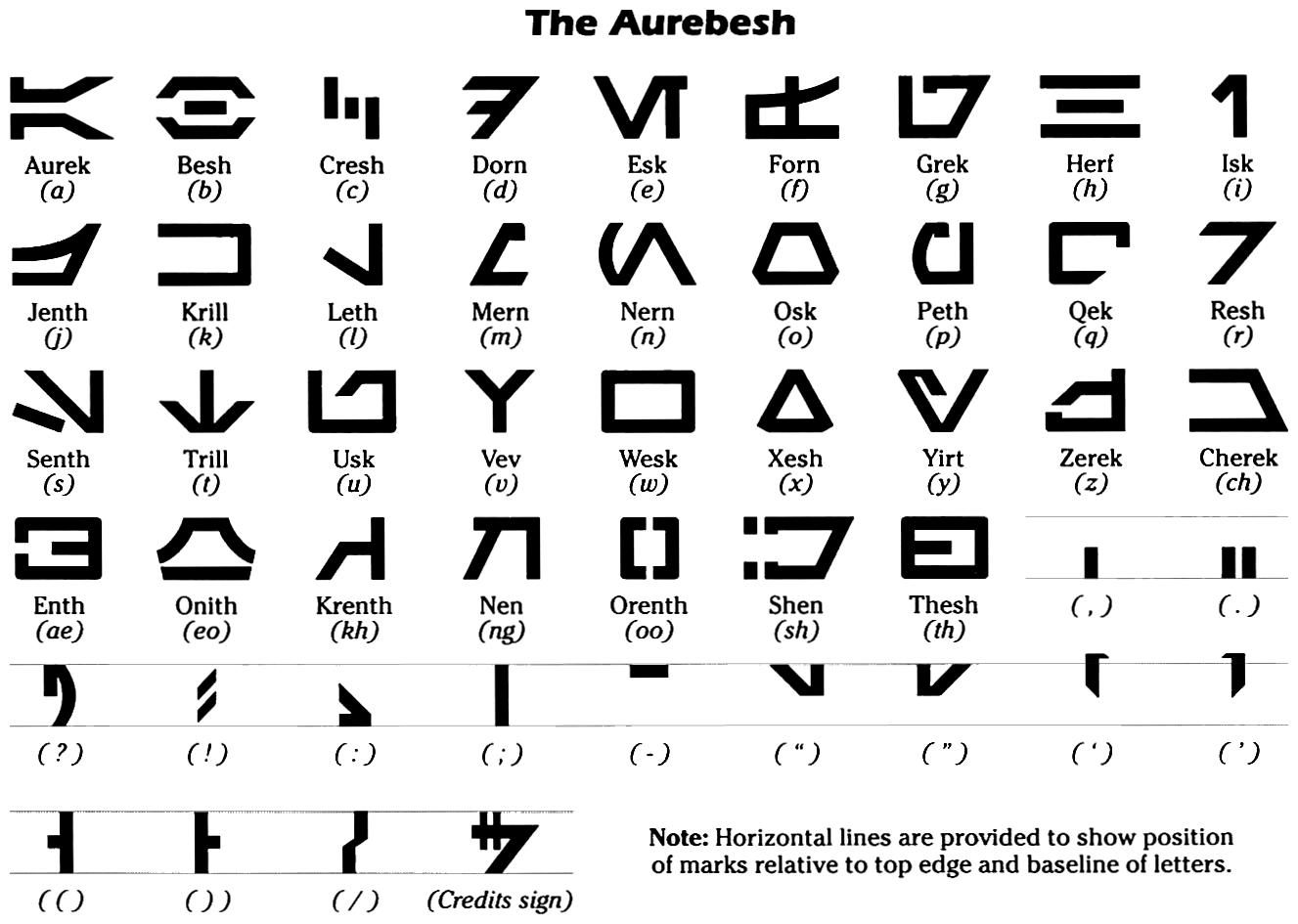
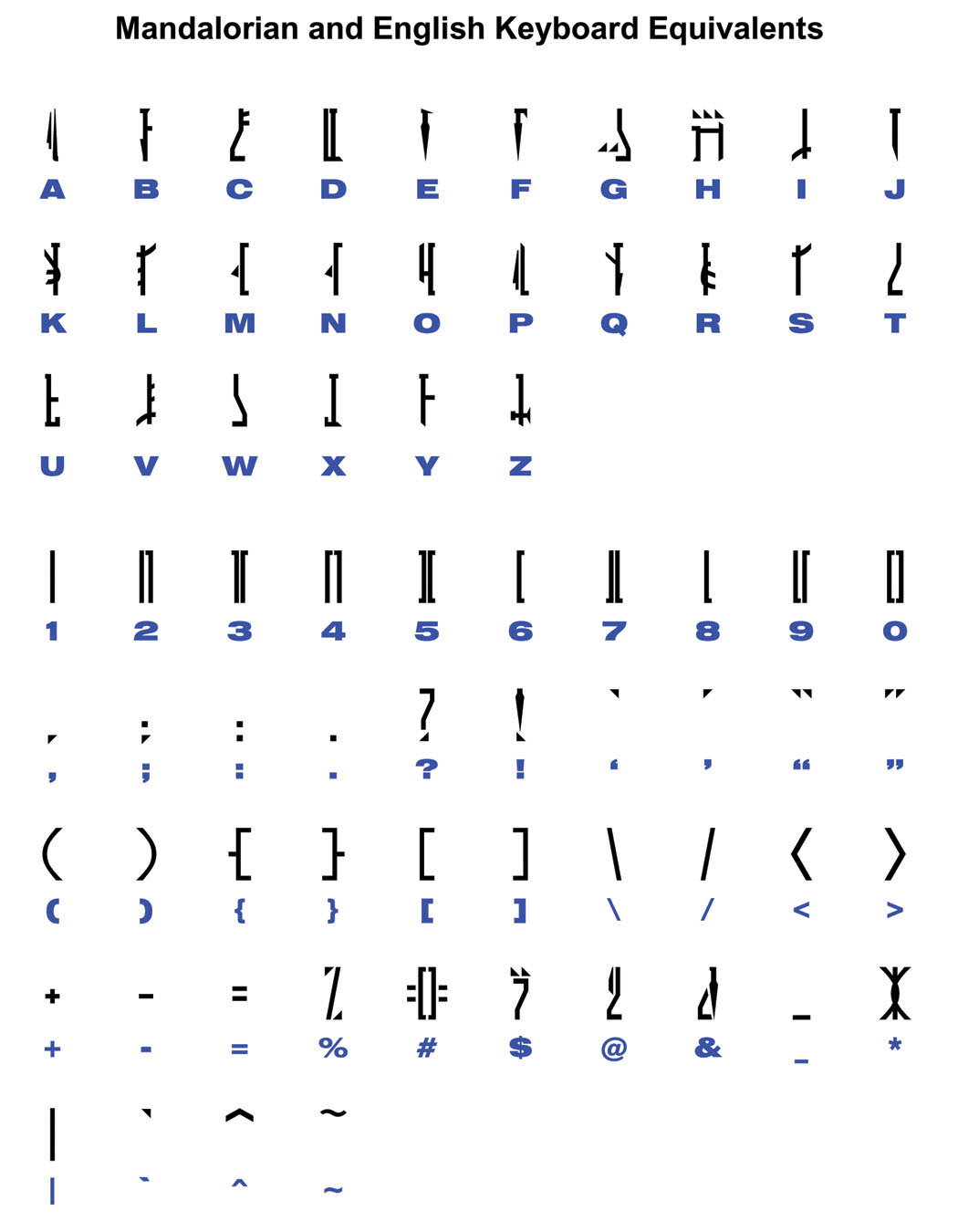
The first item of "housekeeping" was to get things ready for the Silverway session tomorrow.  At last my poor neglected D&D campaign can move forward, in our new DM-is-in-New-York format.  Part of successful DMing over a remote platform like roll20.net is getting the space set up beforehand, so I hopped online and got my digital house (or tabletop, I suppose) in order.  Then it was off to fencing.  I decided not to take chapter five of On Basilisk Station because I try not to print things here at the apartment, and I'm almost done with chapter five so I wanted to save what was left for Monday's commute.  I find the mando alphabet harder to read than the aurebesh.  At first I thought it was because I had more practice with aurebesh (yes, I go to Star Tours in part to practice reading a fictional script, and yes, I pause episodes of The Clone Wars to read the aurebesh), but by now I think I can say that's not the case.  I think it's just that more mando letters look similar to each other than in the aurebesh or English alphabet.  As a native English speaker it's hard to judge which English letters are confusingly similar (b, d, p and q, certainly, but what about, say, e and c?), but I feel like the aurebesh letters are fairly distinct from one another, whereas in the mando alphabet I still sometimes get confused between a and p, b and q, c, t, g and w, k and r, l and s, m and n, and u and x are all pretty similar to each other - that's virtually the entire alphabet.  Still, it's a fun project.  Practice practice.

Speaking of practice, today was my first time back to fencing in almost a month.  But I see that I have written many paragraphs about that, so let me skip fencing for now.  After class, I hung around a bit and actually got invited to go to the bar with the guys in what is apparently a post-fencing ritual.  That would be nice, but I don't know if I have the money for it.  Maybe I should try to make room for it.  It would be good to have friends outside of work.

At any rate, I went home, did my meager grocery shopping, and then finished up my laundry.  Turns out the massive cardboard flat that's been under the stairs in front of my apartment actually had a tiny label on it declaring that it was for me: my ironing board had arrived.  A full-size ironing board is not something that my housemates felt the need to find room for (and given their jobs, who can blame them?), but after trying to iron pants on a countertop ironing board I decided that enough was enough, and bought my own full-size ironing board.  Now my pants (and dry cleaning budget) can feel the firepower of this fully armed and operational ... clothes-pressing ... operation?  Anyway, since I have the apartment to myself I had a nice quiet time doing my ironing like a big boy and singing worship songs.  And that brings me to, well, now.  A nice, responsible day.

So ... I guess that brings me back to KDF.

Since I had been gone, I had ordered a fencing helmet (for some reason Raab Rashi, the studio owner/katana instructor - I use his name because I don't think he'd mind the modest advertising additional internet presence brings - refers to them as "helmets," instead of "fencing masks," though I suppose they do provide more throat, side, and back protection than a regular fencing mask) and picked up a cheap pair of lacrosse gloves in anticipation of the new advanced/sparring hour, as I had been told this was the minimum allowable safety equipment.  I am quite happy with the helmet, although I may have to invest in a set of contacts - only wearing them once a week, they should last me for quite a while.  I am really quite happy with the gloves, even though they're cheap by lacrosse standards, and even though at some point I'd like to upgrade to hard-shell gauntlets.  Since the studio now offers unlimited KDF training, today I was going to go to all three Saturday classes: beginning, open level, and advanced/sparring.

The beginning and open level classes were a lot of fun.  I try to work on keeping my face impassive during class, since facial expression can give away your intentions in a fight.  It is surprisingly difficult not to show in your face that you have mentally committed to hitting somebody, so it's something I try to practice whenever I have a sword in my hand or when I drill in the mornings.  Today, though, it was really hard to keep from grinning.  As we practiced our cuts in the beginning class and some zwerchau and scheitelhau plays ("plays" is the KDF term for "things you can do from a given position or with a given maneuver") in the open level, I could feel my pulse quicken, my airways open up, and my heart lift.  It was good, exciting, and alive.  I am starting to actually feel part of the class community, too, which is also good, exciting, and alive.

And then we got to the sparring class.  This was still good, but much less thrilling.  I was expecting that, of course, since I didn't really feel ready for sparring.  I went because Raab recommended I do so for the sake of learning despite my comparative inexperience.  When to begin free fencing is a topic that I know many weapons instructors have different views on, but I figured that this was the opinion being expressed by my fencing authority (well, one of them), so I might as well go with it.  I went in expecting to get beat up a lot, and the fact that my right hand, left index finger, right pinky, and both forearms are still sore eight hours later is testament to the fact that I did.  For the record, getting walloped, even with the padded boffers I was using, hurts more than getting shot in paintball - or at least the soreness and tenderness lasts longer.  Since I do not yet own a fencing jacket I wasn't allowed to spar with nylon, and as much as I hate to shy away from bruises, I have to admit that was probably wise.

I would have liked a little more structure to the rules of sparring.  I have no interest in counting points or in deciding who "wins" a bout, of course, but I do have plenty of interest in learning how to do it for real.  For now, there is plenty for my brain to sponge up without worrying about that sort of thing, but for the future, I want to know - do we stop our rounds after a good hit has been landed, or only after a good hit has been landed and the attacker has successfully made it to safety?  Those seem to be the two major schools of thought.  To them I would add a third, or at least like to raise the question at some point: what about stopping our rounds only after a crippling hit has been landed?  We've already been taught a few cuts that are clearly not going to end a fight, but this point is bigger than that.  For instance, I get the impression that most practitioners would stop a bout (score a point, whatever) after a thrust that would run their opponent through the lung.  And that is certainly a good hit.  But of course, being impaled through the lungs is not crippling, and is not even especially likely to be mortal, so ... should we really stop sparring just because that's happened?  To put it another way, I suppose I'd like to have a clearer idea of what our sparring is trying to achieve ... which is probably a post for another time.

I'm still very glad I went, though.  We only had enough space for two pairs to be sparring at once, and as many of the guys (there are several women who are regulars in class, but none of them happened to be present for today's sparring class) had just gotten their fancy new fencing jackets, they were excited to be sparring with nylon.  That left me with a disproportionate amount of time with the boffers, which are heavy, imbalanced, and generally make me feel slow as molasses.  This in turn makes it extra difficult for me to remember what I know.  But that was perhaps a good thing, as the senior student I did two bouts with turned them into teaching experiences rather than just beating on me, and Tristan reminded me that I actually did know several plays applicable to the situations the aforesaid student was deliberately putting me into.  As before, when I was handling these same boffers in June, it all felt very serious.  I could feel my mind engage its learning mode, just trying to absorb as much data as possible.

I saw The Wolverine last weekend, and it reminded me how much fencing is not like dance.  I have a tendency to compare it to dance, because that's what I know, and it's a fairly well-established trope in fiction that a very skillful combatant looks like he or she is dancing.  It often looks that way in film, television, and stage, and those are generally the only ways most people see fencing.  But fencing is not dancing.  There is no rhythm to fencing, no internal metronome.  There is a metronome in fight choreographies, of course, because the performers need to synchronize their timing or the choreography would break down.  But when doing it for real, the metronome is replaced by asynchronous movement - not just asynchronous movements, but moving when and in a way for which one's opponent is not prepared - and speed, as much of it as one's mind, reflexes, and conditioning can muster - and if that is more speed than one's opponent can muster, too bad for him.

There are other ways in which I notice that fencing is not like dance.  One that's been deviling me is this: when I practice "leaping" to the side with my zwerchauen (that is, at least as I have been taught, simply taking a long lateral step), I have a tendency to recover by bringing my trailing foot too far - the instep of my trailing foot ends up directly aligned with the heel of my leading foot, so the two could be brought together to form a T.  This, of course, is because I practiced that very stance in college ad nauseum, attempting to ingrain in myself the classic stance of a 19th century gentleman at ease in a ballroom and presenting his silhouette to best advantage.  I guess it worked, because my trailing foot can find that position in my sleep.  For fencing, though, having both feet in line like that weakens one's balance.  I've been working on this minor thing all week, and I was very proud of myself the other day when I could finally throw a phantom right zwerchau at speed without falling into that T-stance ... only to discover that the problem had migrated to my left zwerchau.  Well, practice practice.

One thing that is like dance, though - so far, at least - is the mental process of learning.  The Dance Master always used to tell us that if we were having trouble learning a step, we should just go home and sleep on it - we'd find that it made more sense after giving our brains that time to process.  I've definitely experienced this in my park drills - on one day I just won't be able to keep from rising on the balls of my feet when I cut (another dance habit), and on the next day I can stay grounded.  I haven't had a chance to experience this in our open level drills and plays, because we haven't been repeating things from class to class (yet; perhaps this will change with the addition of Tuesday night classes), but I look forward to seeing it at least with respect to sparring.

And on that note, I should end this post and get to sleep.  Mental processing, and Silverway, await!

Sunday, July 21, 2013

Touchstones

People ask me with some regularity how things are going in New York.  This is a difficult question to answer since the vast majority of things I do here are work.  There's only so much I can talk about work period, and I know a lot more people who want to know "how I'm doing" than I do who want to hear about the nuts and bolts of a lawyer's life, anyway.

In a lot of ways I don't really feel like I'm in New York.  I don't really have the time to explore the free places (I have not gotten to explore any more of Prospect Park, although it remains on my to-do list), and I don't have anywhere near enough money to explore the local restaurants (even the cheap ones), museums, theaters, or any of those things.  That is to say, I could have enough money, but that would mean cutting down on saving, which is the whole reason I'm here.

Nevertheless, the emotional reality that I am Away From Home remains, lurking on the periphery of my soul.  This makes it extra necessary to pay attention to my touchstones.  These are things I have had as long as I can remember, although the actual touchstones themselves have changed from season to season in my life - the things that help me remember that I am still me.  They aren't the things that make me me, just reminders.  These are things that I expect everybody has, but I am by nature very sensitive to symbols, so I think about them a lot.

Here are some of my touchstones in New York:

My signature seal.  This is something Thayet had made for me a long time ago.  It's a pewter seal with my initials carved into it in a design she did herself.  Seals are like flowers - despite the outward appearance of their function, their real function (at least, in Natalie) is to honor the recipient.  My signature seal reminds me to honor others.

My Phoenix Earth seal.  Every week, I send a letter to Thayet signed with my signature seal, and seal the envelope with my Phoenix Earth seal.  This has various ritualistic layers of significance - the colors of the waxes, the act of letter-writing itself, the use of seals, and so forth, most of which are an idiosyncratic Natalian mix of meanings culled from various sources.  One of the layers that actually has nothing to do with Thayet at all, though, is the opportunity to handle the Phoenix Earth symbol itself.  The Phoenix Earth symbol was designed by my sister for the roleplaying game of the same name, but it actually holds very little significance for me as a symbol for all those bonds forged around the table and stories told (though those bonds and stories are, in their own right, very dear to me).  The Phoenix Earth itself, rather, is my personal expression that I still believe in the Second Coming of Christ, that the king will return, that God is in his heaven and still in charge of the universe, that things will get better, that he is here.

The mythosaur.  Another symbolic touchstone these days is the mythosaur.  This one really crystallized when my cousin bought me a set of Star Wars pins from Disneyland, one of which is a red mythosaur skull on a yellow field.  As the prototypical symbol of Mandalorian culture, the mythosaur emblem stands for the application of will to the concept of family: of choosing to make a person your spouse, child, or parent (that is, loving them as those things), and doing what has to be done for them.  I wore this pin to every job interview when I was looking for work, pinned to my tie under my left collar, and I still sometimes wear it to work when I feel like wearing a tie.  There are a set of mythosaur cufflinks on eBay that I'd like to buy one day.

Star Wars.  My adult relationship with Star Wars is sort of weird.  After loving it to death as a child and teenager, I came to a sort of love-hate relationship in my twenties.  This post summed up my feelings about it for a long time.  I didn't like Star Wars anymore, and I felt mostly relief.  But that was never entirely true, and I think I've finally kind of figured out why I can't leave Star Wars alone.  In many ways, I value it the same way I value Disney (an ironic identity, now that Disney owns Star Wars): it teaches me to believe in magic.  I am currently teaching myself to read the aurebesh and Mandalorian alphabet by transliterating On Basilisk Station in Word and reading it in the different alphabets, one chapter at a time, on the subway to and from work.  It's hugely geeky, I know, to want to read fictional alphabets with the same facility with which I read the English alphabet (I'm getting pretty good at the aurebesh), and it's probably even geekier to read an Honor Harrington in a Star Wars script.  But it's cheap entertainment, and ... well, it's a touchstone.  I need to believe in magic.

KDF.  KDF takes up virtually my entire discretionary budget, and is actually rather more expensive than I would like.  I still love movies, and the ritual of eating out, and buying toys.  I would like to have some money to do those things, even if only once a month.  But in general, the expense is part of the point.  It's often said by swordspeople (as by many martial artists generally, I think) that the point of their discipline is ultimately control of the self.  Certainly that is what I primarily value KDF for: control, control, you must learn control.  Discipline in spending, working, exercising ... these are the things that KDF has become my touchstone for.

Sunday, July 07, 2013

Never Pick Up A Weapon ...

On Saturday, we spent the entire hour drilling krumphauen.  I was very happy about this, since at this point what most interests me about cuts is the how and why.  The krumphau ("crooked hew") is a sort of windshield wiper movement of the sword - if you suppose you have your weapon in both hands on the right side of your body, imagine twisting your wrists such that the sword cuts down and to the left.  Simply twisting your wrists is not likely to cut anything, of course (and even if it does, it's inefficient body mechanics), so you actually sort of drop into a lunge while dropping your whole arms to help power the sword down, but that basic windshield wiper movement seems to be what ties all krumphauen together.

The obvious use of this cut is to remove your opponent's hands.  Suppose, as he cuts or holds his sword in front of him in what we call "long point" (langenort, which seems to refer to the fact that the sword is at a point that is "long," or far, from the body - not "point" as in the sharp tip of the sword), one lunges to his left.  One can then use a krumphau to amputate both hands at the wrists or forearms.  A man with no hands is obviously still capable of killing you, but you have at least removed a major threat source.

I mention that a man with no hands is "obviously" capable of still killing you advisedly.  This is grade-school stuff for a certain class of nerd, but it bears reflecting upon.  Heinlein puts these words into the mouth of Sergeant Zim:
"Well, suppose all you have is a knife? Or maybe not even a knife? What do you do? Just say your prayers and die? Or wade in and make him buy it anyhow? Son, this is real -- it's not a checker game you can concede if you find yourself too far behind."
So suppose somebody does cut off your hands.  You might run away - surviving is often more important than killing one's opponent.  But suppose it isn't?  Or suppose you can't?  What do you do? Say your prayers and die, or wade in and make him buy it anyhow?

One of the reasons that I think it's so important to think about this sort of thing is that it's particularly hard (maybe impossible) to drill.  Obviously a body with no hands is still physiologically capable of killing an assailant in any number of ways, but of course getting one's hands cut off is likely to be quite the psychological shock, both in terms of surprise and pain.  How do you train for that?  I'm not sure you can.  But you can at least meditate on it.

There are difficulties the other way, as well.  One of the other uses of the krumphau, apparently, is to defeat an oberhau (overhand strike).  As the opponent's blade descends, a krumphau can be used to smash it into the ground.  This momentarily disables the opponent's sword (from the sudden and unexpected momentum change), and places one's weapon on top.  From here, it can be flicked into the opponent's head.

Now, it was made very clear to us that such an attack is not going to kill one's opponent.  The point is simply to wound him so that you have a window for a follow-up strike.  I wonder: will we train that way?  It won't be until August that I can participate in our sparring hour, but I wonder what our rules will look like.  It seems obvious to me that, if we are truly practicing a killing art, a krumphau used in that way should not end the bout.  In fact, most attacks, it seems to me, will not actually kill an opponent except over a period of many seconds or minutes.  I am curious to see what our practice will be.

A related question this brings up: how should a man in the modern world fight?  This is perhaps more philosophical than practical, as a sword is not particularly likely to be at hand in a modern fight scenario, but I think the philosophical point is still important.  Suppose I have successfully cut off my opponent's hands, or flicked my sword into his face.  Neither wound is especially likely to be fatal; neither removes the opponent as a threat.  What should my instinct be?  To attempt to disengage, giving my opponent time to reconsider whether he wishes to continue to attempt to kill me?  Or to follow up with an attack that will actually incapacitate him?

It seems to me that the wisdom of the martial community is that one does not let up - if the opponent removes himself as a threat, well and good, but until that point, his life is forfeit - you continue to strike, or shoot, or whatever, until the opponent is either unconscious, paralyzed, or dead.  This seems to me like it has to be the right answer.  It is a sobering thought, though, to consider that the thing you do to a man whose hands you have just cut off, whose face or throat you have just opened, is hit him again - because he still has a brain capable of ordering your death, and a spinal cord capable of relaying those orders to his body.

Firearms practitioners have an old chestnut that I think is applicable to all fighting: never point a gun at something you are unwilling to destroy.  It's important to remember just what that destruction means, though, in the context of a human being.  If you aren't willing strike down a man whose hands you have just cut off, you shouldn't cut off his hands in the first place - shouldn't even have drawn your sword.  These words, from Weber's Honor Among Enemies, have always haunted me:
"Course, you knew it wasn't real.  It was just training, and you figured - hey, I'm a little, wiry guy, and I've never had a fight, and I'm never gonna have a fight, and I don't want to have one, even if I could.  That about sum it up?"
"It sure does," Aubrey said feelingly, and Harkness chuckled.
"Well, looks to me like you were wrong.  You are gonna have a fight - the only question is whether or not you're gonna win it or get your fool head busted.  And do you know what the secret to not getting your head busted is?"
"What?" Aubrey asked, almost against his will.
"It's busting the other guy's head first," Harkness said grimly.  "It's making up your mind going in that you're not just gonna try to defend yourself.  It's deciding right now, ahead of time, that you're gonna kill the motherfucker if that's what it takes." 

Thursday, June 27, 2013

United States v Windsor (the DOMA case)

I've been staring at my screen for a while trying to figure out what I wanted to say about United States v Windsor, the DOMA case that was decided yesterday. My initial plan was simply to do a Natalie-style breakdown of the opinion for those of my readers who value such things, and then do a separate post with my personal responses, but after reading the whole thing, I'm not sure I can separate them cleanly enough to do that.

Some of our most celebrated Supreme Court cases have been, I think, wrongly decided. Brown v Board of Education is one such case (although some have argued that there was no legally correct answer, I don't know of anybody who thinks the Brown I decision was correct on the merits of the case). Griswold v Connecticut, the case that enunciated federal protection for the right to privacy, is another (that the constitution guarantees some privacy-like rights is quite clear, but not even the prevailing justices in that case could agree on where, exactly, the constitution guarantees the right to privacy in general). I think that Windsor is going to go down in history with these cases. Wide-eyed law students in the future will learn about the time in 2013 when the Supreme Court struck a historic blow for equal rights - by ignoring the law.

So ... what happened?

The Windsor in Windsor is Edith Windsor, a New York lesbian. Windsor and her partner got married in Canada, gay marriage jurisdictions in the United States being hard to find at the time. New York then decided it would recognize same-sex marriages performed outside of its borders (later it would decide to permit same-sex marriage within its borders, but that's not relevant to the story). At this point, Windsor and her wife, Thea Spyer, were legally married as a matter of New York law. Spyer died, and willed her entire estate to her wife.

As you may know, inheritance is subject to federal income tax - it is, after all, money that you didn't have before, which is pretty much the definition of income. For its own inscrutable reasons, however, the federal tax code does not require you to pay income tax on an inheritance you receive from a spouse. You can see where this is going. For purposes of New York law, Windsor had inherited from her spouse.

For purposes of federal law, though, Windsor had not inherited from her spouse, because Section 3 of the Defense of Marriage Act defines "spouse" for purposes of federal law as an opposite-sex person (I mean that literally; Section 3 of DOMA amends the aptly named Dictionary Act). As a result, Windsor paid the Treasury her inheritance tax, then sued for a refund. The Treasury refused, since Spyer had not been Windsor's wife for federal law purposes, and Windsor took the government to federal district court on the grounds that Section 3 of DOMA violated the Equal Protection Clause.

Her argument for that was fairly bold and very much in keeping with the story that is going to be told to future generations about the gay rights struggle. But this is where things begin to get weird from a civics point of view, so before we get to her argument, pay attention to what happened next: the government told the district court that it agreed with Windsor's argument and should be ordered to refund her tax, with interest - while simultaneously continuing to enforce Section 3. While arguing that Windsor should get her tax back because Section 3 was unconstitutional, the government was simultaneously collecting estate taxes from other people in her situation (and otherwise denying legally married same-sex spouses recognition under federal law).

As might be expected when the defendant's argument is, "I am wrong and the plaintiff is right," Windsor won at the district court level. The government then appealed to the Second Circuit Court of Appeals, while continuing to hold Windsor's estate tax. This is where the gentle reader may expect the government to turn its cloak and ask for Section 3 to be upheld and the tax retained. But what happened was even more incredible - the government's argument on appeal was that it should lose the appeal, because Section 3 was unconstitutional. Take a moment to appreciate that: the government said it should lose, lost, and then appealed its loss on the grounds that it should have lost.

Under these circumstances, it is perhaps hardly surprising that the government lost. The government then appealed again, and argued to the Supreme Court that it should ... wait for it ... lose.

And it did.

You can probably tell that I have some feelings about that whole process. But let's get on to the actual opinion.

If you have the good fortune to come across the better sort of popular news reporting about legal issues, you may have heard that the majority opinion in Windsor is ... confusing. This is absolutely true, but to understand why, we need to review a few basics of common law. One of the reasons I dislike popular news reporting about legal issues so much is that it can't seem to decide which story it wants to tell. On the one hand, there is usually a narrative about "winning" and "losing," as if people pay attention to these things strictly for the entertainment value of observing the litigants fight. On the other hand, there is usually a narrative about which laws have been struck down, died, revived, or other such agonistic terms.

Neither narrative is wholly satisfactory. What people really want to know, I think, is what the state of the law is after the case is over. And to understand that, you have to understand how the case arose (which is one reason I spent so much time sketching that) and how one side "won" or "lost," a law "died" or was upheld. Remember that the whole manner in which courts create law (which in a broad sense they are supposed to do; let us have no childish nonsense about "activist" vs. "conservative" judges here) is by articulating principles, so that the legal reasoning in one case can be applied to analogous - but not identical - situations.

So what are the principles that underlie Windsor? The majority spends several pages discussing the proper boundaries of federal action with respect to marriage. "By history and tradition the definition and regulation of marriage, as will be discussed in more detail, has been treated as being within the authority and realm of the separate States." Aha, thinks the reader - this is a federalism argument. "Federalism" is a fancy word for the principle that not everything is something that the federal government can regulate. Yet the majority then says that it is not deciding the case on federalism grounds, because that's unnecessary: "Despite these considerations, it is unnecessary to decide whether this federal intrusion on state power is a violation of the Constitution because it disrupts the federal balance."

So ... apparently we will not be hearing whether Section 3 violates federalism principles after all. What then? The majority turns to a principle that it will restate in several forms: "DOMA seeks to injure the very class New York seeks to protect. By doing so it violates basic due process and equal protection principles applicable to the Federal Government. [citation omitted] The Constitution's guarantee of equality 'must at the very least mean that a bare congressional desire to harm a politically unpopular group cannot' justify disparate treatment of that group." Fair enough, it seems. New York wants to protect same-sex couples (by allowing them to marry); Section 3 does the opposite (by refusing to acknowledge their otherwise valid marriage). Equal protection violation, problem sorted.

Take another look at that sentence and ask yourself what the animating principle is. Is the constitutional problem here that Section 3 seeks to injure the class that New York seeks to protect? Or is it that Section 3 itself reflects a "bare congressional desire to harm a politically unpopular group?"

If the former, then Windsor would seem to stand for the very alarming principle that federal law cannot override state law. That is entirely counter to our tradition of federalism. The federalist principle is that there are some areas as to which the federal government cannot make law at all, but in those areas where the federal government can act, its law is supreme. This is what Article VI, clause 2 of the federal constitution means when it says "the laws of the United States ... shall be the supreme law of the land, anything in the constitution or laws of any State to the contrary notwithstanding."

It seems incredible that the majority opinion would be based on such an elementary error. So perhaps the real principle is that laws that represent a bare desire to harm a politically unpopular group are unconstitutional.

This is an attractive statement, but also an incredibly strange one to anybody who is even moderately versed in the actual law of equal protection in this country. As I've said before, neither the Equal Protection Clause of the Fourteenth Amendment, the Due Process Clause of the Fifth Amendment, nor the general concept of "equal protection" means that all laws must treat everybody equally. This is easy to forget when one is caught up in the emotions of a righteous crusade for civil rights, but it is a very ordinary concept. Prior to Windsor, some people were denied the benefits of federal marriage law. After Windsor, some people are denied the benefits of federal marriage law. Let's call them "single people." Why can't single people demand federal marriage rights under equal protection?

The answer is as simple, and as complex, as saying that single people and married people are not the same. The Supreme Court puts it this way: "The equal protection of the laws must coexist with the practical necessity that most legislation classifies for one purpose or another, with resulting disadvantages to various groups or persons."

Because of this tension - on the one hand, we want everybody to enjoy equal protection under the law; on the other hand, taking that principle to its logical extreme means virtually no law is valid - American jurisprudence has a familiar and fairly well understood way to balance. This is the "tiers of scrutiny" or "heightened scrutiny" approach you may have heard about. The principle is this: when a law benefits or harms one class of people over another (say, giving married people benefits that only married people can have, or imposing penalties on convicted criminals that only convicted criminals have to suffer), the question is what the purpose of the law is and what sort of distinction is being made. Roughly, when a law draws a distinction based on something that is very rarely relevant to legitimate state interests in general, the classification must be narrowly tailored and the specific state interest in question must be a "compelling" one. The classic example is race (well, it is now; originally it was religion or national origin). For instance, suppose the United States were suffering from a plague that only infected white people, with a 100% mortality rate, which could only be communicated by shaking right hands. A state could very likely pass a law forbidding white people to shake right hands with each other, in this case, despite the fact that the law would only burden the behavior of white people (a class based on race), because preventing the spread of such a virulent plague is a "compelling" government interest, and the law was as narrowly tailored as possible (it would, for instance, be unconstitutional to pass a law preventing white people to have physical contact with each other - the goal is still compelling, but the method is no longer as narrowly tailored as possible).

At the other end of the spectrum is "rational basis scrutiny," which is applied when the law draws a distinction of the sort that is often relevant to legitimate state interests in general. In this case, the rule requires only that the government's goal be a "legitimate" one, and that the classification be one that a rational person could find legitimate - even if other people disagreed. Married people vs. single people is one such classification - if a law distinguishes between married people and single people (a distinction that is often relevant to legitimate government interests), it need only be based on a set of facts that a rational person could believe to be true. Those facts don't have to be true. They don't have to be popular.

What Windsor really wanted was for the Supreme Court to say that sexual orientation is very rarely relevant to legitimate state interests - to say that it is like race, religion, or national origin. I think it fair to say that this is what most LGBT advocates, including myself, want the law to say. And indeed, most of the legal arguments in Windsor were about precisely this question. This is how we decide equal protection arguments in this country, and the obvious fact that virtually every law creates inequality by the very nature of lawmaking.

But, having raised the specter of equal protection law, the opinion doesn't even mention the tiered scrutiny test. Instead, it recites a variety of ways in which Section 3 makes same-sex marriages "second class marriages." Now, it is undoubtedly true that Section 3 has this effect. But notice what the court goes on to say: "What has been explained to this point should more than suffice to establish that the principal purpose and the necessary effect of this law are to demean those persons who are in a lawful same-sex marriage. This requires the Court to hold, as it now does, that DOMA is unconstitutional as a deprivation of the liberty of the person protected by the Fifth Amendment of the Constitution."

I confess to being skeptical that one can, as a matter of principle, determine the "purpose" of a law with any degree of certainty. But let us leave that aside, and assume that it is theoretically possible to determine a law's purpose. What exactly is the rule here? Would it be enough if Section 3's principal purpose were to demean same-sex marriages, even if it didn't really have that effect? What about the other way around - what if a law accidentally had the effect of demeaning same-sex marriages, even though that wasn't its principal purpose? Or does a law have to have both? What if a law does neither? What if a law merely makes a distinction between opposite-sex and same-sex marriages, but manages to do so with neither the purpose nor the effect of demeaning either class?

If the court had simply followed the tiered scrutiny test, none of these questions would arise. Instead, they do. The court never explains the test it is using to make its decision. It never even explains its reasoning. It simply lays out a bunch of statements, and then says, "Somewhere in here is our warrant for holding as we do." What are we supposed to do with that? What is the law?

One might well ask why the court did things this way. We may never know. It may be that in the strictest sense we can't know, any more than we can know why a law was passed. If one were feeling cynical, one might imagine that the court wanted to make a statement on gay marriage without articulating a usable test that would be applied throughout the nation. Yet if that were so, why didn't they simply dismiss for lack of standing? Did they feel like to dismiss both Windsor and Hollingsworth (the Prop. 8 case) without making some sort of statement would be somehow cowardly?

Which brings us to the question of standing. Recall that, from the very first trial, Windsor won, and the government repeatedly urged successive courts that Windsor should win. I am incredulous that, under these circumstances, the court agreed to decide the merits of the case at all.

There is a tendency nowadays to imagine that the Supreme Court is the final arbiter of justice in the land, and the ultimate word on what is the law. This is not true. In fact, Article III of the constitution specifically prohibits the judiciary from issuing what are called "advisory" opinions. In some countries, one can essentially ask the judiciary a hypothetical question, and the judiciary is allowed to answer - to give its legal advice about the query. One can imagine the usefulness of such a situation. However, the constitution prohibits the federal judiciary from doing any such thing. In this country, if one wants mere legal advice from a government official on a constitutional question (e.g., "Hypothetically, what level of scrutiny should be applied to classifications based on sexual orientation?"), one asks the attorney general. The American judiciary is only allowed to decide actual cases. Doing so may require it to state what the law is, but that does not mean that the judicial branch has the power, in general, to state what the law is. First, there must be two parties who disagree over which of them is entitled to redress.

And yet in this case ... where was that? Windsor won. The government agreed that she should win. Where is the disagreement? At every stage of the litigation, the government loudly and forcefully denounced its own cause. Truth be told, the Supreme Court was not allowed to decide this "dispute," but if it wanted to avoid the clarity that the tiered scrutiny analysis would give, it certainly had an easy out.

I do not think that Section 3 was good policy, and I would - in general - be glad to see it gone. But I am deeply disappointed in the way that this all played out. The judiciary ducked its responsibility to say that this whole appeal was an unconstitutional attempt to weasel an advisory opinion out of it, and then issued a confusing muddle of an opinion with a clear result but no clear reasoning or statement of principles (again, if one were of a cynical mind, one might think they didn't want to make their reasoning clear). But the deeper cowardice belongs to the executive branch, which got us into this whole mess by continuing to enforce a law that it believed - as it told everybody who would listen - to be unconstitutional. This is unacceptable. If the executive believes that a law is unlawful, it is supposed to refuse to enforce it, in which case it will never have to defend it in court. If the legislature has a problem with that, the two of them are supposed to fight it out. If the executive believes that a law is lawful, it is supposed to enforce it, and defend it in court. But the executive cannot have it both ways. Either it has the courage of its convictions or it does not. If one were of a cynical mind, one might think the executive wanted the political cache of being an LGBT ally and the political cover of only ceasing to enforce Section 3 after the courts had "agreed" that it was unconstitutional. Cowards.

As I said, I am sure that striking down Section 3 will be remembered as a landmark victory for the cause of equal rights. And I suppose that it is. But I cannot escape the conclusion that it was a victory achieved by the cowardice of two branches of government whose essential reasoning was that the ends justify the means. A marriage regime that is no respecter of sexual orientation is a good end. But the ends do not justify the means.